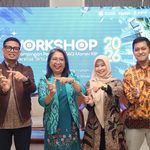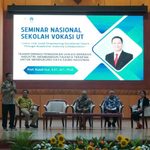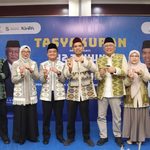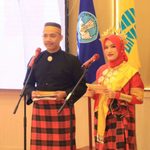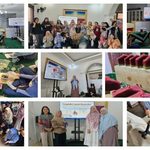

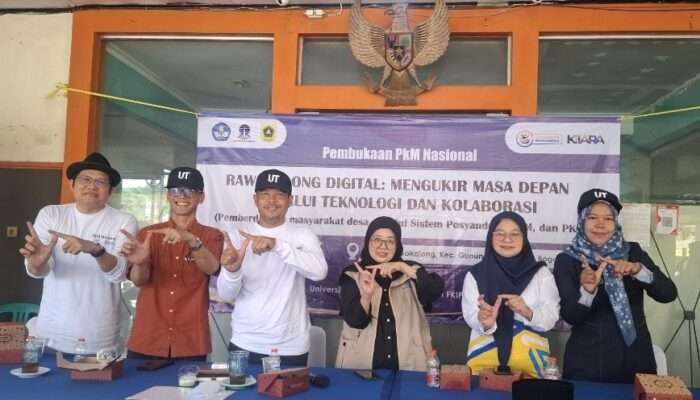
Bogor, July 26, 2025 – Universitas Terbuka (UT) has once again demonstrated its commitment as an “Impactful Campus” (Kampus Berdampak) by launching the 2025 National Community Service Program (PkM) in Rawakalong Village, Gunung Sindur District, Bogor Regency. This program is more than just a community empowerment activity; it’s a tangible expression of UT’s role in driving the digital transformation of villages through technology.
Rawakalong was chosen as a UT-fostered village due to its position as a buffer for a modern city and a hub for local industry, particularly as a producer of orchids. The significant potential in local SMEs and public services provided a strong reason for UT to offer direct assistance, from digitalizing village administration and strengthening local businesses with technology, to improving the digital literacy of residents.
“UT is not only an inspiring campus with its distance learning method, but it is also genuinely present in the community. Through this National PkM, we want to show that distance education can have a direct and sustainable impact on village development,” affirmed Dr. Heriani, S.IP., M.A., Head of UT’s Center for Community Service.

The program, running from March to October 2025, involves lecturers from various UT faculties, including the Faculty of Science and Technology (FST), the Faculty of Economics and Business (FEB), and the Faculty of Teacher Training and Education (FKIP). Through this collaborative approach, UT aims to foster a self-reliant and competitive ecosystem in the fostered village that can optimize local potential through digital innovation.
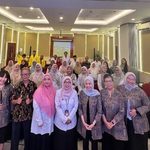
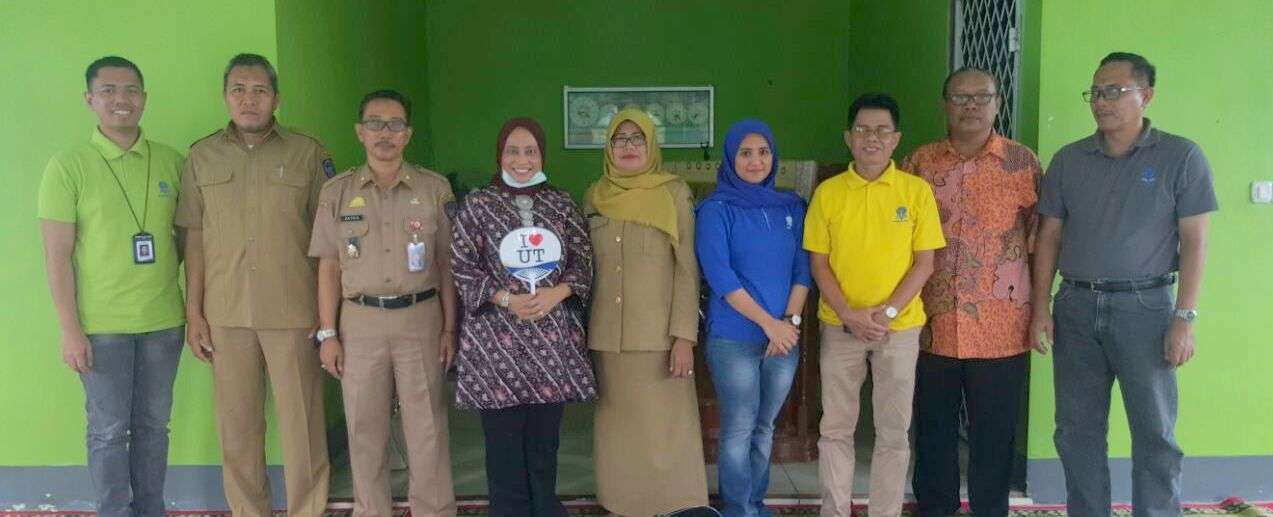
The launch of the Rawakalong National PkM was attended by Prof. Dewi Juliah Ratnaningsih (Vice Dean III of FST), Dr. Mukti Amini, M.Pd. (Vice Dean III of FKIP), and Kani, S.Kom., M.Kom. (Rawakalong National PkM Coordinator), as well as local government officials, including Gunung Sindur Sub-district Head Muhamad Jamaludin, S.IP., M.Si., and Rawakalong Village Head H. Wardi. Full support was also provided by the Head of the SME Forum, the Head of the BPD, the Head of Bumdes, and representatives from PKK and Posyandu.
The Rawakalong National PkM Coordinator, Kani, S.Kom., stated that lecturers from the three faculties are ready to work together to address the village’s crucial problems and will conduct regular evaluations to gauge the community’s response as a collaborative partner. “What is most needed right now is digitalization services for the government, including Posyandu services. That’s where we will take action,” Kani said.
Rawakalong Village Head, Wardi, expressed his sincere gratitude for being chosen as a UT-fostered village. Despite already being a “Self-Sufficient Village,” Rawakalong still has the future target of becoming a “Digital Village.” “We hope that UT’s presence in our village will ease Rawakalong’s journey toward becoming a digital village, in accordance with the village laws,” Wardi said.
This sentiment was echoed by Gunung Sindur Sub-district Head, Muhamad Jamaludin. He believes Rawakalong is expected to become a pilot project for a Digital Village in the Gunung Sindur District. Currently, there are 10 villages in Gunung Sindur, and Rawakalong is one of the fastest-growing. “We also hope that UT is willing to assist other villages in the Gunung Sindur District,” Jamaludin added.
UT’s presence in Rawakalong proves that distance education is not just about flexible access to lectures but also about creating a tangible impact within the community. This National PkM program is expected to serve as a model for empowerment that can be replicated in other buffer villages, while also affirming UT’s contribution to supporting sustainable development and implementing the SDGs in Indonesia through education, digital innovation, and cross-sector partnerships.