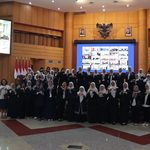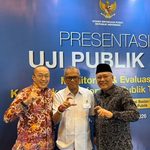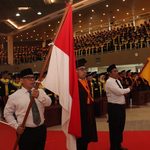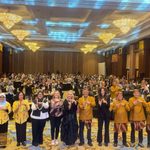

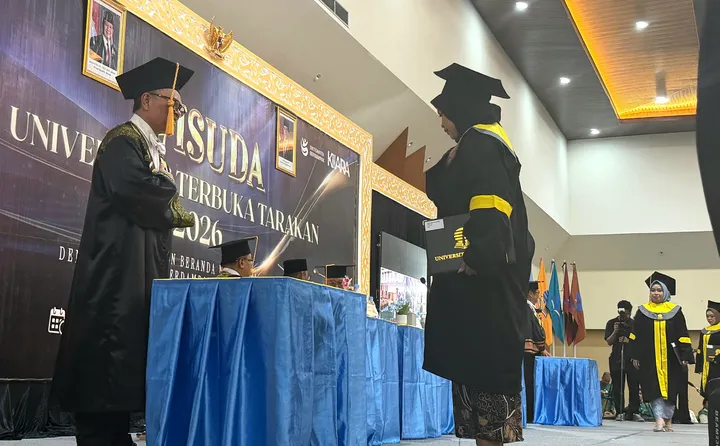
TARAKAN — A total of 612 Universitas Terbuka (UT) Tarakan students were officially conferred their degrees during a graduation ceremony at the Tarakan Art Convention Center (TACC), Kampung Empat, Kota Tarakan, on Sunday (23/8/2026). The graduates came from various parts of Kalimantan Utara, including communities in areas bordering Malaysia.
They consisted of 205 graduates from Kota Tarakan, 158 from Kabupaten Bulungan, 120 from Kabupaten Nunukan, 108 from Kabupaten Malinau, 18 from Kabupaten Tana Tidung, and three graduates from Malaysia. These graduates are part of UT’s 7,906 active students across Kalimantan Utara.
The presence of students from remote areas and border regions has drawn UT’s attention as the university strengthens its role in supporting development in Indonesia’s disadvantaged, frontier, and outermost regions (3T). UT Rector Prof. Dr. Ali Muktiyanto, S.E., M.Si., said UT holds a strategic position in preparing high-quality and adaptive human resources to support development in border areas.
“UT is a strategic partner in accelerating the provision of high-quality, resilient, and adaptive human resources for the development of border areas,” Ali said.
To address connectivity challenges, UT has collaborated in providing satellite-based network access points. This support enables students to participate in learning without having to leave their hometowns or jobs.
The initiative received appreciation from Kota Tarakan Regional Secretary Abdul Azis Hasan. According to him, UT’s flexible learning system can also be utilized to improve the qualifications and competencies of civil servants.
“UT’s presence provides broad access for employees to upgrade their knowledge, which directly contributes to improving the quality of public services,” Abdul Azis said.
In addition to strengthening learning access, UT Tarakan has developed technology-based academic services. One of them is a mobile-based online examination system.
UT Tarakan Director Jeji Muhamad Najib, S.Kom., said the service gives students greater flexibility in determining when and where they take their examinations.
“This service provides full flexibility for students in remote areas to independently determine the time and place of their examinations,” Jeji explained.
The learning model and academic services are in line with SDG 4 on Quality Education, particularly by expanding inclusive learning opportunities. At the same time, these efforts support SDG 10 on Reduced Inequalities by promoting equal access to education for communities facing geographical challenges.
For the graduates, distance and place of residence do not have to become barriers to pursuing higher education. From Tarakan, Bulungan, Nunukan, Malinau, and Tana Tidung to communities along the Malaysian border, the 612 graduates officially conferred that day became part of an educational journey that reaches beyond geographical boundaries.