
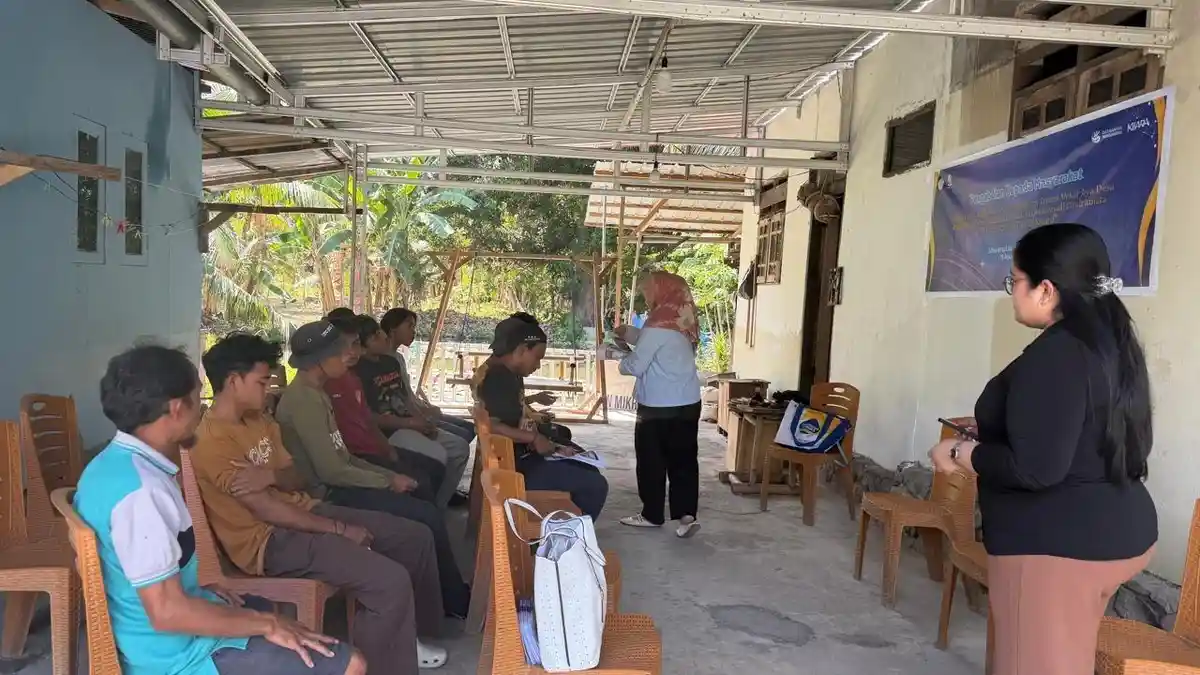
SIGI — In the right hands, something considered useless can be transformed into an opportunity. Leftover wood pieces from furniture production that previously ended up as waste are now being viewed differently by the youth in Desa Pulu, Kabupaten Sigi. From materials that were once nearly worthless, an idea has emerged to create souvenirs, develop products based on local potential, and open a path toward economic independence.
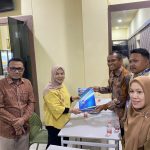
This spirit is being encouraged by Universitas Terbuka (UT) Palu through a Community Service Program (PKM) titled “Capacity Building for the Youth of Karang Taruna Mekar Jaya, Desa Pulu, in Utilizing Furniture Waste to Create Economically Valuable and Creative Souvenirs and Product Marketing Strategies,” held on Wednesday (August 19, 2026), in Desa Pulu, Kecamatan Dolo Selatan, Kabupaten Sigi.
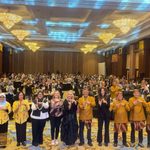
The activity targeted members of Karang Taruna Mekar Jaya in Desa Pulu, with the aim of strengthening their capacity to transform furniture waste into creative products with aesthetic and market value. Participants not only learned how to make products, but were also equipped with knowledge to view waste as a resource that still holds economic potential.
The activity was led by Yuyun Yunita Puspa, a lecturer at the Faculty of Law, Social Sciences, and Political Sciences (FHISIP) at Universitas Terbuka, with PKM team members Steviani Batti’ Wijanarko and Usy Nora Manurung.
Through the program, young people were introduced to various possibilities for utilizing leftover wood materials from the furniture industry. Materials previously regarded as scraps can be reprocessed into souvenirs featuring creative designs and touches of local identity.
The impact does not stop at the ability to process materials. UT Palu also equipped participants with strategies to help ensure that the products they create have a genuine opportunity to enter the market. The materials covered identifying target consumers, developing packaging, building product identity, setting prices, and utilizing digital media for promotion and marketing.
This step is important because production skills without marketing capabilities are unlikely to develop into sustainable economic activities. Therefore, the young participants were encouraged not only to become product makers, but also prospective entrepreneurs capable of identifying market opportunities and introducing their products to consumers.
PKM team leader Yuyun Yunita Puspa said that utilizing furniture waste is one opportunity that can be developed by village youth. With adequate creativity and skills, materials that previously became waste can be transformed into products with added value.
For Karang Taruna Mekar Jaya, this approach opens up new possibilities. Young people can develop productive activities by utilizing resources that have long been available around them. In the long term, souvenirs made from furniture waste could become part of the village’s creative economy while creating alternative business opportunities.
The impact also extends to the environmental aspect. Reusing leftover materials helps reduce waste and extend the useful life of materials. Thus, efforts to increase economic value can go hand in hand with more responsible consumption and production practices, in line with SDG 8 on decent work and economic growth and SDG 12 on responsible consumption and production.
For UT Palu, this PKM program demonstrates how higher education institutions can bring knowledge into forms that directly address community needs. Through the activity, community service is directed not only toward knowledge transfer, but also toward strengthening skills, economic opportunities, and environmental awareness that communities can continue to develop.
The impact of community service does not always have to begin with something big. Sometimes, it starts with a piece of wood that was once discarded and then meets the creativity of young people. From there, a product can be created, a business opportunity can grow, and Desa Pulu can open up the possibility of transforming what was once left behind into something valuable for the future.