
TANGERANG SELATAN — An arts stage is not merely a place to show who is the most skilled dancer. Behind every movement lies creativity, hard work, collaboration, and an effort to keep Indonesia’s cultural stories alive among the younger generation.
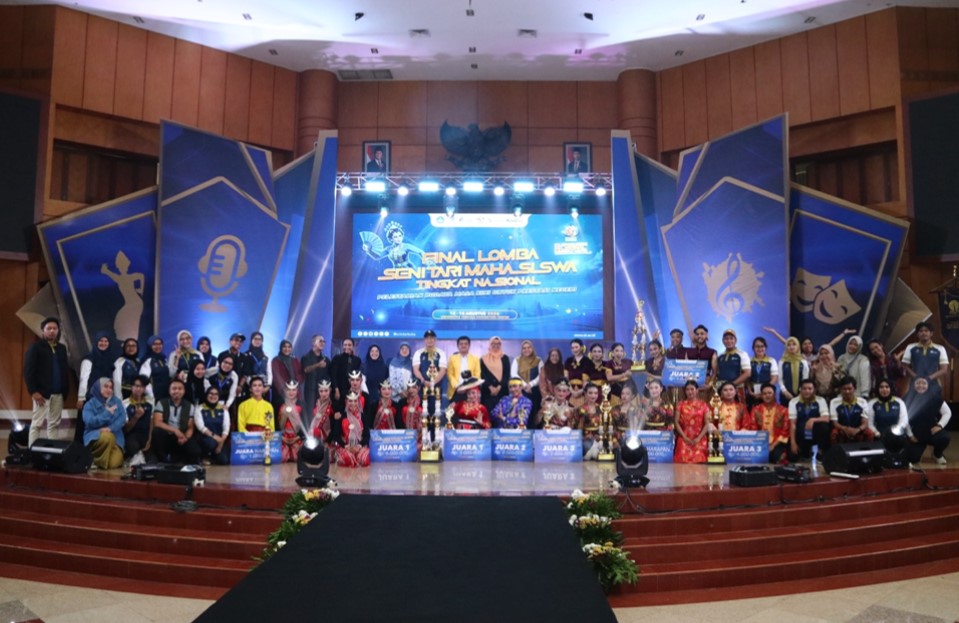
That spirit was evident in the final round of the Dance Arts Competition at the Festival Talenta Disporseni Nasional Universitas Terbuka 2026 at the Universitas Terbuka Convention Center (UTCC) in Tangerang Selatan on Friday (August 14, 2026). The competition served as a stage for student talents from various regions and produced eight award recipients in the Solo Dance and Group Dance categories.
In the Solo Dance category, UT Kendari took first place. UT Ternate secured second place, while UT Surabaya finished third. Meanwhile, UT Pontianak received the Honorable Mention award.
The competition was equally exciting in the Group Dance category. UT Kupang claimed first place, followed by UT Majene in second place and UT Pangkalpinang in third place. UT Surakarta received the Honorable Mention award.
Interestingly, the works presented in the final were not simply repeated performances of existing dances. Chairman of the Disporseni Nasional UT 2026 Dance Arts Competition, Gunawan Wiradharma, M.Si., M.Hum., said that all the works reaching the final were newly created through collaborations between choreographers and UT students.
“UT students have tremendous potential to preserve the cultural heritage of the archipelago from various regions. This is demonstrated by the fact that all participants who successfully advanced to and competed in the final were UT students,” Gunawan said.
The event was part of the Disporseni Nasional UT 2026 series, which carries the theme “Sportsmanship and Creativity for the Nation’s Achievements.” Participants came from diverse backgrounds, including students from 39 UT Regional Offices and UT Overseas Services, students from public and private universities, as well as high school/vocational high school/equivalent students.
UT Vice Rector for Academic and Student Affairs, Prof. Rahmat Budiman, S.S., M.Hum., Ph.D., said that opportunities to engage in the arts play an important role in shaping the character of the younger generation.
“Today, we are gathering not only to open an arts competition. We are opening a stage for courage, creativity, and the preservation of our national culture,” Prof. Rahmat stressed.
According to him, artistic experiences are part of the educational process because they can foster discipline, teamwork, self-confidence, and an attitude of appreciating other people’s work.
A similar view was expressed by the Dean of FHISIP UT through Anto Hidayat, S.IP., M.Si., Vice Dean for Student Affairs, Learning Services, and Cooperation at FHISIP UT. He said that the participation of contestants from various institutions and regions was a strategic value of the event.
“With broad participation, this activity is expected to foster a love of culture, serve as an opportunity to strengthen relationships, provide a place to channel creativity, and achieve accomplishments,” he said.
From Kendari to Surakarta, the list of winners demonstrates one thing: Indonesia’s cultural diversity can find its stage through the creativity of the younger generation. This spirit is in line with SDG 4 on Quality Education and SDG 11 on Sustainable Cities and Communities, particularly in strengthening education while preserving cultural heritage.
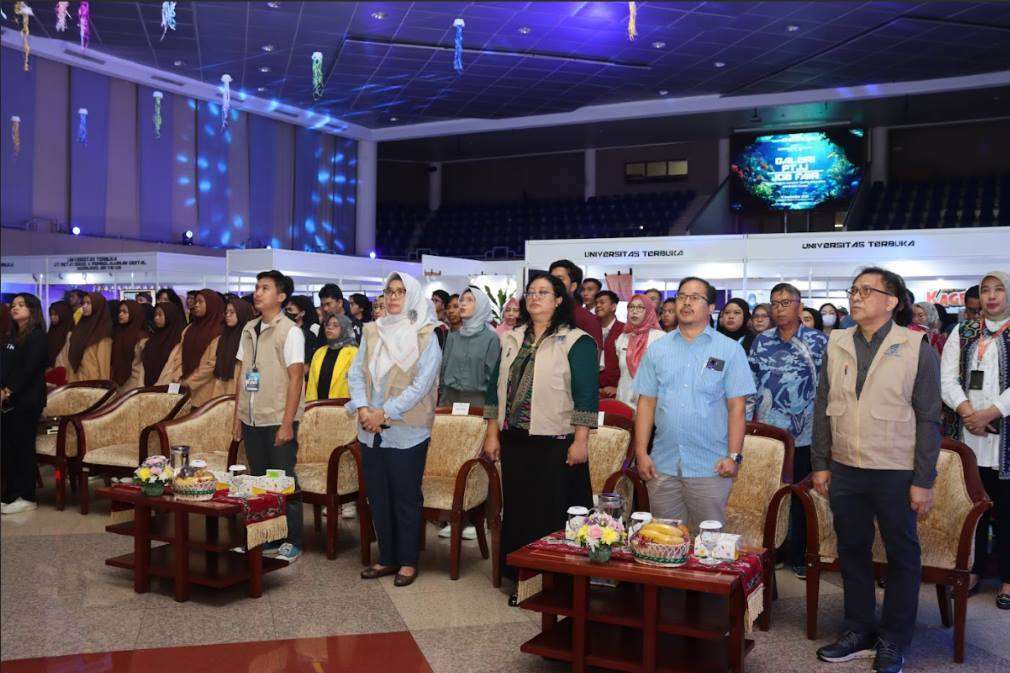
The Festival Talenta Disporseni Nasional UT 2026 itself continued through August 20, 2026. Following the Dance Arts final on August 14, the competition series continued with the Modern Dance Final on August 15, Monologue on August 16–17, Stand-Up Comedy on August 18, and Student Vocal Arts (UT Idol) and the Employee Friendship Singing Competition on August 19–20.
Ultimately, the victories of UT Kendari and UT Kupang were about more than trophies. On that stage, the students demonstrated that culture can continue to grow when it is given space, nurtured through creativity, and passed down through artistic works. From a single dance movement comes a message that Indonesia’s diversity is not merely something to remember, but something to continue celebrating.