
BATAM — Studying from a distance offers flexibility, but flexibility does not always mean things are easy. For some students, the higher education journey still requires a place to turn when they encounter difficulties with registration, need information about academic services, or face issues that need to be resolved promptly. For this reason, Universitas Terbuka (UT) Batam is strengthening the role of Sentra Layanan Universitas Terbuka (SALUT) so that students not only have easier access to higher education, but also receive support throughout their journey until graduation.
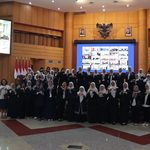
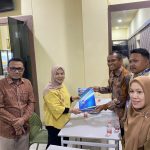
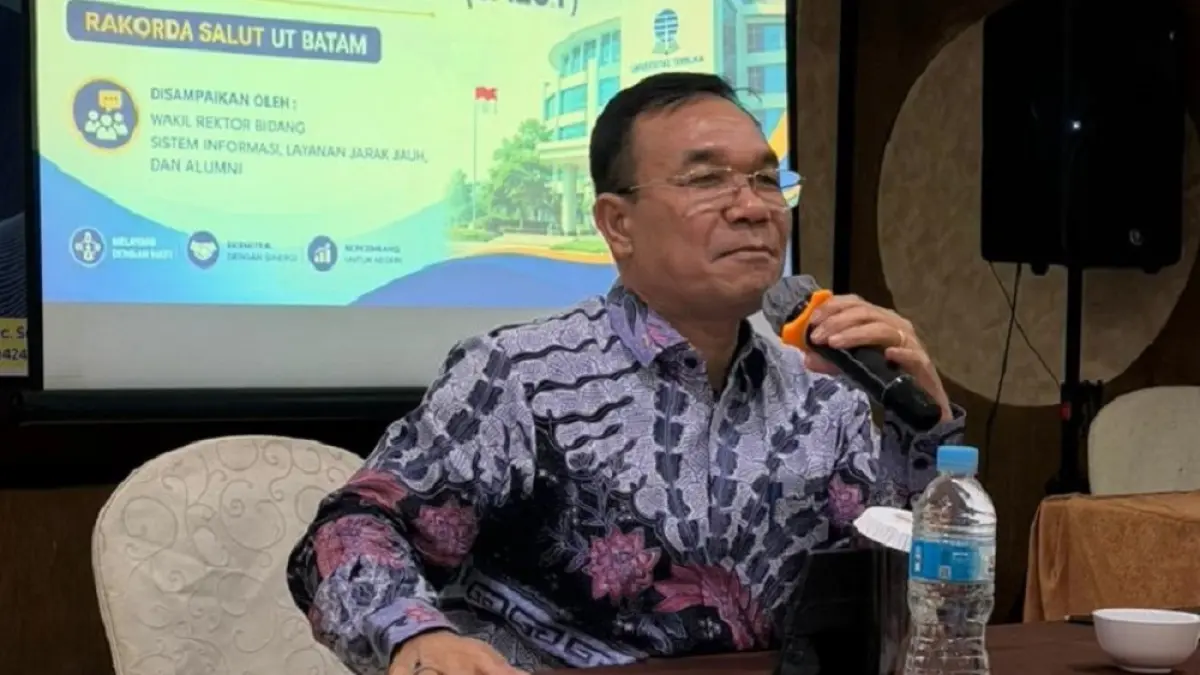
The strengthening of SALUT was one of the focuses of the SALUT Coordination Meeting held by UT Batam at the Pacific Palace Hotel Batam on Friday (Aug. 28). The forum did not merely discuss the presence of SALUT in various areas across the Riau Islands, but also encouraged a shift in perspective regarding the function of these services. SALUT is expected to go beyond introducing UT or assisting with registration and instead become a point of support for students throughout their academic journey.
Director of UT Batam Dr. Pismia Sylvi, S.Si., M.Si., said the presence of SALUT is part of UT’s service ecosystem for bringing higher education closer to the community. According to her, this proximity must be felt throughout the entire process students go through, not only when they first register. “SALUT is not only responsible for introducing UT to the community, but also for assisting prospective students from the registration process, through their time as active students, until they complete their studies,” she said.
This message is important because the open and distance education model presents challenges that differ from those of conventional university education. Within an open and distance education system, the presence of services located close to students serves as a link between them and the institution. Service quality, responsiveness to students’ needs, and the ability to provide assistance ultimately contribute to students’ experiences throughout their education.
UT Vice Rector for Information Systems, Distance Services, and Alumni Prof. Dr. Paken Pandiangan, S.Si., M.Si., explained that SALUT has three main functions: as a facilitator, a support provider, and a liaison between students and UT. These roles position SALUT not merely as an extension of campus information services, but as part of a system that ensures educational services remain accessible and close to students. “SALUT ensures that every service is provided according to UT standards and supports the objectives of open and distance higher education,” he said.
Therefore, quality cannot stop at smooth service delivery, but must also include transparency and accountability. Paken urged SALUT managers and UT to uphold all three aspects to ensure the sustainability of their partnership while supporting student success. He also expressed his appreciation to SALUT administrators for their contribution to providing higher education services to communities in various regions.
As community needs continue to change and technology develops at an increasingly rapid pace, distance education services are also expected to keep moving forward. For UT, expanding access to higher education is not only about opening opportunities for as many people as possible to attend university, but also about ensuring that they have adequate support throughout the learning process.
The SALUT coordination meeting subsequently became a forum for aligning perspectives while gathering input from service managers within UT Batam’s working area. The input will become part of efforts to formulate service policies that are more adaptive to students’ needs. Ultimately, the success of distance education is not only about how broadly access can be opened, but also about how closely students can feel the support throughout their academic journey.