
TANGERANG SELATAN — A large institution does not grow solely through what is visible on the surface. Behind services that continue to operate, there are systems at work, people ensuring that needs are met, and partners helping to keep every process running as it should. For Universitas Terbuka (UT), these partners are part of its ongoing journey to expand access to higher education across Indonesia.
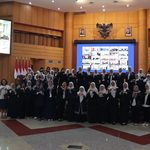
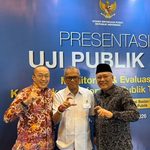
This commitment was highlighted at the UT Vendor Gathering 2026, held in collaboration with PT Bank Tabungan Negara (Persero) Tbk (BTN) on Monday (September 28, 2026). Bringing together 115 UT partner vendors and five BTN subsidiaries, the event served as an opportunity to strengthen partnerships while building a shared understanding of professional, transparent, and value-oriented procurement of goods and services.
UT Rector Prof. Dr. Ali Muktiyanto, S.E., M.Si., emphasized that vendors should be positioned as part of the strength supporting UT’s growth. This is particularly relevant as UT is preparing to provide services to more than one million students.
“UT has grown this large not because we have struggled alone. We are building an ecosystem for collaboration and resource sharing, and this is an inseparable part of UT’s growth,” Ali said.
Therefore, Ali encouraged vendors not to view their relationship with UT merely as a procurement transaction. Goods and service providers are expected to develop into strategic partners who share a common vision in supporting the sustainability of UT’s educational services. For UT, this type of partnership is important because the sustainability of educational services depends not only on the institution’s internal capacity but also on the ability of various parties to share resources, expertise, and responsibilities in achieving common goals.
Strengthening these partnerships goes hand in hand with the transformation of UT’s procurement governance. UT continues to develop a system that emphasizes transparency, accountability, professionalism, independence, and value for money. These efforts are carried out through improvements in regulations and institutional structures, as well as the digitalization of procurement processes using ProMise V2 (Procurement Management Information System).
Vice Rector for Finance, Resources, and General Affairs Dr. Adrian Sutawijaya, S.E., M.Si., said the procurement transformation had become a best practice that was beginning to be adopted by several higher education institutions. Through the continuously developing system, UT seeks to ensure that procurement processes do not stop at meeting institutional needs but also generate added value for the organization while supporting educational services for students.
With more efficient and accountable governance, available resources can be directed toward maintaining the quality of services received by students. Thus, procurement does not stand alone as an administrative matter but is also connected to UT’s efforts to provide quality higher education that is accessible to the wider community.
Meanwhile, collaboration with BTN also creates opportunities to support the sustainability of vendors’ businesses. BTN Director of Corporate Banking Helmi Afrisal Nugroho said BTN was ready to support the financial needs of UT partners through various services, including working capital loans, investment loans, supply chain financing, and supplier financing.
The support is further strengthened through the e-Bank Garansi innovation, which is integrated with UT’s E-Promise system. The digitalization is designed to make the procurement guarantee process faster, easier, safer, more transparent, and better documented. The system also demonstrates how collaboration among institutions, the banking sector, and technology can create more effective business processes for all parties involved.
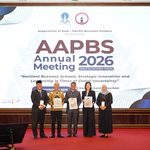
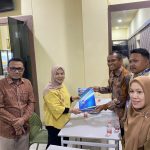
The performance of the partners was subsequently recognized through the UT Vendor Excellent Awards 2026. Awards were presented in five categories, with first place in each category going to CV Bintang Timur Gemilang for Facilities and Basic Needs, PT Asuransi Jiwa Inhealth Indonesia for Essential and Supporting Services, PT Gramedia for Communication and Printing, PT Pos Indonesia for Logistics, Accommodation and Promotion, and PT My Icon Technology for Digital and Physical Infrastructure. Among these categories, CV Bintang Timur Gemilang was named Overall Winner for the Small Qualification category, while PT Gramedia was named Overall Winner for the Large Qualification category.
More than simply an awards ceremony, the occasion provided an opportunity for UT and its partners to reflect that their relationship is not merely about meeting institutional needs but also about trust, professionalism, and the responsibility to deliver the best results. A healthy relationship between an institution and its partners ultimately creates room for mutual growth while strengthening the ecosystem that supports the sustainability of educational services.
This commitment is also directed toward broader social benefits. On the occasion, Ali invited vendors with sufficient resources from their business activities to support students with limited economic means through scholarship programs, including scholarships for Indigenous Papuan students.
Such support creates opportunities for economic limitations not to become barriers for students seeking to pursue higher education. In this way, the partnerships established by UT can benefit not only operational sustainability but also contribute to expanding opportunities to access quality education.
According to Ali, business growth and social contribution can go hand in hand when every party cares about the future of education. The more parties involved in creating such opportunities, the broader the benefits that can be experienced by students and society.
Ultimately, UT Vendor Gathering 2026 serves as a reminder that the journey to expand access to education is never undertaken by a single party. Institutions, business partners, banks, technology providers, and various other elements all strengthen one another within a shared ecosystem.
Through professional partnerships and increasingly transparent governance, UT seeks to build a strong foundation for responding to the continuously evolving needs of education. When various parties are not merely present as service providers but also grow as partners who share resources, opportunities, and responsibilities, such partnerships can create a broader impact, from increasingly quality educational services to expanded learning opportunities for more people.