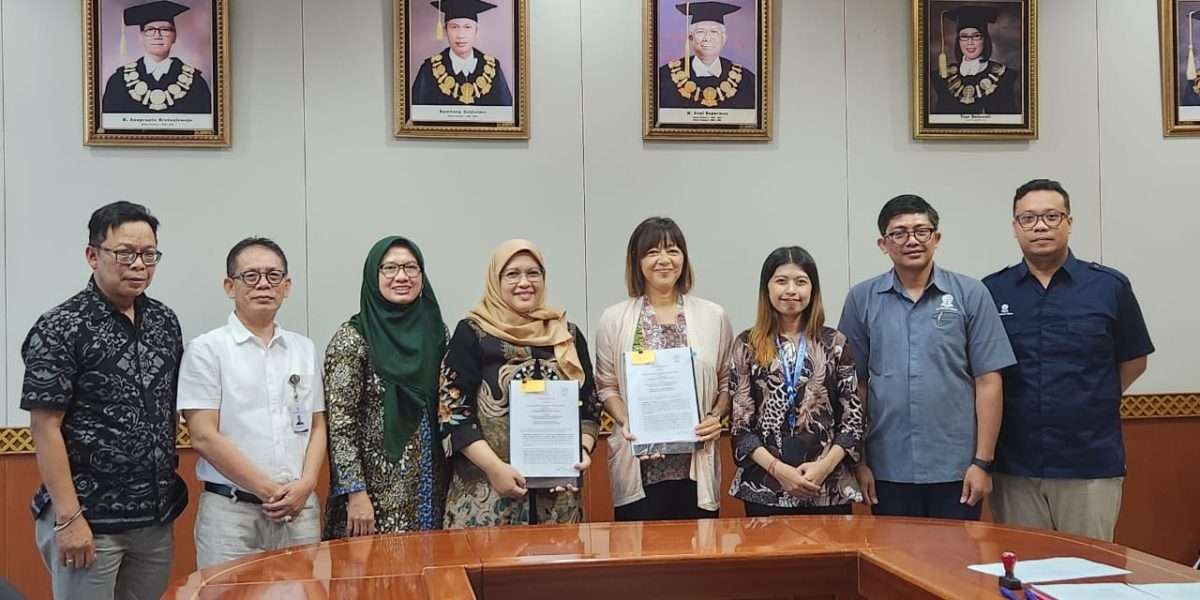

TANGERANG SELATAN— Positions may change, but the spirit of service must continue. For Universitas Terbuka (UT), leadership changes are not merely about changing names within the organizational structure. Behind every new responsibility lies the hope of strengthening the quality of education, accelerating digital transformation, and making UT increasingly competitive on the global stage.
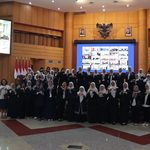
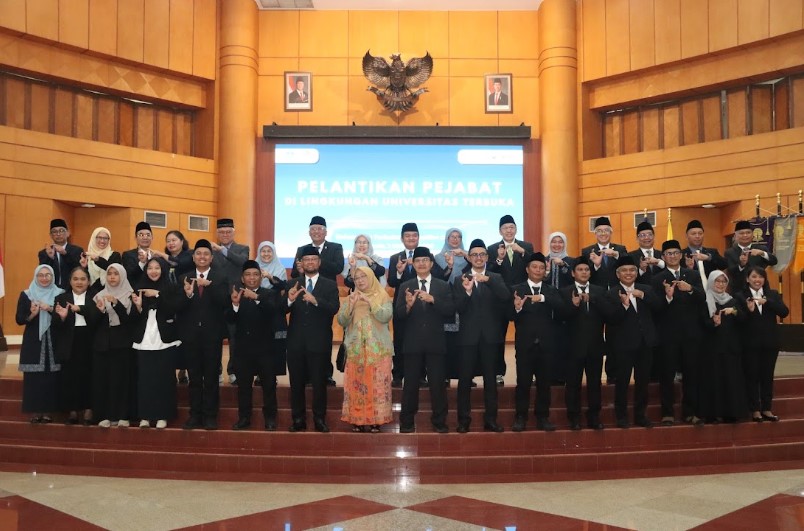
This spirit emerged during the Inauguration of Officials within Universitas Terbuka, led by UT Rector Prof. Dr. Ali Muktiyanto, S.E., M.Si., on Thursday (October 1, 2026). The inauguration was part of organizational restructuring aimed at introducing a more progressive, adaptive, and responsive approach to addressing the needs of higher education.
The inauguration was conducted based on the Decree of the Minister of Higher Education, Science, and Technology of Republic Indonesia Number 20098 and 20099/M/KPT.KP/2026 dated August 19, 2026, concerning the appointment of Supervisory APBN Financial Administration Functional Officials at UT.
In addition, the inauguration referred to Universitas Terbuka Rector’s Decree Number 2271 of 2026 dated September 30, 2026, concerning the honorable dismissal of several officials, as well as Universitas Terbuka Rector’s Decree Number 2271 of 2026 dated September 30, 2026, and Number 2280 of 2026 dated October 1, 2026, concerning additional assignments or positions within UT. The complete list of officials and their respective positions is included in the appendix.
In his remarks, the Rector expressed his appreciation to the officials who had completed their terms of service. According to him, organizational adjustments are necessary to introduce new environments and approaches capable of accelerating the achievement of the university’s aspirations.
One strategic focus is strengthening the Graduate School (SPs). The Rector targets SPs to develop into one of UT’s flagship institutions within the next one to two years, both nationally and internationally.
These efforts include developing leading study programs, strengthening accreditation, and enhancing academic reputation. Together with the Vocational School, SPs is expected to become an important force in expanding UT’s contribution to global higher education.
Alongside academic strengthening, digital transformation is also an agenda that continues to be accelerated. The development of the Lentera application, the Inovasi application, the Learning Management System (LMS), and the digitalization of examination services demonstrate the direction of renewal within UT’s learning ecosystem.
However, the Rector emphasized that technological sophistication must be balanced with the quality of learning content. Therefore, strengthening teaching materials, learning resources, and learning outcome evaluations is a priority so that students can receive an increasingly high-quality learning experience.
Improvements also target the strengthening of alumni services, the development of digital-based UT Jakarta 2, and data-driven approaches to outreach, marketing, and expanding reach. All of these efforts are aimed at preparing UT’s capacity to serve up to one million students.
Amid these various targets, the Rector reminded officials that organizational success is determined not only by systems and strategies but also by the integrity of every individual entrusted with responsibilities. For the Rector, integrity is not merely a value stated in an oath of office but must be reflected in the execution of daily duties.
In taking their oaths of office, the officials pledged to uphold professional ethics, perform their duties to the best of their abilities and with a full sense of responsibility, maintain integrity, and refrain from abusing their authority. These commitments serve as an important foundation for carrying out every responsibility entrusted to them.
“We work with all our integrity, ensuring that our words are consistent with our actions, and that our intentions are consistent with what we do,” the Rector said.
The message also serves as a reminder that integrity must be demonstrated through consistency between what is communicated and what is done. Leaders are also expected to resolve outstanding matters, build internal communication, and address challenges together so that organizational harmony can be maintained.
“We are one body, one organization striving together, with a clear direction and purpose,” he said.
The message further emphasizes that every change must ultimately serve the common interest. Integrity, collaboration, responsibility, and continuity of service are the foundations for delivering higher education services that are increasingly inclusive and of high quality.
This spirit is in line with the Sustainable Development Goals (SDGs), particularly SDG 4 on Quality Education, SDG 9 on Industry, Innovation and Infrastructure, and SDG 16 on Peace, Justice and Strong Institutions.
Ultimately, an inauguration is not merely about who receives a position but about how trust is transformed into meaningful work. UT’s future is not built by one person or a single generation of leaders but by those who continue to move forward together, uphold their responsibilities, align their words with their actions, and ensure that quality education can reach more people.