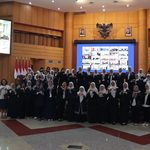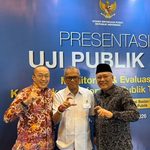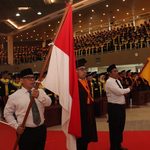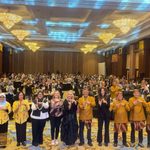


TANGERANG SELATAN – Completing higher education is not merely about earning a degree, but also about how knowledge and character are applied to face life’s challenges. This message took center stage at the Universitas Terbuka (UT) Graduation Seminar for the First Semester of the 2026/2027 Academic Year, Region 1, held at the Universitas Terbuka Convention Center (UTCC) in Pondok Cabe, Tangerang Selatan, on Monday (October 26, 2026).
Carrying the theme “An Intelligent, Principled Generation Ready for the Global Stage,” the event provided prospective graduates with an opportunity to prepare for the next stage of their lives after university. A total of 2,183 prospective graduates from 12 UT Regional Offices, including Banda Aceh, Medan, Batam, Padang, Pekanbaru, Jambi, Bengkulu, Jakarta, Surakarta, Malang, Majene, and Gorontalo, as well as UT Overseas Services, were scheduled to attend the graduation ceremony the following day. The preparation they need extends beyond academic knowledge to include character, adaptability, and a willingness to continue learning.
UT Vice Rector for Academic and Student Affairs, Prof. Rahmat Budiman, S.S., M.Hum., Ph.D., who opened the seminar, emphasized that success requires struggle, sacrifice, discipline, and perseverance. He encouraged prospective graduates to continue developing their critical thinking, problem-solving, and decision-making skills, as well as their ability to adapt to change amid technological developments and global competition.
“Technological developments and global competition require university graduates to continue developing their abilities and adapting to change,” he said.
In addition to these skills, he emphasized the importance of integrity in building trust. Graduates must uphold honesty, responsibility, discipline, and consistency in every step they take. Meanwhile, being prepared to compete globally does not mean abandoning national identity, but rather representing Indonesian values through their work and contributions in diverse environments.
This message was further explored by the keynote speaker, Dr. M. Samsuri, S.Pd., M.T., IPU., Secretary of the Directorate General of Science and Technology at the Republic of Indonesia’s Ministry of Higher Education, Science, and Technology (Kemdiktisaintek). He emphasized that a university’s success is also reflected in the contributions its alumni make after completing their education. Knowledge and intelligence may earn admiration, but character is what builds trust.
Therefore, graduates are expected to apply their knowledge to address real-world problems, improve their competencies, and benefit society. Preparing for the workforce also requires a willingness to continuously develop skills, as the learning process does not automatically end when someone receives a diploma.
The meaning of lifelong learning was reflected in the story of Ika Mustikawati, aged 68, who pursued a master’s degree in Public Administration at UT Jakarta. Ika’s determination demonstrates that opportunities for personal development are not limited to a particular age. An education system that provides opportunities for people from diverse backgrounds is an important part of achieving SDG 4, which promotes quality education and lifelong learning opportunities. At the same time, improving competencies and adaptability also helps support decent work and economic growth, as reflected in SDG 8.
In addition to preparing prospective graduates, the seminar featured an alumni Tracer Study presentation by Teguh Muhammad Ilham, S.Kom., an introduction to the Universitas Terbuka Alumni Association (IKA UT) by Aye Ekaryati, S.Pd., and a motivational session by Prof. Dr. Maximus Gorky Sembiring, M.Sc. These sessions reinforced the message that graduation marks the beginning of a new journey to develop careers, expand professional networks, and contribute to society.
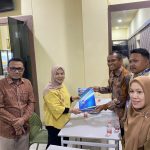
On the same occasion, UT strengthened institutional cooperation with Universitas La Tansa Mashiro (UNILAM) in Rangkasbitung, Banten. The two universities signed a Memorandum of Understanding (MoU) to improve the quality of the implementation of the Three Pillars of Higher Education (Tridharma Perguruan Tinggi). This was followed by the signing of a Cooperation Agreement (Perjanjian Kerja Sama – PKS) between UT’s Faculty of Economics and Business (FEB) and UNILAM’s FEB, conducted through a desk-to-desk process. The cooperation covers education, research, community service, and resource development. This collaboration is expected to broaden knowledge exchange and strengthen the implementation of the Three Pillars of Higher Education at both institutions.
Through the seminar and strengthened collaboration, UT reaffirmed that higher education is not solely focused on graduation, but also on developing knowledgeable, principled individuals capable of making a meaningful impact. Ultimately, the success of education is measured not only by the degrees earned, but also by the values and contributions graduates bring to society.