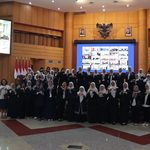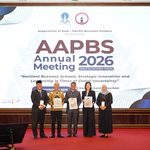

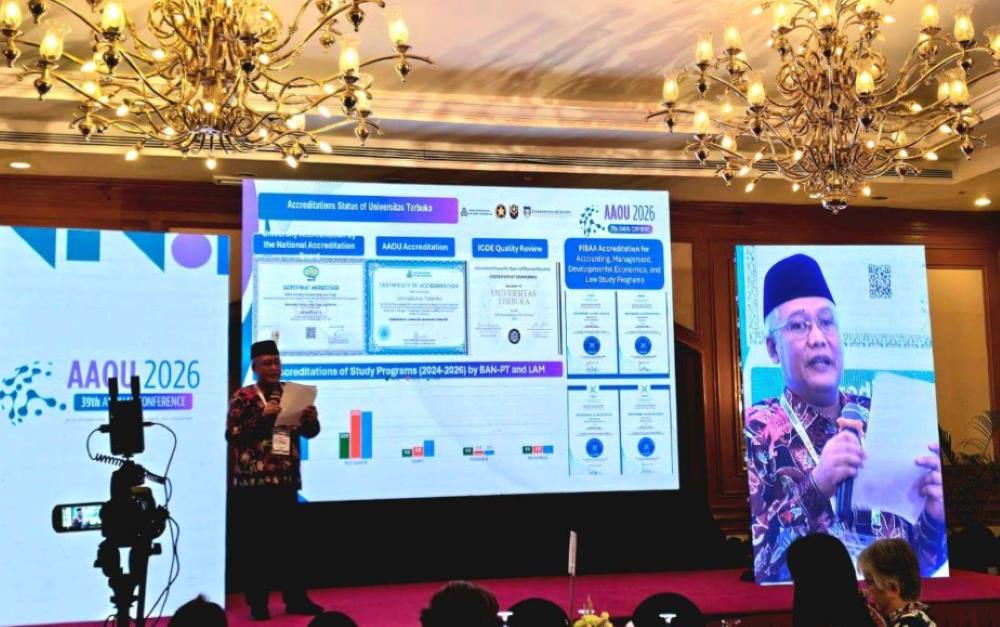
PASAY CITY, PHILIPPINES – Have you ever wanted to pursue higher education but found yourself held back by distance, work commitments, or a schedule that never seems to ease up? In Pasay City, Philippines, there is a story of a university designed from the outset to address these challenges. Universitas Terbuka (UT) demonstrated this commitment at the 39th Asian Association of Open Universities (AAOU) Annual Conference, held on October 22–24, 2026, and returned home with two prestigious awards.
The conference, held at the Heritage Hotel, brought together higher education leaders, researchers, and distance education experts from across Asia. Its theme addressed an issue familiar to many people: “Responding to Global Challenges Towards a Resilient and Future-Ready Open Distance and e-Learning.” At its core, the discussion focused on how learning from anywhere can maintain high quality while remaining responsive to the changing times.
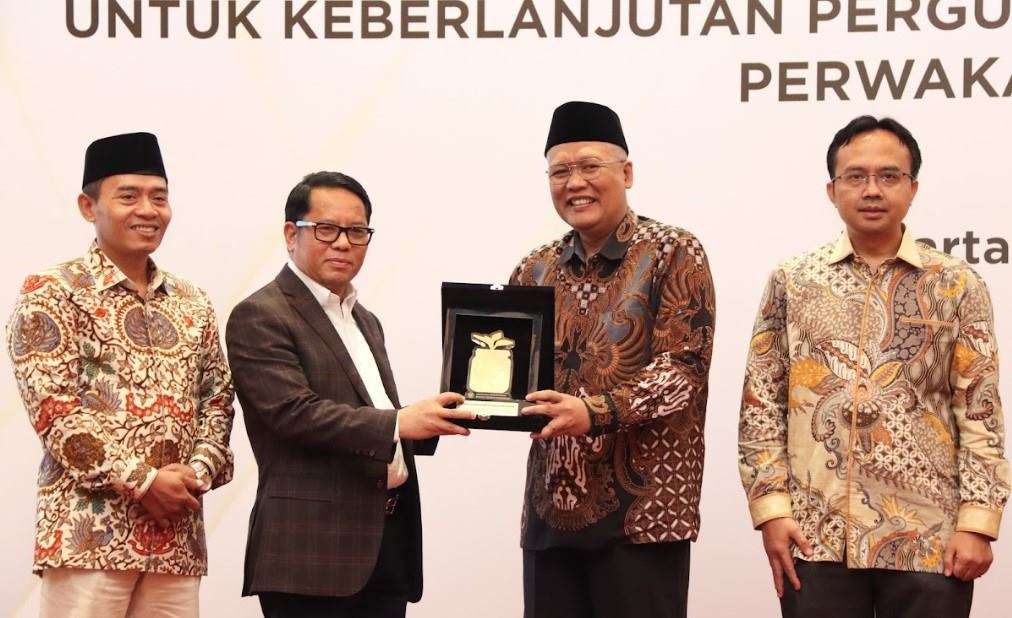
The first award, the Meritorious Service Award (MSA), was presented to Prof. Ojat Darojat, M.Bus., Ph.D. He was recognized for his longstanding dedication and contributions to expanding and improving the quality of open and distance education in Asia. Behind the award lies a long journey of work that has helped make flexible higher education increasingly trusted.
The second award, the Best Paper Award, was won by Bambang Hariyanto, Ali Muktiyanto, and Ira Geraldina from UT’s Faculty of Economics and Business. Their work was selected by the AAOU Jury following a rigorous evaluation for its originality, depth, and contribution to flexible learning environments. This achievement demonstrates that distance education is not merely about technology, but also about rigorous research.
UT’s story in the Philippines did not end with the awards. As a member of the AAOU Executive Committee, UT took part in formulating strategic policies and initiatives, which were subsequently brought to the AAOU General Body Meeting on October 23. At the meeting, UT contributed to regional decisions and inter-institutional collaboration. This spirit of partnership aligns with SDG 17, which promotes partnerships to achieve shared goals. Quality education, after all, grows through collaboration.
UT Rector Prof. Dr. Ali Muktiyanto, S.E., M.Si., also served as a keynote panelist in the discussion titled “Quality Assurance through Institutional Accreditation.” Together with leaders of open universities and accreditation experts, he discussed ways to maintain rigorous academic standards, strengthen institutional resilience, and continuously improve quality. For students, this is reassuring news, as flexible learning continues to operate under carefully maintained standards. This is a tangible manifestation of SDG 4: quality education for all.
Ultimately, this achievement serves as a reminder that pursuing higher education does not have to wait until life becomes less demanding. Through quality assurance and reputable research, UT continues to strive to provide inclusive, affordable, and resilient higher education for millions of learners. As access expands, educational disparities can gradually narrow, in line with SDG 10. For those still considering returning to education, this story from Pasay City may offer a reason to take that first step.