
PURBALINGGA — Natural, cultural, and culinary potential can serve as assets for a village to develop as a tourism destination. However, such potential requires a community with the skills to manage it. In Desa Onje, Kecamatan Mrebet, Kabupaten Purbalingga, Universitas Terbuka (UT) Purwokerto is seeking to strengthen this aspect by improving the competencies of tourism-related human resources.
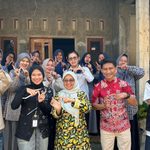
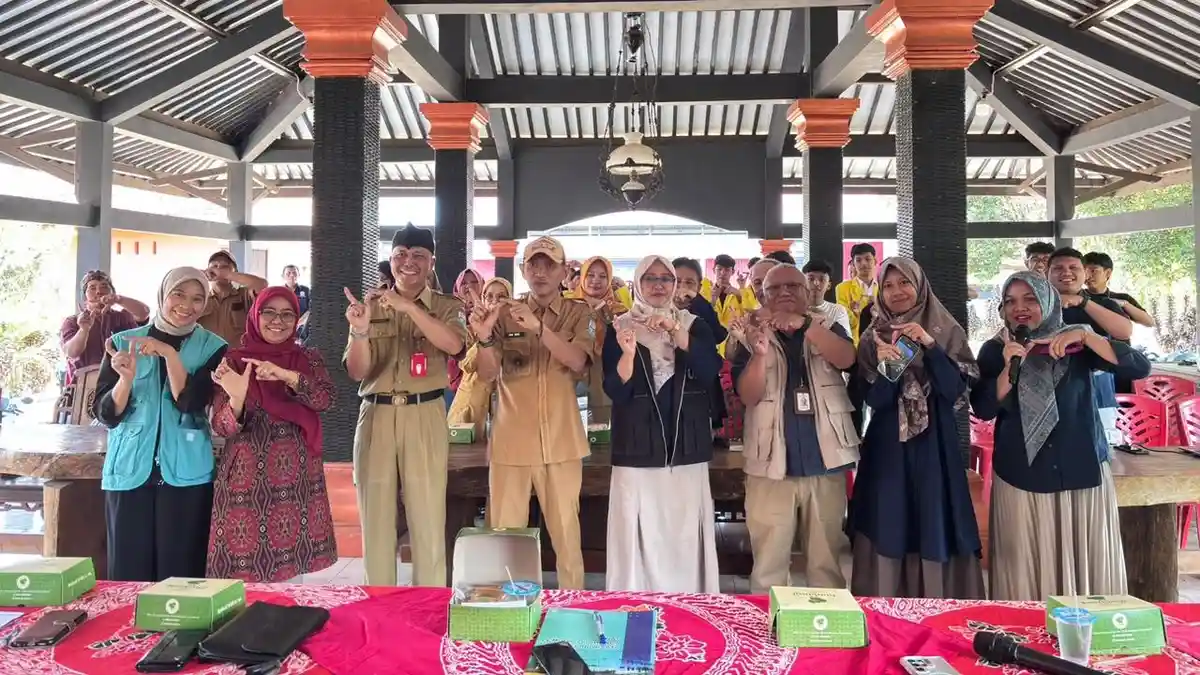
The effort was carried out through the second stage of the National Community Service (PkM) program held at the Desa Onje Hall on Tuesday, September 15, 2026. Rather than simply providing training, the activity was designed to help residents improve their ability to manage tourism potential and provide better services to tourists.
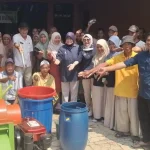
This focus continued the previous PkM stage. While the first stage provided residents with training in food processing based on local commodities, particularly cassava and corn, the second stage of UT Purwokerto’s program focused on strengthening tourism-related human resources.
The two stages were designed so that the development of local products could progress alongside the strengthening of the tourism sector. Products derived from village resources can develop together with the tourism sector when residents have the ability to manage them. In this way, the PkM activities are expected not to stop at increasing knowledge, but also to support the establishment of a community-based economic ecosystem.
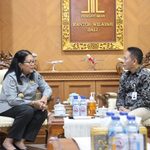
Head of the Kabupaten Purbalingga Tourism Office Sudono, S.Sos., M.Si., who served as a speaker in the second-stage training, delivered material on tourism human resource development. Strengthening community capabilities is considered important because the development of a tourism village depends not only on natural and cultural attractions, but also on residents’ ability to manage destinations and serve tourists.
For Desa Onje, the training is expected to help residents identify and develop tourism opportunities in their area. The ability to manage potential, provide services, and create quality tourism experiences is part of the effort to develop a more competitive tourism village.
Head of Desa Onje Mugi Ari Purwono, S.Pd., expressed his appreciation for UT Purwokerto’s involvement in improving community capacity. He hoped residents would make use of the opportunity to develop their competencies while encouraging the advancement of tourism in the village.
“Hopefully, the community can make the most of this activity to improve their competencies, become motivated, and hopefully tourism in Desa Onje will continue to develop,” Mugi said.
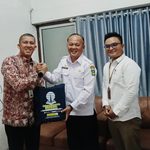
Director of UT Purwokerto Dr. Prasetyarti Utami, S.Si., M.Si., said that PkM is one form of UT’s contribution to providing direct benefits to the community. According to her, the program in Desa Onje is aimed at supporting the development of local potential through increased community capacity.
“We hope that these two National PkM programs can ultimately contribute to improving human resources, strengthening the economy, and developing community MSMEs,” Dr. Prasetyarti said.
She explained that the direction of the activities is in line with efforts to establish a tourism village capable of providing optimal services, improving community welfare, and becoming competitive. Therefore, the success of the program is measured not only by whether the training is conducted, but also by the community’s ability to utilize the knowledge gained to develop the potential of their village.
Kabupaten Purbalingga has a plan to develop around 30 tourism villages. This condition also demonstrates the importance of improving human resource quality so that tourism potential at the village level can be managed more optimally and sustainably.
UT Purwokerto also views sustainability as an important part of the program. The Director of UT Purwokerto hopes that synergy among higher education institutions, regional governments, village governments, and communities can continue so that the benefits of PkM can reach residents more broadly.
“We hope that the synergy between UT and the regional government can continue sustainably so that the benefits of this activity can truly be felt by the community,” she said.
Head of the UT Purwokerto National PkM Team Indah Setia Utami, S.E., M.Si., said the series of activities was designed to optimize the local potential of Desa Onje through a sustainable approach.
The food-processing training in the first stage and the strengthening of tourism human resources in the second stage are expected to support each other. Developing community skills can create opportunities for utilizing local commodities, developing MSMEs, and strengthening the tourism sector as part of the village’s economic activities.
Through this approach, UT Purwokerto’s presence in Desa Onje is not directed solely toward transferring knowledge through training. The PkM program is expected to become part of a community empowerment process by bringing together higher education capacity, local potential, and village development needs.
Through the series of PkM activities, UT Purwokerto seeks to connect local product development with capacity building for the community in the tourism sector. The food-processing training in the first stage and the strengthening of tourism human resources in the second stage are expected to create opportunities for MSME development while strengthening the tourism potential of Desa Onje.