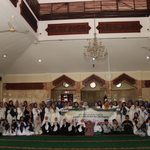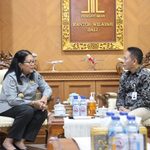

PURWOKERTO – Behind the process of international quality assessment, Universitas Terbuka (UT) Purwokerto chose to present more than statistics and documentation. Instead, the university showcased stories of student creativity, inclusivity, and the rich cultural heritage of Banyumas through a Student Work Exhibition, held as part of the International Council for Open and Distance Education (ICDE) review visit at the UT Purwokerto Regional Office on Thursday (July 9, 2026).
Through the exhibition, ICDE reviewer Dr. Sanjaya Mishra was able to witness firsthand how open and distance higher education extends beyond academic services by fostering an ecosystem that encourages students to create, innovate, and remain connected to their local culture.
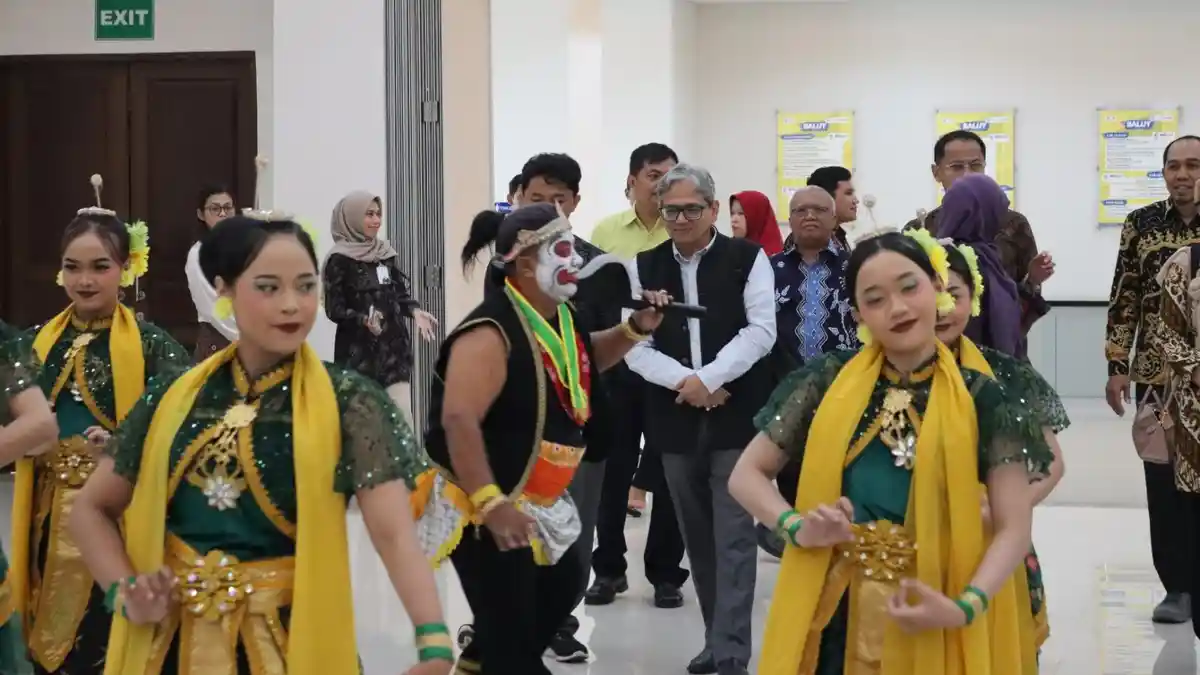
The welcoming ceremony began warmly from the moment Dr. Sanjaya entered the exhibition area. The traditional melodies of Gendhing Banyumasan accompanied a graceful yet energetic performance of Tari Sekar Gadung. Rooted in the Tradisi Lengger Banyumasan, the dance reflects the openness character of Banyumas community (cablaka), friendly, and deeply committed to the values of togetherness.
The atmosphere was further enriched by the appearance of Bawor, the iconic cultural figure of Banyumas, symbolizing simplicity, hospitality, and the local community’s identity. This cultural showcase served not merely as a ceremonial welcome but also as UT Purwokerto’s way of introducing local wisdom to its international guests.
“The inclusion of local cultural elements is part of UT Purwokerto’s effort to introduce Banyumas’ cultural values and local wisdom to the ICDE reviewer,” said Dr. Prasetyarti Utami, Director of UT Purwokerto.
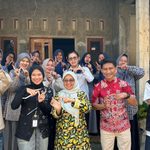
Following the welcoming ceremony, Dr. Sanjaya and the review team toured the Student Work Exhibition, which featured a wide variety of student creations, including paintings, products developed by student entrepreneurs and small businesses, handicrafts, and numerous innovative works.
The exhibition involved students from multiple university communities, including SALUT Jenderal Soedirman, SALUT Wijaya Kusuma, student organizations, and learners from various academic programs at UT Purwokerto. The collaboration reflected the spirit of partnership that plays a vital role in the university’s open and distance learning system.
Every exhibit demonstrated that UT students are not only actively engaged in their academic studies but are also capable of developing creativity, perseverance, and products with both economic and social value.
One of the exhibition’s highlights was a collection of handicrafts created by Dwi Retno Anggraeni, a student with a disability. Her creative products, including keychains, fruit-shaped educational toys, and various handcrafted items, illustrated that physical limitations do not prevent individuals from expressing their creativity and producing meaningful work.
Dwi’s participation served as a tangible example of UT Purwokerto’s commitment to providing an inclusive learning environment where every student, regardless of background or physical condition, has equal opportunities to grow and succeed. This commitment to equal access remains one of the defining strengths of the university’s open education model.
During his visit, Dr. Sanjaya expressed his appreciation for the wide range of student works on display. His recognition is expected to inspire students to continue strengthening their creativity, building self-confidence, and demonstrating that graduates of open and distance learning can produce high-quality work that benefits society.
Through the Student Work Exhibition, UT Purwokerto demonstrated that educational quality is measured not only by academic systems but also by its ability to cultivate creativity, preserve local cultural heritage, and provide inclusive learning opportunities for all students. This commitment supports the Sustainable Development Goals (SDGs), particularly SDG 4 (Quality Education), SDG 8 (Decent Work and Economic Growth) through student creativity and entrepreneurship, SDG 10 (Reduced Inequalities) through the empowerment of students with disabilities, and SDG 11 (Sustainable Cities and Communities) by preserving local culture as part of Indonesia’s national identity.