
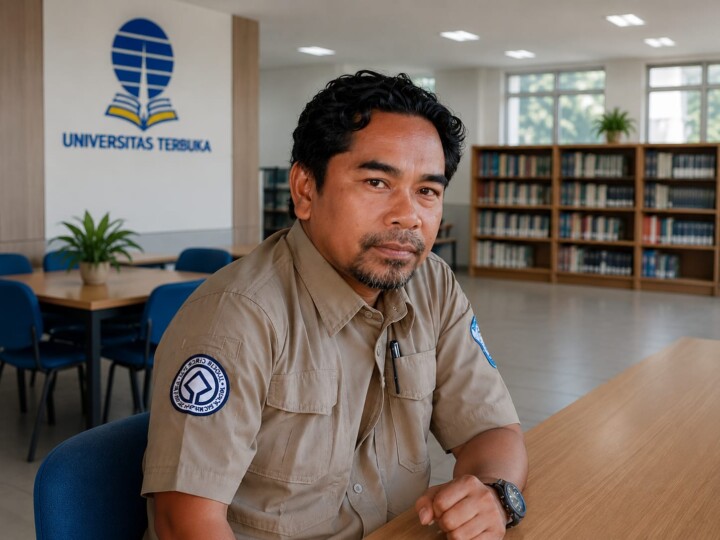
Tangerang Selatan, June 22, 2026 – How can a university conduct examinations simultaneously across Indonesia’s vast archipelago? The answer lies in the strength of its digital ecosystem and the extensive network of Universitas Terbuka Service Centers (SALUT), enabling Universitas Terbuka (UT) to overcome geographical barriers and provide quality higher education that is accessible to everyone.
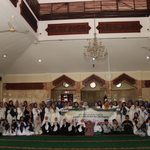
Through this adaptive system, SALUT Labuan Bajo successfully supported the implementation of both Face-to-Face Examinations (UTM) and Online Examinations for the 2026.1 registration period, organized by UT Kupang. The end-of-semester examinations were held over two days, from Saturday (June 20, 2026) to Sunday (June 21, 2026), at SMA Negeri 1 Labuan Bajo, Kabupaten Manggarai Barat, Nusa Tenggara Timur (NTT).
Approximately 396 students from various academic programs attended the examination sessions. Participants traveled from different areas across Kabupaten Manggarai Barat and neighboring regions to complete their examinations as part of the ongoing academic semester.
UT’s inclusive approach naturally aligns with the Sustainable Development Goals (SDGs) agenda, particularly SDG 4 (Quality Education), which promotes inclusive, equitable, and flexible learning opportunities for all, regardless of geographical or time constraints.
Suryadin, S.Sos., Head of SALUT Labuan Bajo, said the high number of participants demonstrates the growing interest among residents of Manggarai Barat in pursuing higher education throughout years. According to him, UT provides a pathway for individuals to advance their education without sacrificing their livelihoods.
“Universitas Terbuka offers a solution for people who want to pursue higher education while continuing to work. Many of our students are civil servants, village officials, teachers, private-sector employees, and entrepreneurs,” said Suryadin, who is also currently pursuing a Master’s degree in Public Administration.
To ensure both convenience and academic integrity, the examinations were strictly supervised by invigilators from SMA Negeri 1 Komodo and monitoring teams from UT Kupang. This layered supervision ensures that academic honesty is maintained while preserving the flexibility offered by the university’s learning system.
Students also expressed appreciation for the convenience of the examination system. Dinda Karlina, a student of Government Studies, said she was satisfied with the services provided by SALUT Labuan Bajo throughout her academic journey.
“The entire process is highly flexible, and the services provided by SALUT Labuan Bajo have been excellent. The examination environment was very conducive, allowing us to concentrate fully on completing the test,” Dinda expressed.
Sharing a similar perspective, senior UT student Feri Adu emphasized that UT has successfully challenged the long-standing perception that pursuing higher education requires moving to major cities at significant expense.
“Now, with Universitas Terbuka and SALUT Labuan Bajo, people can pursue higher education while remaining in their own communities through a much more flexible system. Education is the best pathway to improving one’s quality of life,” Feri said.
Through the successful implementation of examinations at the western tip of Flores Island, UT once again reinforces its position as a pioneer in adaptive distance education. When quality higher education becomes accessible from anywhere, developing highly skilled human resources to support regional development is no longer merely an aspiration, it is a reality already taking shape.