
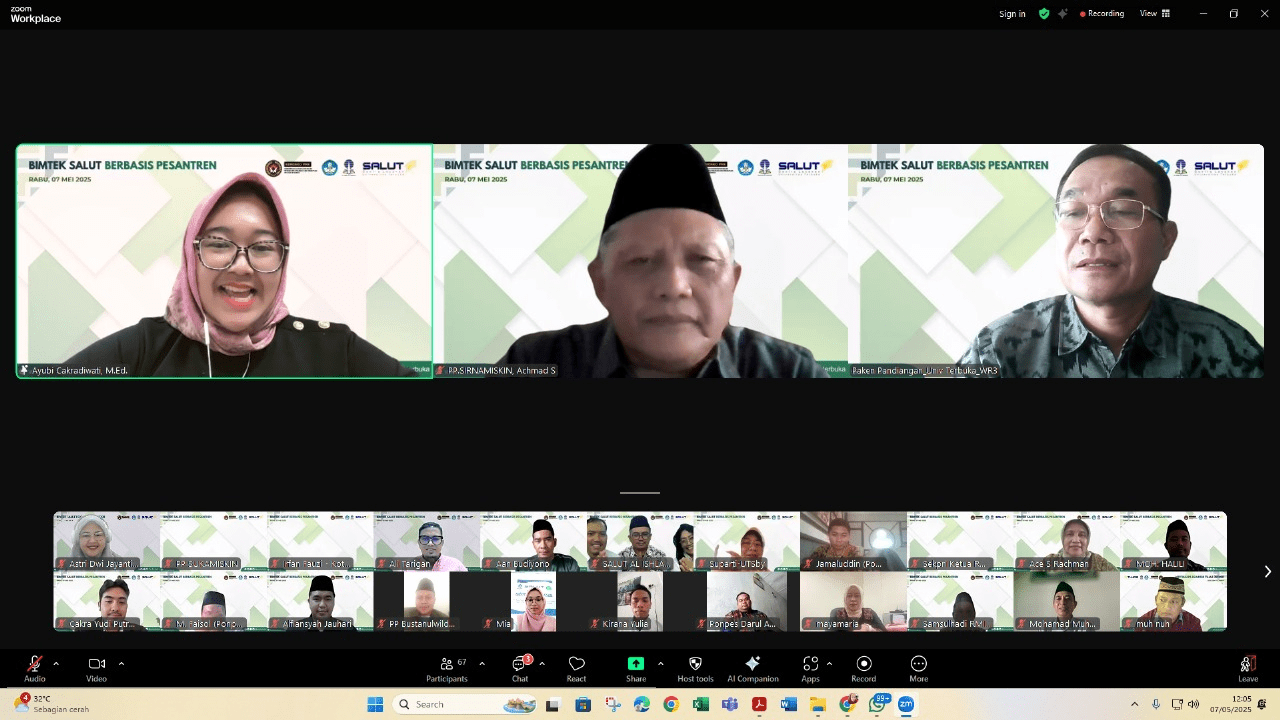
South Tangerang, May 7, 2025 — Universitas Terbuka (UT) once again demonstrated its commitment to expanding access to higher education to all corners of the country by holding a Technical Guidance and Socialization of Pondok Pesantren-Based SALUT online. This activity is part of UT’s strategic efforts to accelerate the establishment of inclusive Universitas Terbuka Service Centers (SALUT) that reach pondok pesantren-based communities in various regions.
SALUT is UT’s partner in the regions, not only acting as an information and administrative service center but also as an educational hub that brings the learning process closer to the community. The presence of SALUT is expected to increase student retention and study success at UT, as well as become a model of collaborative and participatory community-based services.
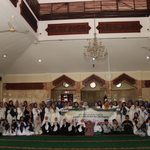
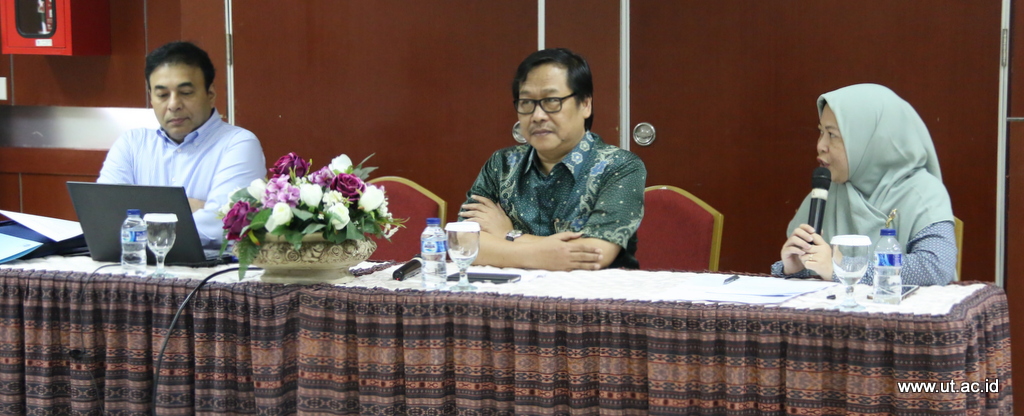
The event, held on Wednesday, May 7, 2025, was attended by prospective SALUT partners from various regions and pondok pesantren communities. The activity opened with remarks from the Vice-Rector for Information Systems and Student Affairs, Prof. Paken Pandiangan, S.Si., M.Si., and representatives from RMI PBNU KH. Khodri Ariev, as well as the Special Staff of the Coordinating Ministry for Human Development and Culture Affairs, Ulun Nuha (Gus Ulun).
In-depth Discussion of SALUT Procedures & Best Practices
During the presentation session, the Expert Staff for UT Regional Services, Astri Dwi Jayanti S., M.Ed., Ph.D., explained the steps for establishing and managing SALUT in accordance with Universitas Terbuka policies. “SALUT is an independent unit formed by the community to bridge access to UT services, introduce UT to the public, support learning success, improve ICT-based readiness, and expand partnerships—all managed professionally through collaboration with individuals, groups, or foundations,” she explained.
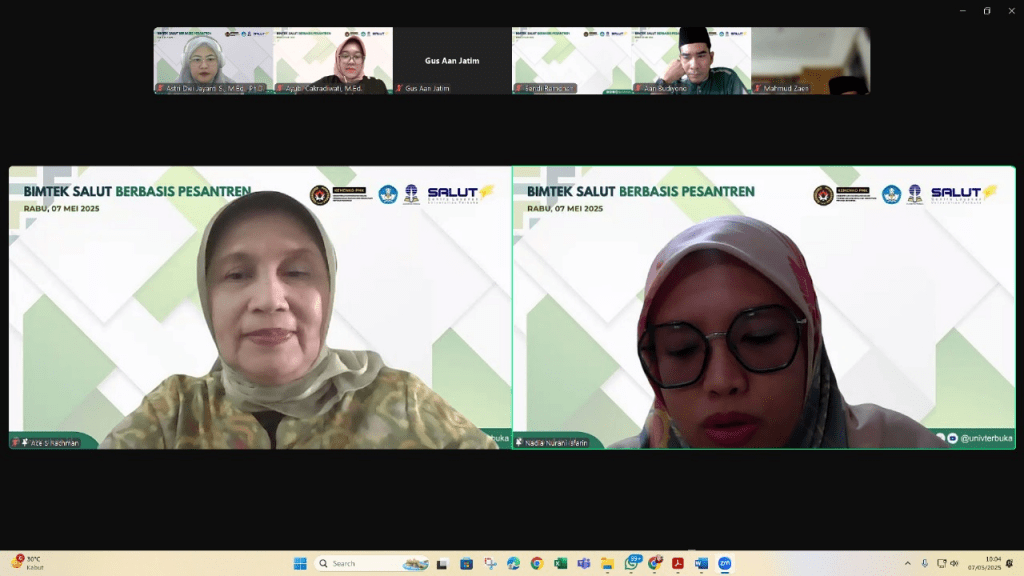
The material was then continued by Dra. Ace Sriati Rachman, M.Si. (Expert Staff for Marketing, Partnership, and Public Relations) together with Nadia Nurani Isfarin, LL.M. (Manager of Contract and Advocacy Affairs), who discussed in detail the preparation of cooperation agreements between UT Regional Offices and SALUT. Both outlined the rights and obligations of SALUT as UT’s official partners, including legal aspects and service commitments. “The cooperation agreement is an important basis for ensuring that the responsibilities of both parties run harmoniously and professionally,” said Nadia.
The next session was delivered by the Director of UT Surabaya, Dr. Suparti, M.Pd., who presented material on SALUT Surveys and Verification by UT Regional Offices. In her presentation, she emphasized the importance of the field survey process as a crucial step before cooperation is established. “Surveys are mandatory to align the content of the proposal with the real conditions in the field, so that UT can ensure that partners are truly ready to provide services according to standards,” she stressed.
In addition to technical aspects, marketing support and strengthening cooperation were also important topics presented by the Director of Marketing and Cooperation, Ali Tarigan, S.E. In the session, he affirmed that the success of SALUT is not only determined by the completeness of facilities but also by the strength of promotion and service commitment. “The success of SALUT depends on the synergy between institutions, targeted promotional strategies, and services that are truly oriented towards student satisfaction,” he said.
The activity also featured an inspiring session from well-established pondok pesantren-based SALUTs. Dr. Moh Anshori, M.Pd.I from SALUT ICT Tuban (UT Surabaya) and Ahsani Fathurrohman from SALUT Al-Ishlahiyah Singosari (UT Malang), shared best practices in managing SALUT within the pondok pesantren environment. Their success stories are proof that the collaboration between UT and pondok pesantren communities can strengthen an adaptive and innovative distance education ecosystem.
Concrete Steps to Realize Equitable Higher Education
This technical guidance is an important foundation for building a deep understanding of the procedures, roles, and support accessible to SALUT partners. UT hopes that this activity can encourage the emergence of new SALUTs in strategic areas, especially those that have so far been untouched by conventional higher education services.
“Pondok pesantren-based SALUTs are becoming a face of UT that is closer to the community. This is not just a service, but a joint movement to present higher education that is more equitable, inclusive, and just,” said one of the speakers.
Through this activity, UT is further strengthening its role as a pioneer of distance education that is responsive to the social, geographical, and cultural diversity of the Indonesian society.