
TANGERANG SELATAN, September 15, 2026 — Artificial intelligence (AI) is becoming increasingly integrated into everyday life. Amid the convenience offered by technology, one thing is becoming even more important: ensuring that people do not lose their ability to think critically.
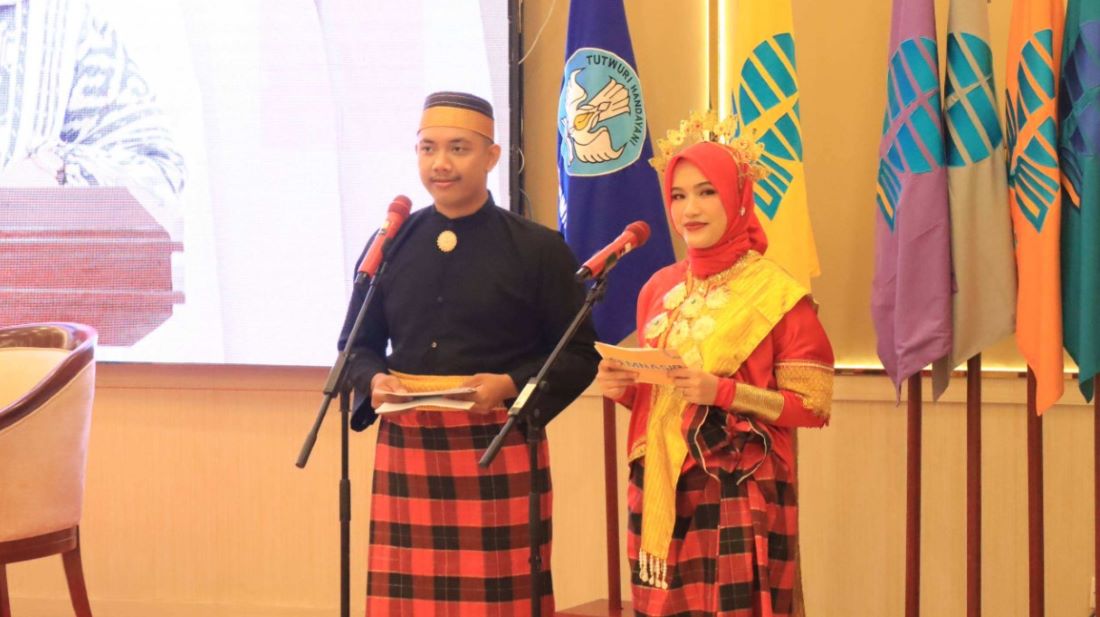
This issue was highlighted at the 2026 National Seminar on Law, Social Sciences, and Political Science (SEMNASIP), organized by the Faculty of Law, Social Sciences, and Political Science (FHISIP) of Universitas Terbuka (UT) on Tuesday (15/9/2026). Carrying the theme “Digital Society and Artificial Reason in the Study of Law, Social Sciences, Humanities, and Politics,” the seminar discussed the impact of AI development on social life, law, humanities, politics, and the information ecosystem.
The attention to AI-related issues was also reflected in the high level of participation in the forum. During the two-month submission period, 124 scientific papers were submitted by students, lecturers, practitioners, members of the public, as well as participants from various UT Regional Offices and other higher education institutions across Indonesia. Following a selection and assessment process, 81 papers were accepted.
Chair of the 2026 SEMNASIP Organizing Committee, Rosiana Nurwa Inda, SH, MA, said the seminar’s theme was closely related to the disruption caused by AI, which is fundamentally transforming social structures, law, and the information ecosystem. Therefore, technological development needs to be accompanied by people’s ability to understand and critically assess its impacts.
According to Rosiana, the forum was expected to make a tangible contribution to preparing an adaptive, critical, and integrity-driven intellectual generation to face challenges in the era of artificial intelligence. She also expressed her appreciation to UT leadership, the dean and leadership team of FHISIP, heads of study programs, directors of UT Regional Offices, partners, speakers, participants, and the entire committee that supported the organization of the seminar.
The message was in line with remarks by FHISIP UT Vice Dean for Academic Affairs, Dr. Irsanti Widuri Asih, S.Sos., M.Si., who represented the Dean of FHISIP UT. She said the national seminar had four main objectives: increasing knowledge of current issues, encouraging academic interaction, disseminating research findings, and building broader scientific collaboration networks.
Irsanti also expressed her appreciation to students who had prepared scientific articles under the guidance of lecturers. She encouraged participants to actively engage in discussions, raise critical questions, and develop ideas together so that the scientific forum would not stop at the delivery of material.
When opening the seminar, UT Vice Rector for Academic and Student Affairs, Prof. Rahmat Budiman, S.S., M.Hum., Ph.D., highlighted an important challenge in the use of AI. According to him, the technology needs to be used with sound justification and a deep understanding.
“Writers need to read more to avoid citation errors or invalid information,” Rahmat said.
He also emphasized the importance of digital literacy and social media literacy for the academic community amid the rapid pace of digital transformation. In line with this, UT completed a rector’s regulation in 2026 concerning the use of artificial intelligence by students and educational personnel to safeguard academic integrity.
From a utilization perspective, Dr. Abdurrahman Rahim Thaha, M.A.B., explained that AI can serve as a “digital mentor” to accelerate competency development, including by helping make scientific article writing more efficient. The technology can also be utilized by micro, small, and medium enterprises (MSMEs) to address resource limitations through the automation of administrative and marketing tasks.
However, this convenience still requires human control. “AI is not a replacement for humans, but rather an assistant that must be positioned wisely to improve efficiency without eliminating critical thinking,” Abdurrahman said.
Meanwhile, Louise Shania Sabela, S.H., invited participants to view AI from a social perspective. She discussed changes in social relations, access to information, and the distribution of power in digital society, while also criticizing technological solutionism, or the tendency to treat technology as an instant solution to complex social problems.
This is where SEMNASIP 2026 finds its relevance. As technology becomes increasingly capable of helping people complete various tasks, the ability to read, understand, question, and make decisions critically becomes increasingly valuable.
Through the forum, FHISIP UT not only opened a space to discuss the future of AI, but also invited participants to reflect on how technology should be used. This effort also strengthens the spirit of SDG 4 on Quality Education, particularly in developing adaptive learners who can face changing times without losing their critical thinking abilities.