
TANGERANG SELATAN — Entering the world of distance higher education requires mental readiness and a thorough understanding of an independent learning system. Providing students with a strong foundation is crucial to helping new students adapt and maintain academic integrity from the beginning of their studies. These values are instilled to ensure that every student is prepared to navigate academic challenges effectively.
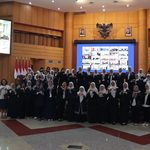
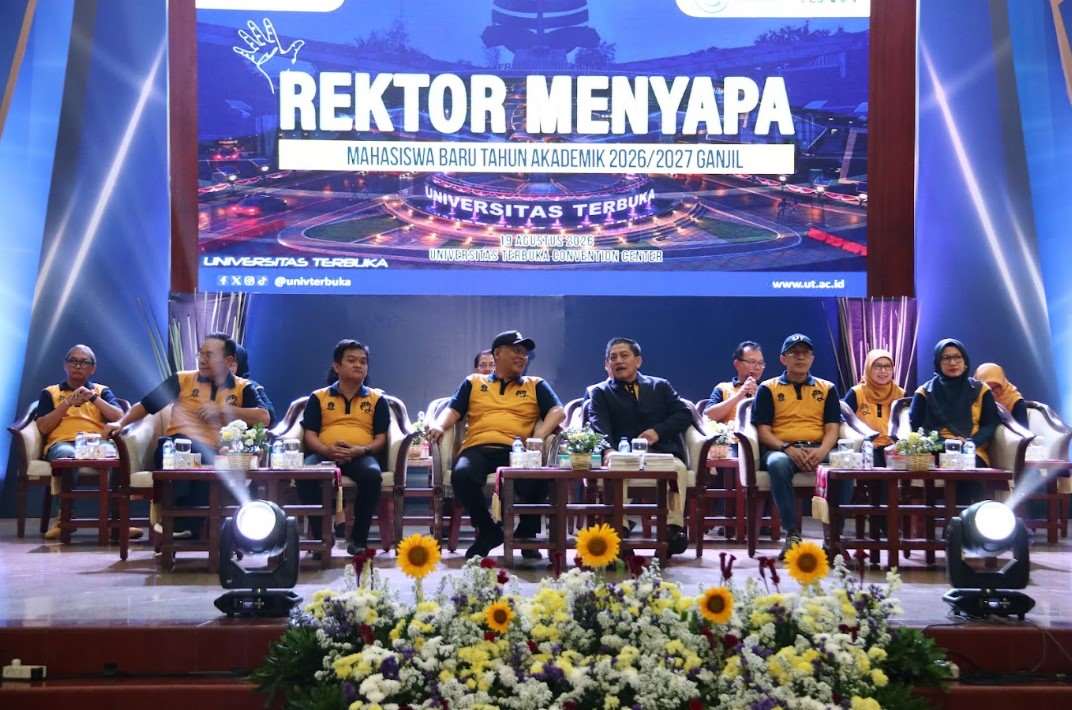
As a concrete effort to instill these values, Universitas Terbuka (UT) prepared its new students with a spirit of independent learning, academic integrity, and national insight through the Rector Meets New Students for the 2026/2027 Academic Year (Odd Semester) held on Wednesday (August 19, 2026). The event was attended by 2,500 students from UT Jakarta, Serang, and Bogor in person, while 37 other UT Regional Offices participated online. The event served as part of the orientation before students began their academic journey through UT’s Distance Education (PJJ) system.
UT Rector Prof. Dr. Ali Muktiyanto said that Rector Meets New Students reflects UT’s commitment to expanding access to quality higher education while encouraging students to become independent learners.
“Students are symbols of independence and an important part of the Distance Education (PJJ) ecosystem. UT is currently transforming from Open and Distance Learning (ODL) into Open, Flexible, Digital, Distance Learning,” said Prof. Ali.
According to Prof. Ali, the transformation is intended to address three major challenges facing higher education in Indonesia: accessibility, quality, and relevance. Therefore, students are required to manage their learning processes independently, including managing their time, developing discipline, and taking responsibility for their academic journey.
The message of independence was reinforced through the session “Tips for Studying at UT and the Philosophy of Independent Learning,” delivered by Dr. M. Jeffri Arlinandes Chandra, S.H., M.H., Head of the Master of Law Study Program at UT’s Graduate School. The session was an important part of preparing students to understand how to navigate the learning process within a distance education environment.
In addition to independence, academic integrity was also a key focus of the orientation. Prof. Ali said UT continues to develop information technology-based control and monitoring systems to prevent various forms of academic misconduct, particularly in learning activities and examinations.
Special Advisor to the Minister of Higher Education, Science, and Technology Prof. Dr. Marsetio considered the initiative important because many UT students have professional backgrounds. According to him, financial limitations should not prevent young people from pursuing higher education.
“Many young people, after graduating from high school, have limited financial resources but have a strong desire to study while working,” said Prof. Dr. Marsetio.
During the public lecture, Prof. Dr. Marsetio also encouraged new students to view education as part of preparing the younger generation for Golden Indonesia 2045. He emphasized the importance of leadership and an understanding of Indonesia’s position as a maritime nation, with advantages in geography, demography, and natural resources.
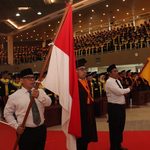
He also highlighted the importance of strengthening national insight and the values of Pancasila. According to Marsetio, these values should ideally be instilled from basic education, while at the higher education level, national insight can be strengthened through seminars, orientation programs, and activities such as the Reserve Component (Komcad), without adding an excessive burden to the curriculum.
Meanwhile, UT’s commitment to its students also extends to those facing emergency situations. Ali said UT is currently collecting data on students affected by disasters in the Maumere area and its surroundings. The assistance being prepared may include tuition fee exemptions, logistical support, and simplified examination arrangements.
Through a combination of independent learning strategies, strong integrity, and a solid sense of national identity, the orientation emphasized that Universitas Terbuka students are not only being prepared to pursue distance education but are also being prepared to become part of the nation’s development efforts. The flexibility of the PJJ system, balanced with personal discipline, demonstrates that geographical and financial limitations no longer have to be barriers to gaining knowledge and achieving excellence. Ultimately, every small step taken by independent learners today serves as a real foundation for developing excellent and character-driven human resources toward the realization of Indonesia Emas 2045.