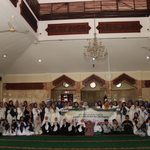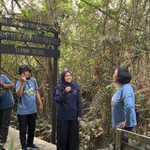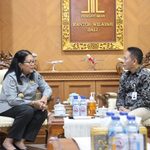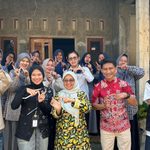

Sidoarjo, June 16, 2026 — In Desa Pagerngumbuk, Kecamatan Wonoayu, Kabupaten Sidoarjo, learning does not always begin with a blackboard, classroom desks, or textbooks. Sometimes, it starts in an open field, with the laughter of children running together, traditional games being played once again, and curiosity growing as children interact directly with nature.
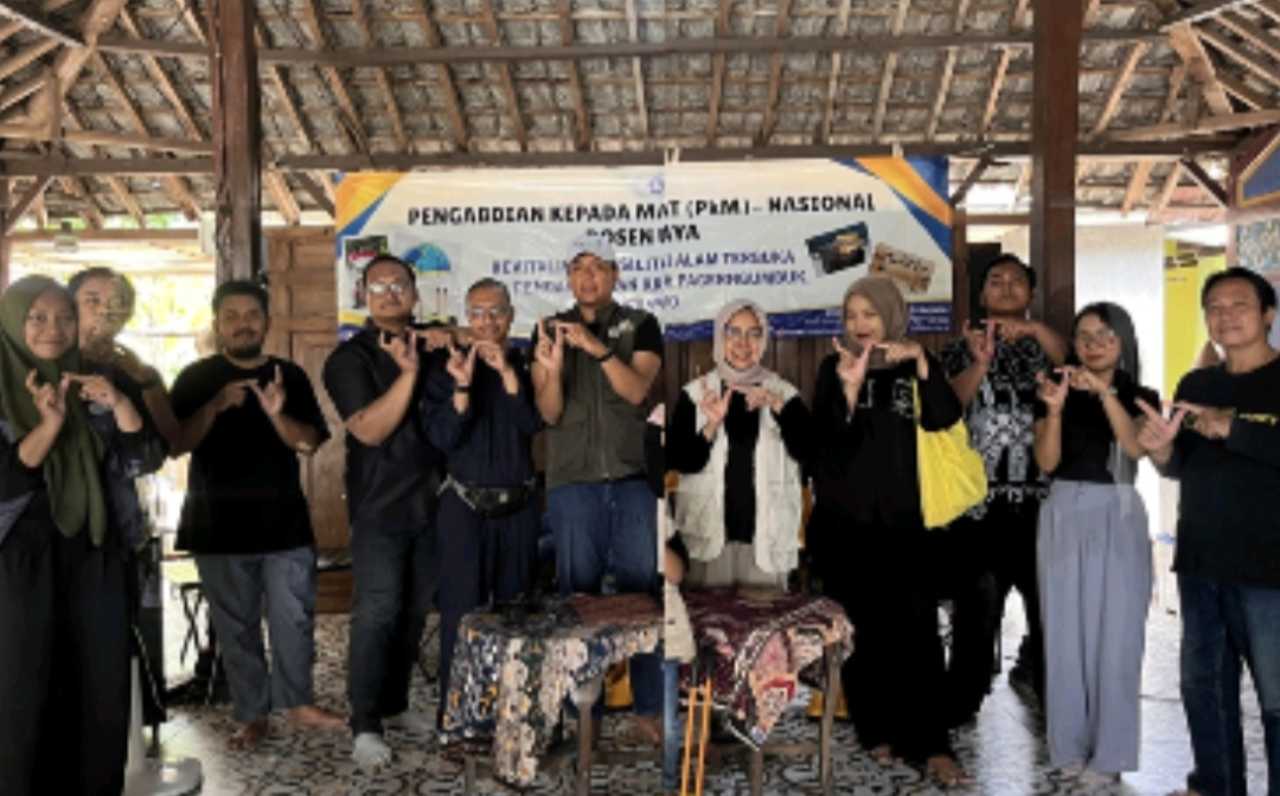
That spirit is being fostered by Universitas Terbuka (UT) Surabaya through its Community Service (Pengabdian kepada Masyarakat – PkM) program entitled “Revitalization of Outdoor Learning Facilities and Traditional Games: Educational Tourism and Creative Mentoring Program.” The initiative was implemented at the Kampung Lali Gadget (KLG) Educational Tourism Village in Desa Pagerngumbuk, in collaboration with the KLG Educational Tourism Foundation, the village government, community managers, youth organizations, community leaders, creative facilitators, and local residents.
At a time when children are becoming increasingly attached to digital devices, nature-based learning environments are more important than ever. The goal is not to reject technology, but to restore balance by providing children with opportunities to move freely, use their imagination, collaborate with others, explore their surroundings, and experience hands-on learning.
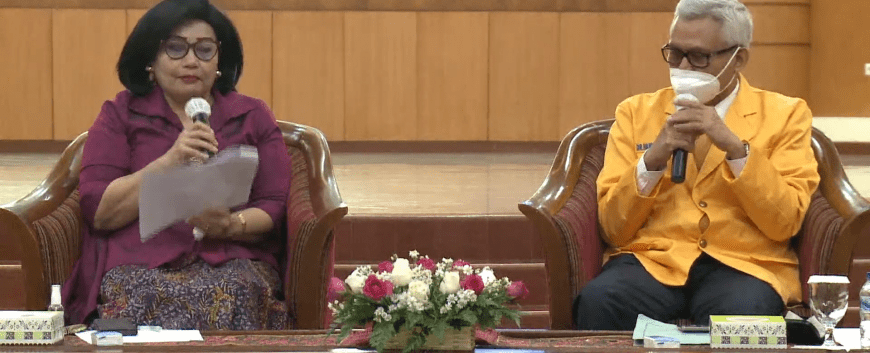
Head of the UT Surabaya Community Service Team, Prof. Dr. Tri Dyah Prastiti, M.Pd., emphasized that education should not be confined within classroom walls. Parks, village spaces, playgrounds, and other outdoor environments can serve as valuable learning resources that are closely connected to children’s everyday lives.
“We believe that education can flourish anywhere. Nature offers tremendous potential as a learning environment capable of providing meaningful real-life experiences for children,” she said during her remarks.
Through the program, UT Surabaya has gone beyond upgrading physical facilities. The revitalization initiative seeks to restore public spaces as child-friendly, educational, and sustainable learning environments. Areas that once served primarily as community gathering spaces have been redesigned to support literacy, numeracy, character education, creativity, and children’s social skills.
At Kampung Lali Gadget, children can learn in ways that closely reflect their own world. They explore nature, participate in traditional games, conduct simple science experiments, engage in arts activities, go camping, and take part in group activities that strengthen communication and teamwork.
Creative mentoring also plays a central role in the program. UT Surabaya provides capacity-building support to local managers, volunteers, and community members to ensure that children’s learning activities continue long after the facilities have been established. The learning spaces are expected to remain vibrant through regular, innovative programs that respond to the evolving needs of village children.
Prof. Tri Dyah noted that creativity does not necessarily emerge from expensive facilities. In many cases, creativity develops from the simple things surrounding children, provided they are given opportunities to ask questions, experiment, imagine, and discover new experiences.
This approach complements the identity of Kampung Lali Gadget, which has become widely recognized as an educational tourism destination centered on traditional games and outdoor activities. UT Surabaya’s involvement further strengthens the village as an alternative learning environment for children amid the rapid expansion of the digital age.
The initiative also demonstrates that the university’s commitment to the Tri Dharma of Higher Education extends beyond the campus. Through community service, UT Surabaya works alongside local residents to build an educational ecosystem that is more inclusive, contextual, and sustainable. The program aligns with the United Nations Sustainable Development Goals (SDGs), particularly SDG 4 (Quality Education), SDG 11 (Sustainable Cities and Communities), and SDG 17 (Partnerships for the Goals).
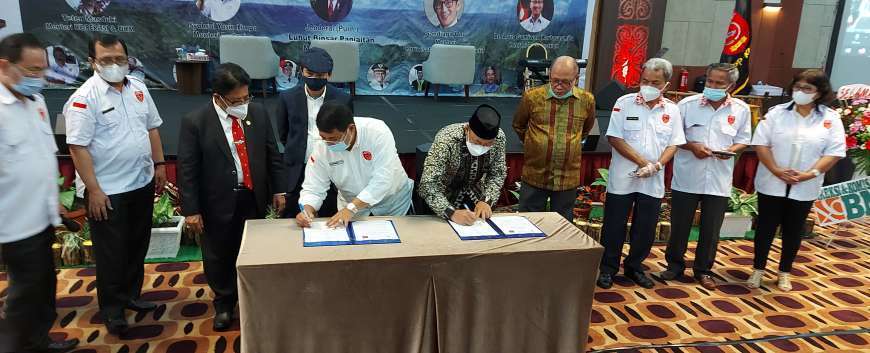
The program has received strong support from Pagerngumbuk Village Head Abdul Malik, along with the management of Kampung Lali Gadget, youth organizations, community leaders, and creative facilitators. Their commitment is essential to ensuring that the learning space remains active and well-maintained, rather than becoming merely a symbolic project.
For the children of Pagerngumbuk, this space is more than just a playground. It is a place where they can grow—where learning happens naturally, where nature becomes their classroom without the need for a screen, and where they can rediscover the simple, joyful, and meaningful experiences of childhood.