
2025 marked one of the most dynamic chapters in Universitas Terbuka’s (UT) journey. More than figures in an annual report, it tells a story of education moving closer to people. UT is no longer seen merely as a distance-learning university, but as a transformative movement that breaks barriers of space, geography, and life circumstances—aligned with the spirit of sustainable development that upholds education as a fundamental right.
In 2025, 768,248 students learned with UT, coming from across Indonesia and 57 countries worldwide. They are working professionals, community servants, parents, and lifelong learners pursuing dreams once postponed. Through an inclusive and flexible learning system, UT advances SDG 4: Quality Education, ensuring access for anyone, anywhere.
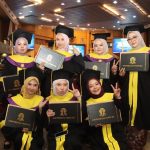
This year was also marked by outstanding student achievements, from gold medals at the SEA Games to global recognition at the World Kungfu Championships in China. These accomplishments affirm that distance education can produce globally competitive talent. Public trust in UT continued to grow, reflected in institutional awards and the distribution of scholarships to over 10,000 high-achieving students, expanding access and reducing educational inequality.
Looking ahead to 2026, UT moves forward with renewed confidence toward its vision of becoming a world-class Open and Distance Learning University supported by a strong digital ecosystem. The goal of reaching one million students is not merely about scale, but about expanding educational impact that creates fairer social and economic opportunities—aligned with SDG 8: Decent Work and Economic Growth.
UT’s strategic direction focuses on enhancing competitiveness through digital branding and deeper engagement in the global education ecosystem. Learning transformation is designed to remain adaptive to changing times and workforce needs, while faculties are empowered to drive inclusive, high-quality education. The result: graduates who are not only academically strong, but also equipped with relevant, future-ready skills.
To support this vision, UT continues to strengthen its integrated digital infrastructure. Innovations such as MyRA, an AI-powered virtual assistant, provide more personalized academic support; SIGAP ensures fair and credible examinations; and the UT Metaverse opens new possibilities for immersive learning. UT is also transitioning from fragmented systems to an integrated digital collaboration model, reinforcing its commitment to SDG 9: Industry, Innovation, and Infrastructure, particularly in building sustainable digital education infrastructure.
UT’s role extends beyond virtual classrooms. Research and community engagement are expanded through new assisted villages and the commercialization of distance education innovations, ensuring that knowledge and technology generate tangible social and economic benefits.
At the heart of this transformation, people remain UT’s priority. Student well-being is supported through life insurance coverage, reflecting UT’s commitment to SDG 3: Good Health and Well-Being. For staff, UT fosters a more supportive work environment through well-being initiatives, work-life balance policies, and sustained investment in talent development, including further studies and professional certifications.
These efforts are reinforced by environmentally responsible practices, including reducing operational waste, promoting energy efficiency, and cultivating a culture of sustainability across the institution.
By integrating advancing technology, caring governance, and a strong commitment to sustainable development, Universitas Terbuka reaffirms its role as a beacon of opportunity. UT proves that quality education is no longer distant—today, it is truly within everyone’s reach.