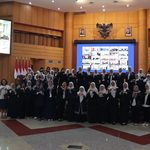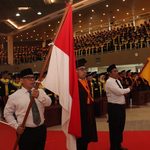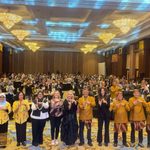


President Prabowo Subianto invited around 1,200 rectors and professors from public and private universities to the State Palace in Jakarta on Wednesday (15 January 2026). Behind the closed-door meeting was a clear message: in an increasingly uncertain world, universities must stand at the forefront—reading the direction of the times and helping prepare the nation’s future.
During the meeting, President Prabowo spoke directly about the rapidly changing global geopolitical landscape and its implications for Indonesia. He emphasized that global challenges cannot be addressed through reactive policies alone. Instead, the nation must rely on knowledge and academic insight, making the role of higher education institutions more critical than ever.
For this reason, the President invited not only university rectors, but also professors, particularly from the social sciences and humanities. He sought academic perspectives on Indonesia’s social and political conditions and encouraged universities to help formulate strategic steps that must be prepared well in advance.
Minister of State Secretariat Prasetyo Hadi explained that the dialogue with academics is part of the government’s effort to strengthen the foundation of national development through education.
“This discussion and communication with rectors and professors from both public and private universities—around 1,200 invitees today—reflects our strong commitment to education. We understand that education is one of the key foundations and driving factors toward Indonesia Emas 2045,” he said.
Several strategic issues were discussed, including the urgent need for medical professionals, as Indonesia still faces a shortage of approximately 100,000 doctors. The President also highlighted concerns related to the quality of higher education, lecturer competencies, infrastructure availability, efforts to reduce operational burdens on public universities, and plans to increase the national research budget to strengthen research and innovation.
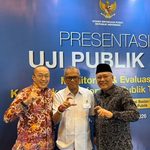
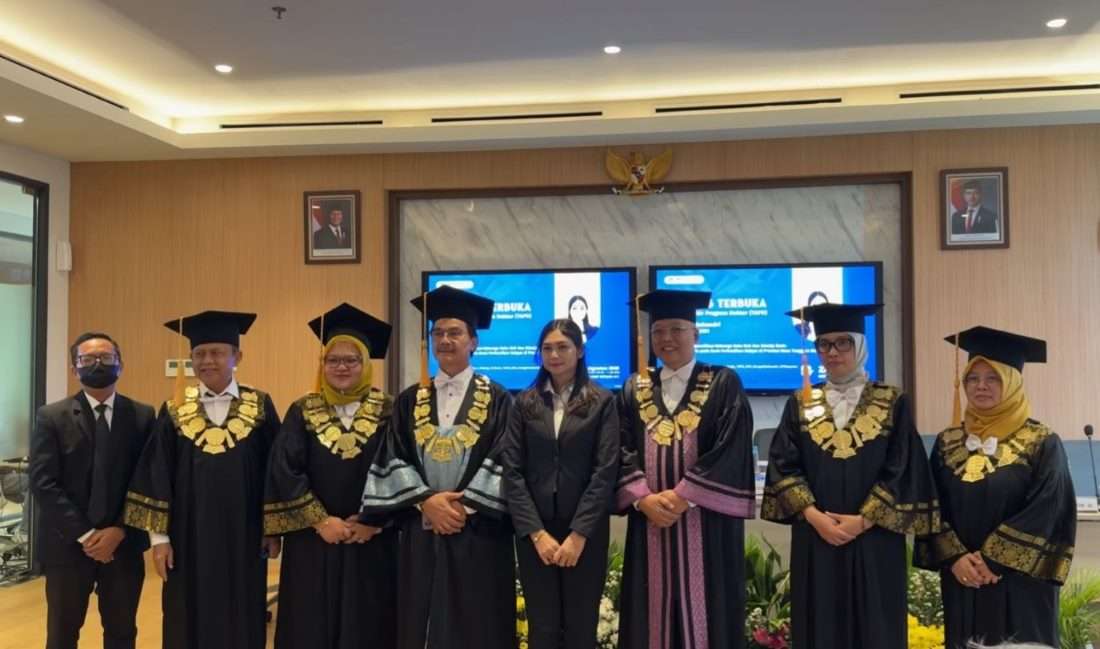
Universitas Terbuka (UT) was among the institutions present at the meeting. UT was represented by Rector Prof. Dr. Ali Muktiyanto, S.E., M.Si., accompanied by Dr. Meita Istianda, S.IP., M.Si. (Dean of the Faculty of Law, Social, and Political Sciences), Prof. Dr. Ucu Rahayu, M.Sc. (Dean of the Faculty of Teacher Training and Education), and Dr. Meirani Harsasi, S.E., M.Si. (Dean of the Faculty of Economics and Business). UT’s presence underscored the role of open and distance universities in expanding access to higher education across Indonesia.
Prof. Ali Muktiyanto stated that the meeting offered direct insight into the President’s policy direction.
“We were invited to listen directly to the President’s briefing on recent developments, including geopolitics and other key issues—particularly his understanding of our national condition and what we must do to support his programs,” he said.
He also welcomed positive news for the research community.
“There is encouraging news that the President has instructed the Minister of State Secretariat to increase the research budget. This is very good news for our researchers. We will continue to support the President’s efforts, and we hope UT can play an important role in driving positive change,” he added.
Meanwhile, FHISIP Dean Dr. Meita Istianda noted that the President’s presentation addressed fundamental national issues, including the state of democracy in Indonesia.
“The President’s explanation was very comprehensive regarding our national condition, including reflections on Indonesia’s democracy and his programs aimed at improving public welfare,” she said.
Overall, the meeting marked a strong commitment by the government to engage universities more actively in national development. In line with the Sustainable Development Goals (SDGs)—particularly SDG 4 (Quality Education) and SDG 16 (Strong Institutions)—the collaboration between the state and higher education institutions is expected to produce policies grounded in knowledge, integrity, and the real needs of society.