
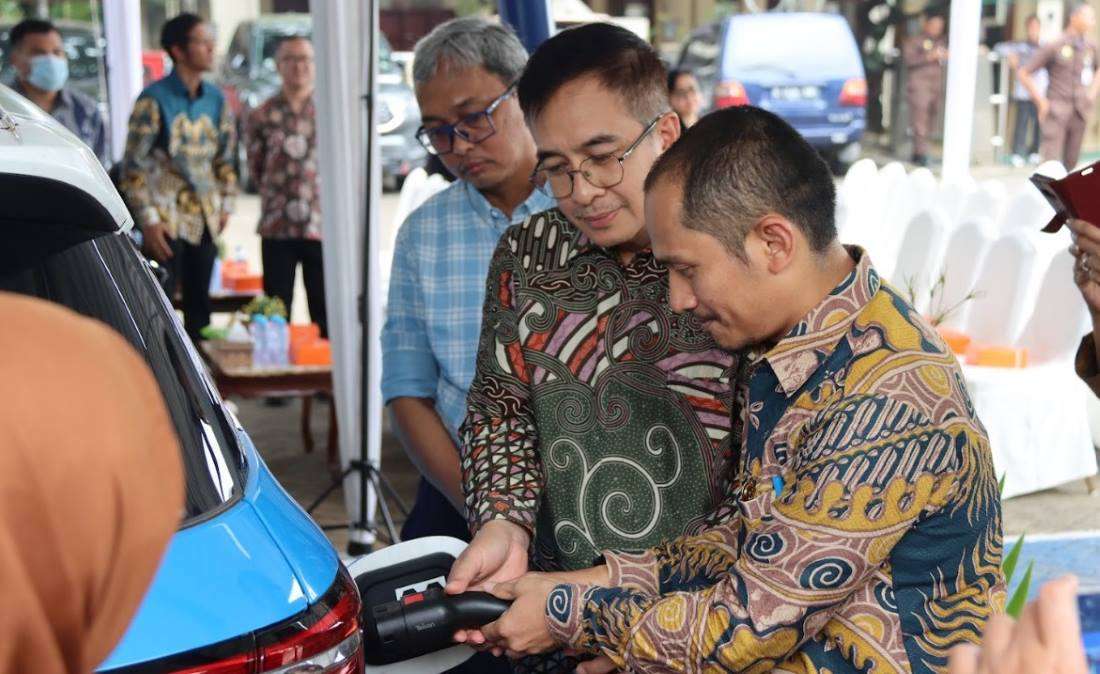
Universitas Terbuka (UT) has taken another practical step to benefit the community by inaugurating a Public Electric Vehicle Charging Station (SPKLU) on its campus. This program is a result of the collaboration between UT and the state-owned electricity company, Perusahaan Listrik Negara (PLN), as a form of support for the use of clean energy and the reduction of carbon emissions.
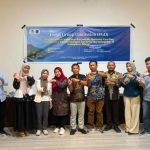
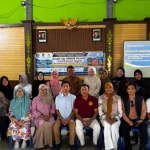
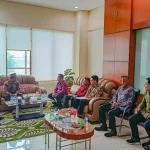
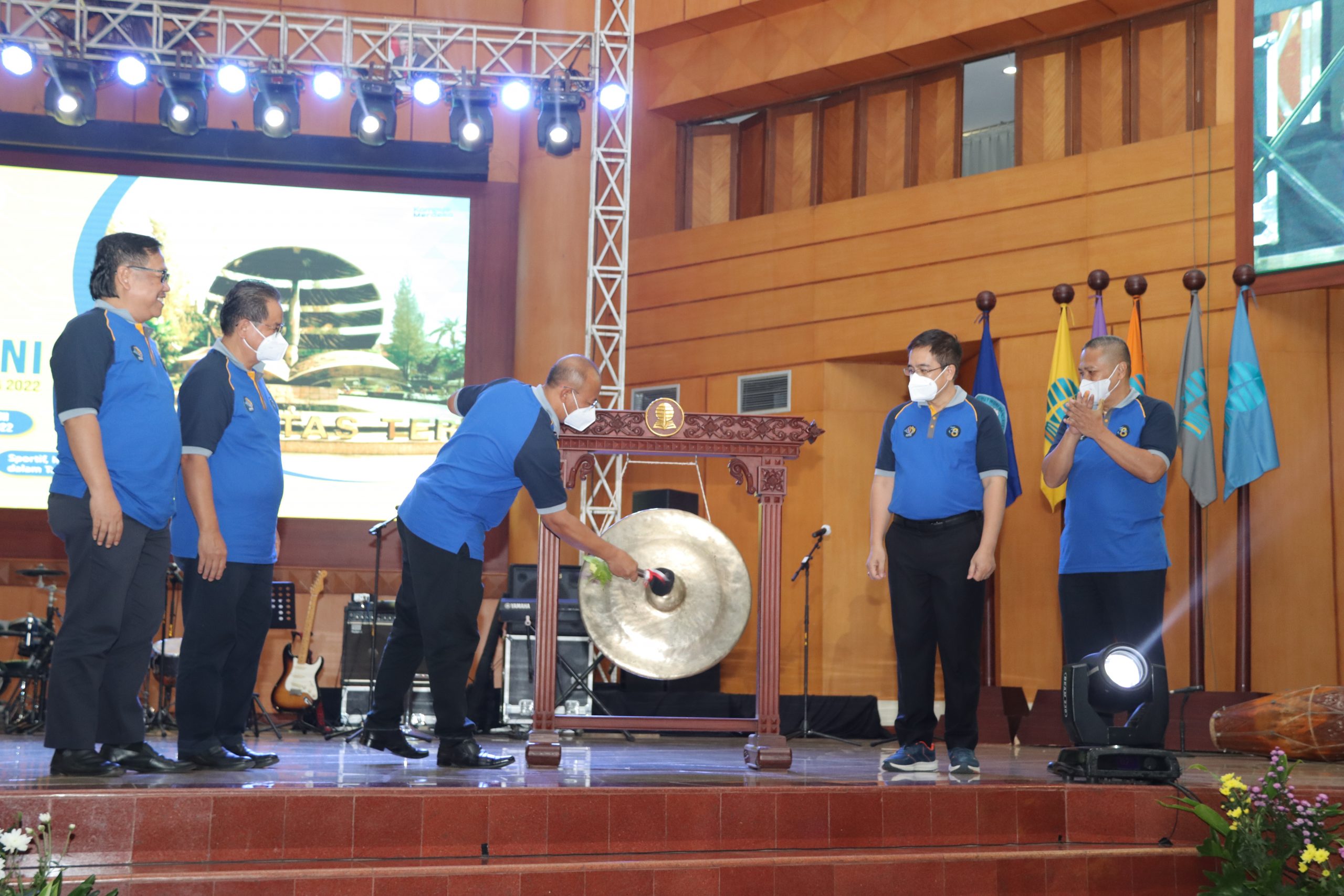
The inauguration ceremony was attended by the Vice-Rector for Research, Innovation, Cooperation, and Business, Prof. Rahmat Budiman, S. S., M. Hum., Ph.D., along with several invited guests, including the Manager of PLN UP3 Ciputat, Syaiful Azhari Siregar, the Secretary of the Pamulang Subdistrict, H. Munadih, S.E., M.Si., and the Head of Pondok Cabe Udik Village, Abdul Malik, S.Sos. The presence of these stakeholders reflects a spirit of cross-sectoral collaboration in supporting a more environmentally friendly energy and technology transformation.
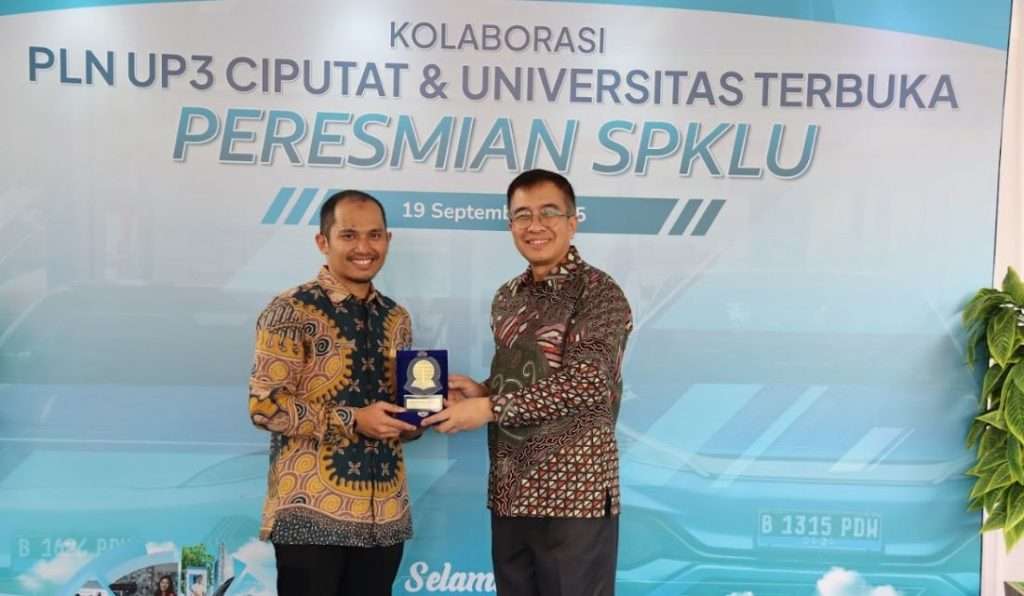
In his speech, the Secretary of the Pamulang Subdistrict thanked the government, PLN, and UT for this initiative, which is expected to reduce air and noise pollution in the Pondok Cabe area. The existence of this SPKLU is also hoped to encourage the academic community and the public to switch from fossil-fueled vehicles to electric vehicles.
“The presence of the SPKLU on the UT campus not only shows a commitment to innovation and sustainability but also serves as a tangible example for the public, especially the academic community, to start using environmentally friendly energy,” said Prof. Rahmat Budiman. According to him, this step is a form of UT’s moral and institutional responsibility in supporting the achievement of the Sustainable Development Goals (SDGs).
The SPKLU program itself has a close connection with a number of SDGs set by the UN. Among them are SDG 7 (Affordable and Clean Energy) by providing access to clean energy through electric vehicle charging infrastructure, which encourages a reduction in dependence on fossil fuels. Then, SDG 4 (Quality Education), as this SPKLU functions as a public education tool regarding green technology and energy sustainability in an academic environment. In addition, the program also supports SDG 11 (Sustainable Cities and Communities) by promoting the use of low-emission transportation in urban areas, SDG 13 (Climate Action) through its contribution to the reduction of greenhouse gas emissions, and SDG 17 (Partnerships for the Goals) through close collaboration between the university and a state-owned enterprise.
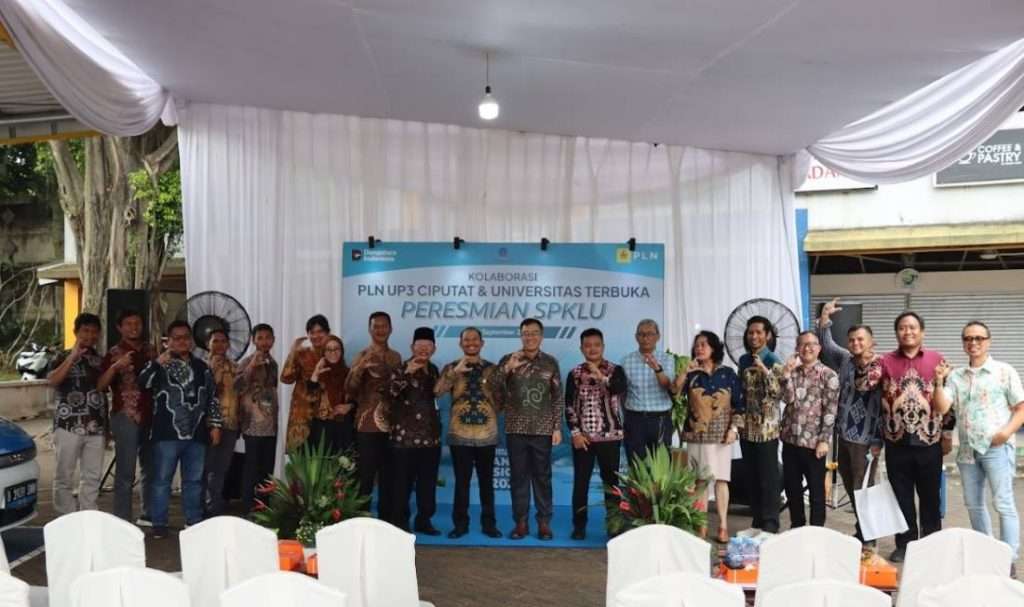
The public and academic community do not need to worry about using this facility, as each station has provided instructions for use, complete with easy and practical cashless payment methods. In the initial phase, the operation of the SPKLU at UT will be monitored and evaluated as a basis for developing similar facilities in other locations.