
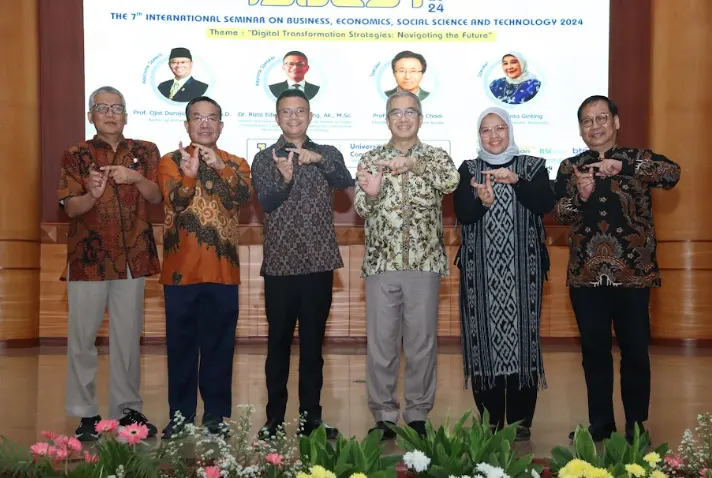
Tangerang Selatan, 19/09/2024 – Universitas Terbuka (UT), through the Faculty of Economics and Business (FEB), proudly held its prestigious annual event, The 7th International Seminar on Business, Economics, Social Science, and Technology (ISBEST). This international seminar, themed “Digital Transformation Strategies: Navigating the Future,” took place on Thursday, 19 September 2024, in a hybrid format at the Universitas Terbuka Convention Center (UTCC) in Tangerang Selatan for on-site participants, as well as via Zoom Meeting and live streaming on UT TV’s YouTube channel for online participants.
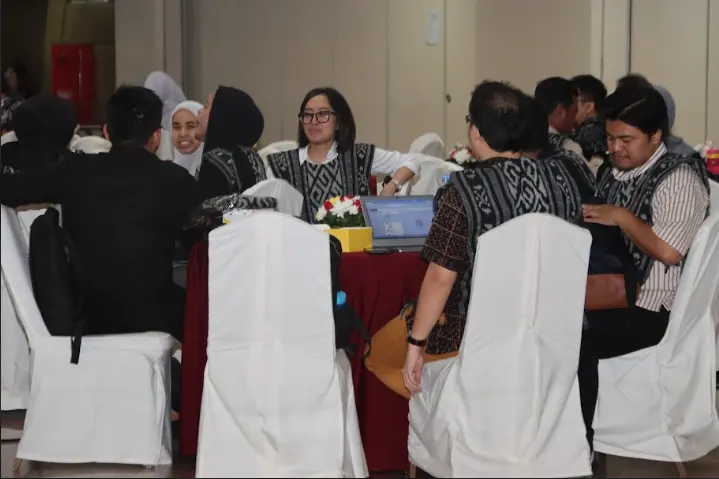
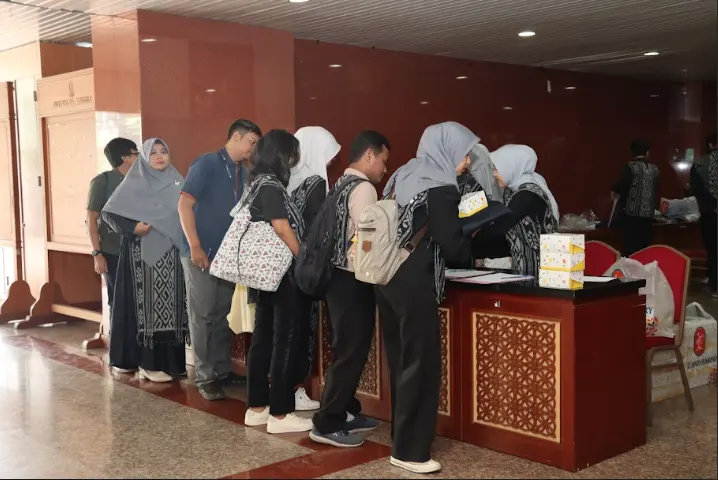
ISBEST has become a platform for scientific discussions, attracting participants from both domestic and international communities. This year’s seminar was attended by various members of the academic community, including lecturers, practitioners, educators, and students, both from within UT and from other institutions. The Chairperson of The 7th ISBEST Committee, Nihan Anindyaputra Lanisy, M.Sn., reported that the seminar featured 71 paper presenters, both in person and online, with a total of 500 participants—200 attending in person and 300 attending online.
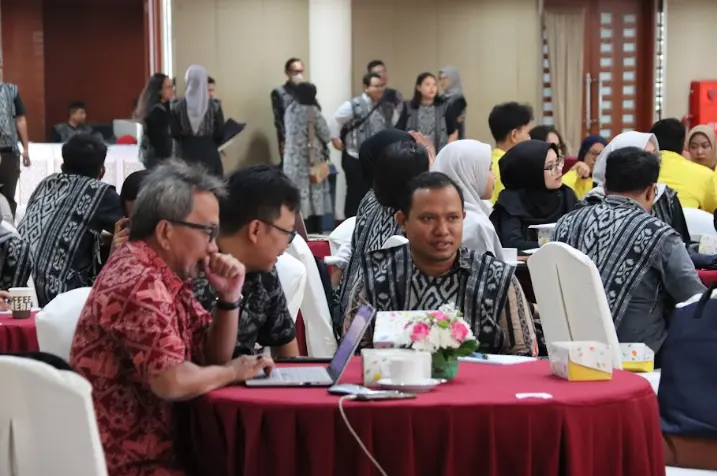
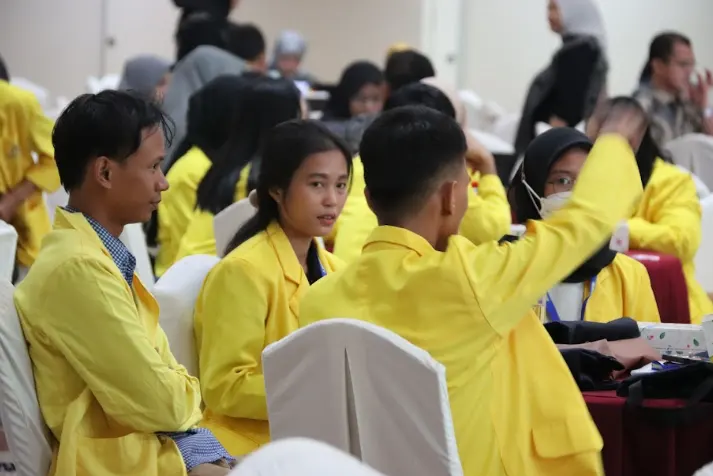
This year’s ISBEST provided insights and broadened participants’ understanding of the ongoing digital transformation and its sustainability, particularly in the fields of business, economics, social sciences, and technology. Moreover, the event served as a platform for researchers, educators, students, practitioners, policymakers, and academics to present their studies in areas such as business, economics, social sciences, tourism, and related fields. ISBEST covered various sub-themes, including: 1) The Evolution of E-Commerce; 2) Artificial Intelligence (AI) in Business; 3) Digital Marketing Innovation; 4) Digitalization of Supply Chains; 5) The Financial Technology (FinTech) Revolution; 6) Workforce 4.0; 7) Sustainability and Digital Transformation; and 8) Digital Tourism.
Accepted papers will be published in the ISBEST Proceedings, and selected papers will have the opportunity to be published in EAI/EUDL proceedings and related journals after a peer review process.
Dr. Meirani Harsasi, S.E., M.Si., Dean of FEB, emphasized in her speech that the world is currently facing major challenges, ranging from technological disruption to economic instability, which demand innovative solutions and forward-thinking mindsets. “The theme ‘Digital Transformation Strategies: Navigating the Future’ reflects the essence of adaptability, innovation, and strategic planning that is crucial for addressing the challenges of the digital era,” Meirani stated.
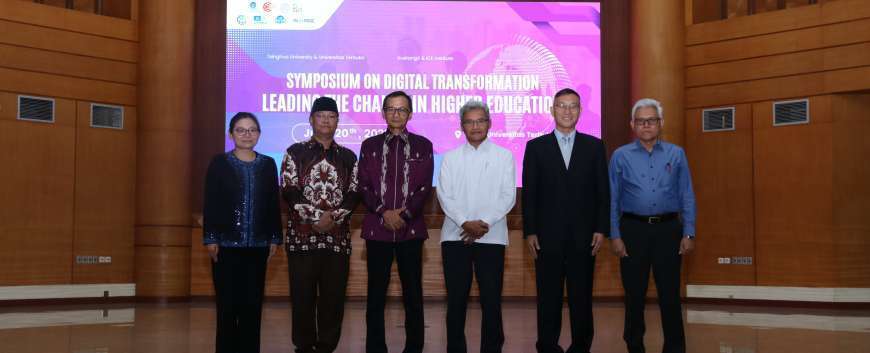
The event was officially opened by Rahmat Budiman, S.S., M.Hum., Ph.D., UT’s Vice Rector for Research, Innovation, Partnership, and Business, representing the UT Rector. This year’s ISBEST featured keynote speaker Dr. Rizal Edwin Manansang, Ak., M.Sc., Senior Advisor for Digital Transformation, Creativity, and Human Resources at the Coordinating Ministry for Economic Affairs. Other speakers included Masatsugu Nemoto, Ph.D., from Chungbuk National University, South Korea, and Prof. Ginta Ginting from Universitas Terbuka, Indonesia.
In his remarks, Mr. Rahmat emphasized that in today’s fast-paced era, digital transformation has become a fundamental shift affecting nearly every sector, from business, education, public services, to social interactions. “We are on the peak of a new era driven by rapid technological advancements, making the need to develop effective strategies for navigating the digital future increasingly urgent. The theme of this year’s seminar, ‘Digital Transformation Strategies: Navigating the Future,’ reflects that urgency,” he stated.
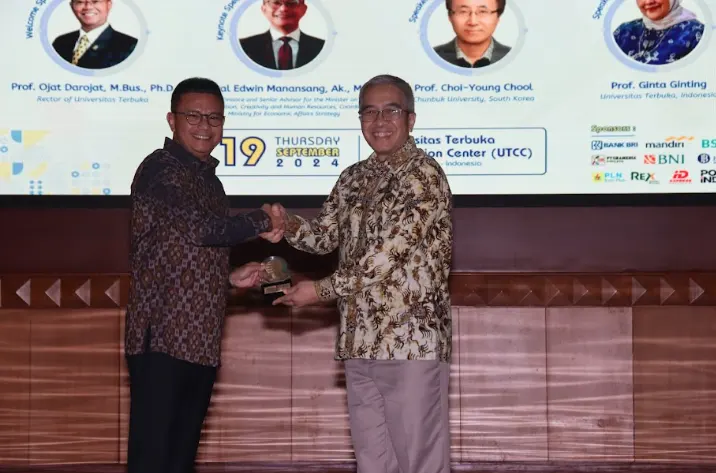
Furthermore, Mr. Rahmat Budiman emphasized the importance of strong strategies in facing digital transformation in the digital era. “Digital transformation is not just about adopting new technologies, but about rethinking how organizations operate and deliver value to stakeholders,” he emphasized. “Digital transformation involves a shift in mindset, culture, and processes. It requires agility, innovation, and a willingness to embrace change. Today, businesses and organizations are forced to transition to digital models that not only optimize their current operations but also set the stage for long-term growth and sustainability,” he concluded.
The event peaked with the announcement of winners from the Competition of Public Sector Innovation (COPSI) and the Competition of Business and Management (COBISMA), both of which were held prior to the international seminar. The COPSI competition was won by Putri Wulandari with her project titled “Turmerone Compounds Extract as a Potential Photosensitizer Achievement for Blood Cancer”, while the COBISMA competition was won by Aryanto from Universitas Terbuka with his project titled “KhA Polyculture Garden”. Additionally, the Best Paper ISBEST award was announced, with the top prize going to:
Lifan Zeng, Surachai Traiwannakij, and Sukon Aduldaecha for their paper “The Influence of Elderly-Friendly Public Spaces and Stakeholder Perspectives on the Quality of Life in Urban Micro-Districts of Fuzhou City, Fujian Province, China”.
Through the increased number of international publications, it is hoped that all sessions of The 7th ISBEST will provide new insights into digital transformation and its sustainability. This conference is also expected to help address global challenges and digital transformation by fostering collaboration and social networking between academics, practitioners, and the public. From this collaboration, new innovations are expected to emerge, capable of creating a dynamic, sustainable, and inclusive digital ecosystem.