
Universitas Terbuka (UT) is increasingly gaining popularity as it has proven to be a solution for those who wish to enhance their competence by pursuing studies without leaving their jobs. As a pioneer in distance education in Indonesia, UT remains committed to improving access to distance education services, not only for individuals within Indonesia but also for individuals residing abroad.
The reach of UT’s services has extended to the world. There are a total of 3,218 UT students located in more than 50 countries in 2023.
The Ministry of Education, Culture, Research, and Technology (Kemendikbudristek) of the Republic of Indonesia, through the Bureau of Cooperation and Public Relations (BKHM), consistently supports UT’s efforts in expanding access to distance higher education. This includes involving UT in the annual meetings of Education and Cultural Attachés (Atdikbud).
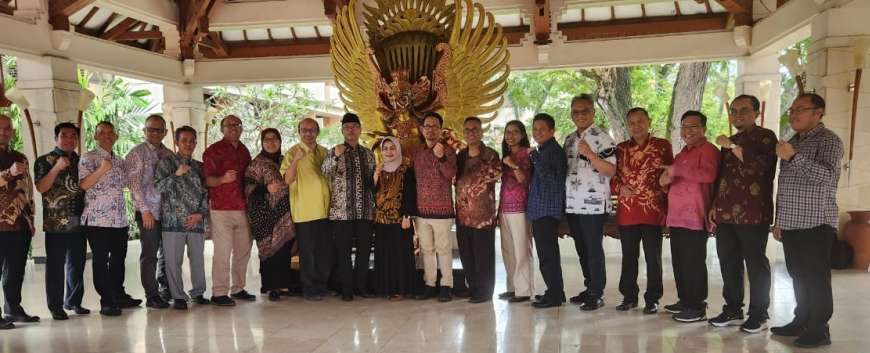
In 2023, BKHM – Kemendikbudristek organized a coordination meeting for Education and Cultural Attachés (Atdikbud) and the permanent delegations of Indonesia to UNESCO in Bali from July 2nd to 8th, 2023. Out of the 19 Atdikbud representatives from various countries, 17 were present, including Atdikbud from the Indonesian Embassies in Kuala Lumpur, Singapore, Bangkok, Beijing, Tokyo, Moscow, Paris, The Hague, London, Washington DC, Riyadh, Cairo, Manila, Seoul, New Delhi, Berlin, and Dili.

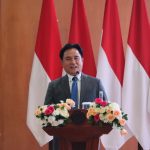
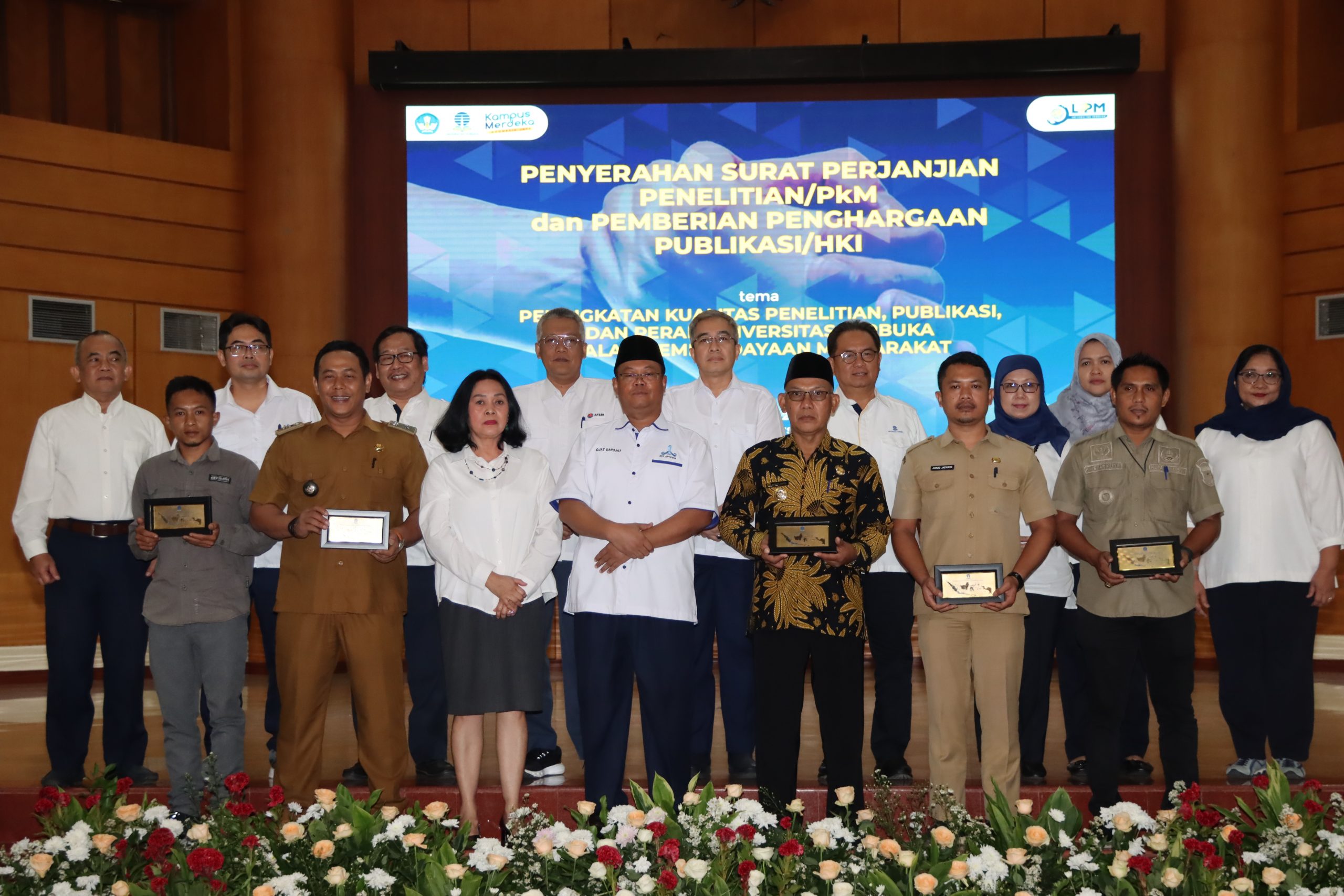
In the meeting, Prof. Ojat Darojat, M.Bus., Ph.D., the Rector of Universitas Terbuka (UT), was invited as a speaker for one of the sessions with the topic “Socializing the Internationalization Program of Open and Distance Education at Universitas Terbuka.”

In his presentation, Prof. Ojat conveyed that UT’s reach in providing education services to Indonesian citizens living abroad, known as PMIs or WNI, was reinforced by the foundation of a Memorandum of Understanding signed between UT and the Ministry of Foreign Affairs on February 7, 2012, which was subsequently renewed in 2019. This Memorandum of Understanding includes the agreement to enhance access to and provision of higher education services abroad through open and distance education. One of its important points is achieved through the annual routine meetings with the Indonesian Atdikbud.
The agenda of this routine meeting became particularly interesting as the attending 17 Atdikbud were highly enthusiastic in listening to and providing feedback on Prof. Ojat’s presentation about the internationalization of UT’s distance higher education.
Several responses and questions were raised during the forum. Prof. Aisyah Endah Palupi, M.Pd., the Indonesian Education and Cultural Attaché of Manila, put forward a proposal for UT to reach out to the Indonesian diaspora, specifically targeting high school graduates in the outskirts of Mindanao. She also stated, “The Distance Education Program (PJJ) of UT could serve as a solution for economically disadvantaged and undocumented Indonesian descendants residing in the outskirts of Manila. Through higher education, we hope their quality of life can improve in the future,”
Atdikbud of Timor also expressed enthusiasm for pursuing distance education at UT, Prof. Dr. Phil. Ikhfan Haris, M.Sc., especially for the staff of the Indonesian Embassy who could pursue online postgraduate studies at the Master’s and Doctoral levels while continuing their jobs. Prof. Dr. Phil. Ikhfan Haris, M.Sc. stated that after this meeting, they would soon implement distance learning programs at UT with specific classes for Timor Leste.
A similar spirit was conveyed by Atdikbud of Riyadh, Badrus Sholeh, S.Ag., M.A. “UT is highly sought after by Indonesian migrant workers (PMI), and the majority of UT students in Riyadh come from Saudi Arabia. UT provides an answer for PMIs who want to pursue higher education while still being able to work,” expressed the Atdikbud of Riyadh. He also expressed enthusiasm for educating PMIs to have a future-oriented perspective through distance learning at UT. The potential that can be tapped into is still significant, as there are approximately 800,000 PMIs in Riyadh. A massive number of UT students in Riyadh will enable future collaborations with local universities.
This idea aligns with the direction from Kemendikbudristek for universities to develop collaboration schemes with international universities. This Collaboration can be realized through the development of dual-degree programs and internships, allowing students to obtain a UT degree and an internship certificate from partner companies upon graduation.
Education and Cultural Attachés of Indonesian embassy in Beijing, Yudil Chatim, S.K.M., M.Ed., is enthusiastic about supporting the initiation of collaboration between UT and a university in Hong Kong. He mentioned that UT students in Hong Kong aspire to have a social life as university students, just like regular university students, by accessing campus facilities and visiting libraries at universities in Hong Kong. “I admire the perseverance of UT students in Hong Kong, who are predominantly PMIs, for finding time to study during their evening breaks,” stated Mr. Yudil.
At the end of the UT distance education socialization event, Prof. Dr. Ismunandar, the Deputy Permanent Delegate of Indonesia to UNESCO in 2023, mentioned that UT is now highly advanced with the establishment of the Indonesia Cyber Education Institute (ICE-I), which offers microcredential course packages accessible to both UT students and PMIs abroad. The Rector of UT added that ICE-I UT serves as a digital marketplace for outstanding online courses provided by a consortium of renowned universities and colleges in Indonesia. “Kemendikbudristek has appointed UT to lead the consortium within ICE-I. Thus, ICE-I, along with UT, can facilitate the fulfillment of lifelong learners’ needs by providing free online learning and distance education services anytime and anywhere,” explained Prof. Ojat
Moving forward, UT continues to improve access and equalize the quality of education to encourage Education Participation Rates (APK) to 40%. (https://www.ut.ac.id/berita/2023/07/kuliah-jarak-jauh-ut-menembus-dunia-bersama-atdikbud)