For students, registration is not merely a matter of filling in data or completing administrative procedures. A single piece of inaccurate information can affect the subsequent academic process. Therefore, Universitas Terbuka (UT) Bandar Lampung is strengthening its service network so that students and prospective students can receive accurate information from the beginning.
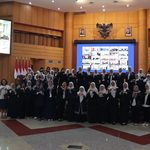
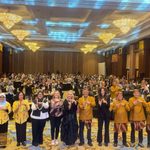
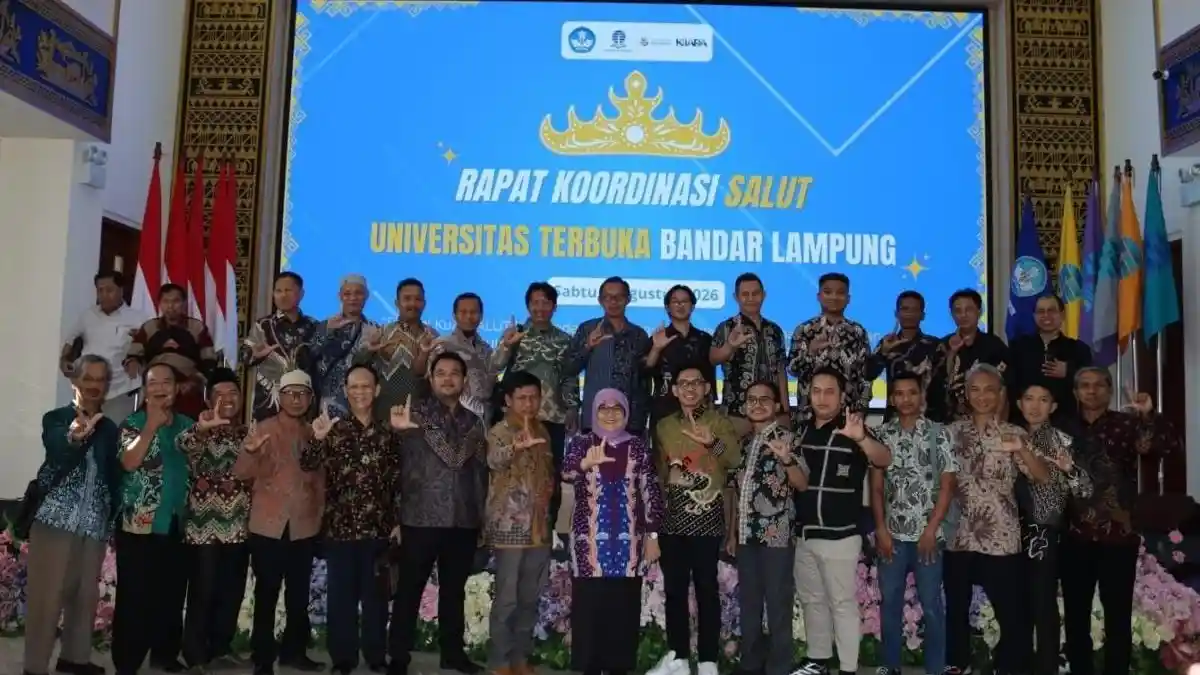
This effort was carried out through an integrated registration coordination meeting that brought together 52 Universitas Terbuka Service Centers (SALUT) from various areas across Lampung. The activity, attended by SALUT heads and staff representatives, served as an opportunity to establish a shared understanding of registration while strengthening the quality of UT services within the community.
Carrying the theme “Strengthening SALUT UT Bandar Lampung Synergy: Realizing Inclusive, Excellent, and Leading Open Higher Education Services in the Digital Era,” the forum positioned SALUT not merely as an administrative service center but also as a bridge between UT and the community.
The organizing committee chair, Rica Wulandari, S.Ak., said integrated registration is part of UT’s transformation of its educational services. According to her, the registration process needs to be designed so that students and prospective students receive a service experience that is easy, fast, and clear.
“Integrated registration is not only related to the administrative process but is part of our effort to provide higher education services that are easier, faster, more accurate, and accessible to all segments of society,” Rica said in a written statement on Tuesday (August 11, 2026).
The role of SALUT is important because of its proximity to communities in various regions. This proximity allows SALUT to provide direct assistance, particularly when students need information about registration and other academic services.
“SALUT must be present not only as a service center but also as a strategic partner of UT capable of providing solutions and assistance to the community,” said Rica.
According to her, UT and SALUT complement each other. UT has the systems and resources, while SALUT has close connections with the community. The collaboration is expected to expand access to higher education while addressing community needs amid technological developments.
A similar view was expressed by The Director of UT Bandar Lampung Dra. Sri Ismulyaty, M.Si. She said strong communication with SALUT managers is necessary to maintain service quality in the regions. Through integrated registration, academic services are expected to become easier, faster, more transparent, and more adaptive to technological developments.
The capacity-building effort was then continued through training for SALUT managers. Firmansyah, S.Kom., M.M., from the Directorate of Academic and Student Administration (DAAK) at UT Central Office, provided material on integrated registration, covering the mechanisms and stages of registration as well as the importance of accuracy in academic administration.
Meanwhile, Head of the Subdirectorate of Innovation, Products, and Digital Services at the Directorate of Digital Technology of UT Central Office, Deni Rudiana Aprizal, S.Kom., discussed UT’s innovations, products, and digital services. The material strengthened participants’ understanding of utilizing technology to provide effective, efficient, and easily accessible services.
The discussion and question-and-answer session also took place actively. SALUT managers explored various issues related to registration and the utilization of digital services that could help them provide better services to students.
For UT Bandar Lampung, strengthening the 52 SALUT centers is not merely about improving the registration process or updating knowledge of digital services. More importantly, the initiative ensures that students do not feel distant from the university simply because they are pursuing distance education. When information is easier to obtain, assistance is available closer to students, and academic issues can be addressed more quickly, the journey toward higher education becomes simpler.
The initiative is in line with Sustainable Development Goal (SDG) 4 on Quality Education, particularly in promoting inclusive and equitable access to education. Through the synergy between UT and SALUT, the digital transformation of education does not stop at developing systems but is realized through services that are easy to understand, easy to access, and whose benefits can be genuinely felt by the people of Lampung.