
MAKASSAR — On social media, attention can disappear within seconds. One piece of content appears, is watched, and then gets swiped away before it has a chance to leave an impression. That is why having millions of followers is not simply a matter of luck or the ability to create viral videos, but rather about understanding who is watching, what they are looking for, and why they are willing to come back.
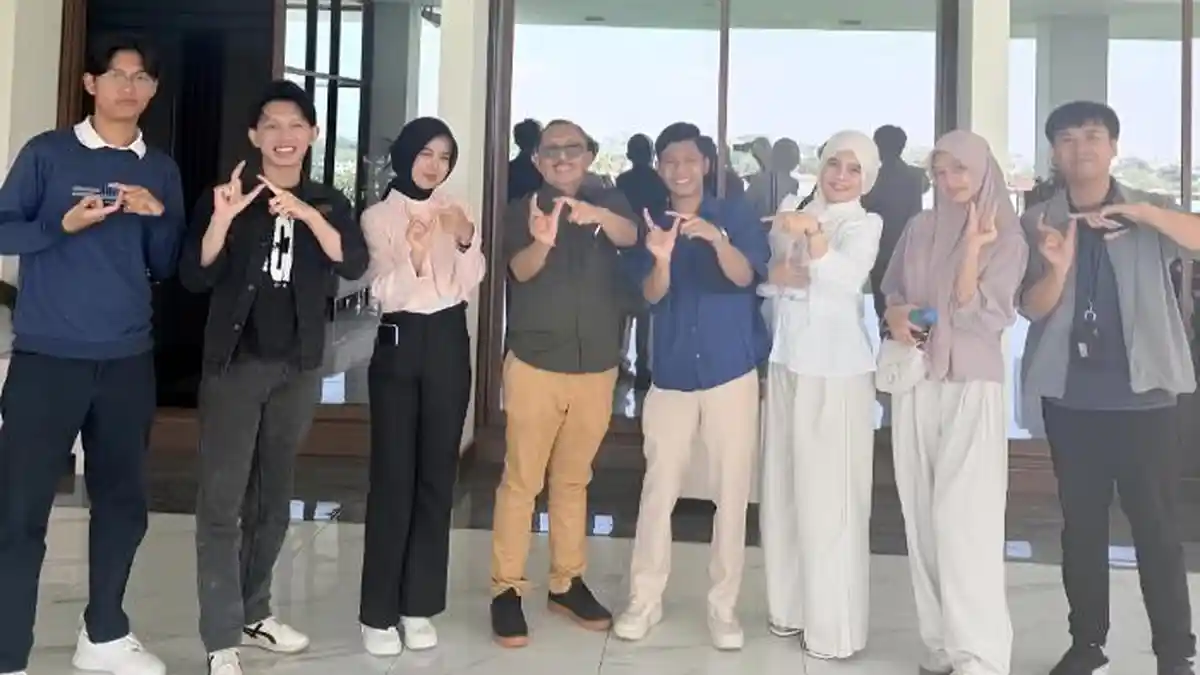
That experience was shared by Universitas Terbuka (UT) Makassar influencer and student Dedy Setiawan when he served as a speaker at a Digital Marketing Training session at the UT Makassar Office on Thursday (August 27, 2026). Dedy is known to have around 1.3 million followers on TikTok. Together with his partner, Nurhayati, who is also an influencer and an undergraduate Law student at UT Makassar, he gave participants a look at the world of content creation from a perspective that is rarely seen behind the view counts.
According to Dedy, creating content goes beyond technical matters. It involves a lengthy process of finding ideas, understanding audience characteristics, following trends, building engagement, and keeping content relevant. The equipment used is also not the main determining factor behind the success of a piece of work. “Good content is not only about having a good camera, but about understanding who is watching, what they need, and how to deliver a message in a relevant way,” Dedy said.
Dedy’s story also shows that being a student does not have to limit one’s space to create. Being a student can actually become part of the story shared with the public, from learning experiences to the challenges of everyday life. In the hands of a creator, these experiences can be transformed into content that feels more relatable because it comes from something they are genuinely experiencing.
Such closeness has become increasingly important as the way young people seek information continues to change. TikTok, Instagram, and various digital platforms have now become one of the gateways for finding information, including when people are looking for a university and considering their future. Higher education institutions are facing a new challenge: providing accurate information is no longer enough; the way it is delivered must also fit the language and habits of the audience.
Director of UT Makassar Prof. Dr. Abd. Rahman Rahim emphasized the importance of adapting to technological developments and constantly changing patterns of communication within society. According to him, universities should not merely provide accurate information, but must also be able to deliver it through media and communication styles that suit the characteristics of today’s generation.
These changes have also shifted the role of students in campus communication. Students are not merely the target audience, but can also become creators, storytellers, and ambassadors who introduce UT through their own experiences. Questions that often arise in the minds of prospective students, such as what it is like to study at UT, how to navigate the distance learning system, and whether studying can be done while working, are actually easier to answer through stories from people who have experienced them firsthand.
This idea found its place in the training session, which was attended by various elements of UT. Representing UT Jakarta Director Drs. Moh. Muzammil was Head of the Center for Public Communication and Cooperation Ali Tarigan. Also in attendance were Manager of Outreach, Registration, and Examinations at UT Palembang Wisnu Firdiansyah Haris, and Director of UT Makassar Prof. Dr. Abd. Rahman Rahim. The event was also attended by members of UT Makassar’s management, the content teams from the Center for Public Communication and Cooperation (Pusat Komunikasi Publik dan Kerja Sama – PPKS) and UT Bandung, administrators of the Sentra Layanan UT (SALUT), students, and UT Makassar staff.
The involvement of various elements demonstrates that digital communication is no longer the responsibility of a single office or team. When university leaders, communication teams, SALUT, students, and creators engage in the same conversation, opportunities to provide educational information that is more relatable, creative, and inclusive become increasingly open. This effort is in line with the spirit of SDG 4 on Quality Education, particularly in expanding access to educational information through the use of digital technology.
Algorithms may determine who sees a piece of content, but people determine whether the story is worthy of trust. That is why the future of campus communication may no longer rest entirely in the hands of official accounts, but also with students who experience the stories within the university every day. Because when the storyteller is someone who is genuinely living the experience, promotion no longer feels like promotion.