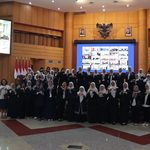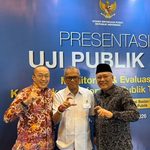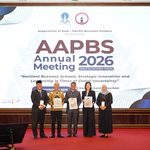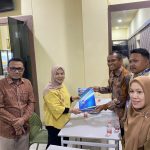


Tangerang Selatan — Universitas Terbuka (UT) is redefining the role of research, no longer treating it as a purely academic obligation. Through the Patent Certificate Awarding and Patent Application Socialization held at the UT Convention Center, Wednesday (28 January 2026), UT signaled a strategic shift: research must lead to protected innovation, generate economic value, and deliver real benefits to society. From campus laboratories, UT is pushing research outcomes toward downstream application and real-world use.
The event featured the Director of Patents, Integrated Circuit Layout Design, and Trade Secrets at the Directorate General of Intellectual Property (DJKI), Ministry of Law of Indonesia, Dr. Andrieansjah, S.T., S.H., M.M., alongside senior DJKI officials. Their presence strengthened UT’s efforts to build a sustainable intellectual property ecosystem and foster closer collaboration between academia and the national IP authority.
Head of UT’s Scientific Research Center (LPPM), Dr. Mery Noviyanti, S.Si., M.Pd., reported that the hybrid event drew strong participation from lecturers and staff across UT Central and regional offices—reflecting growing awareness that patents are now an integral part of the research journey. Since initiating structured support in 2025, UT has submitted 42 patent applications, with 22 already granted certificates and 20 still under review.
The awarded patents showcase innovations rooted in real societal needs. In food and health, UT researchers developed resistant-starch rice and sago noodles for cholesterol management, as well as a new method for producing parijoto flour with commercial potential. In agriculture and environmental sustainability, innovations include liquid organic fertilizer from corn extract, rice-husk-based brick firing technology, and biological wastewater treatment for the meat-processing industry.
Appropriate-technology solutions also stood out, such as a smart hydroponic machine to strengthen food security, a stabilized solar-powered lighting system, pepper threshing tools, batik stoves, and self-service book lending and security devices—many designed to support MSMEs, creative industries, and education.
During the socialization session, Dr. Andrieansjah emphasized that patents should be treated as strategic assets. “These certificates are not for display—they must be economically utilized or commercialized, including through small industries and MSMEs,” he said, highlighting licensing and royalties as sustainable income pathways.
Echoing this, LPPM Chair Prof. Dra. Dewi Artati Padmo Putri, M.A., Ph.D., stressed that as a Public Legal Entity University (PTNBH), UT bears responsibility to drive patent downstreaming. Research, she noted, must go beyond publications to deliver tangible social and economic value.
With dozens of certified patents and more in progress, Universitas Terbuka demonstrates that distance learning institutions can produce grounded, impactful innovation. Aligned with SDG 4 (Quality Education), SDG 8 (Economic Growth), and SDG 9 (Innovation and Industry), UT affirms its role not only as a knowledge producer, but as a catalyst for real change in Indonesia.