
What has long been considered waste can still give life. In Kampung Sampay, Desa Rabak, Kecamatan Rumpin, Kabupaten Bogor, plant residues and harvest leftovers that often ended up as waste are now being turned into compost to enrich the soil and support plant growth. From there, home gardens are gradually becoming productive spaces that can provide vegetables for families.
This simple transformation has become the focus of the Universitas Terbuka (UT) Bogor Team through a Community Service (PkM) program with the Bina Harapan 2 Farmers Group in Kampung Sampay. Rather than merely teaching residents how to make compost, the program offers a solution that can be implemented by the community by utilizing resources that are already available in their surroundings.
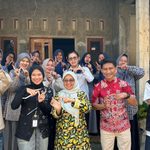
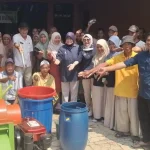
Through the activity titled “Empowering the Kampung Sampay Community to Utilize Harvest Residues into Compost and Use It for Growing Vegetables in Home Gardens,” held on July 14, 2026, a total of 30 members of the farmers group were encouraged to process harvest residues and organic waste into compost and then use it to cultivate vegetables in their home gardens.
Head of the Universitas Terbuka PkM Team, Nurhasanah, said the approach was aimed at changing the way people perceive organic waste. According to her, harvest residues do not have to end up as waste because they can still be processed and returned to support farming activities.
“We want to encourage the community not to see harvest residues as waste that must be discarded. Organic waste or harvest residues available around them can be processed into compost and then reused for growing vegetables,” Nurhasanah told Radar Bogor on Wednesday, September 16, 2026.
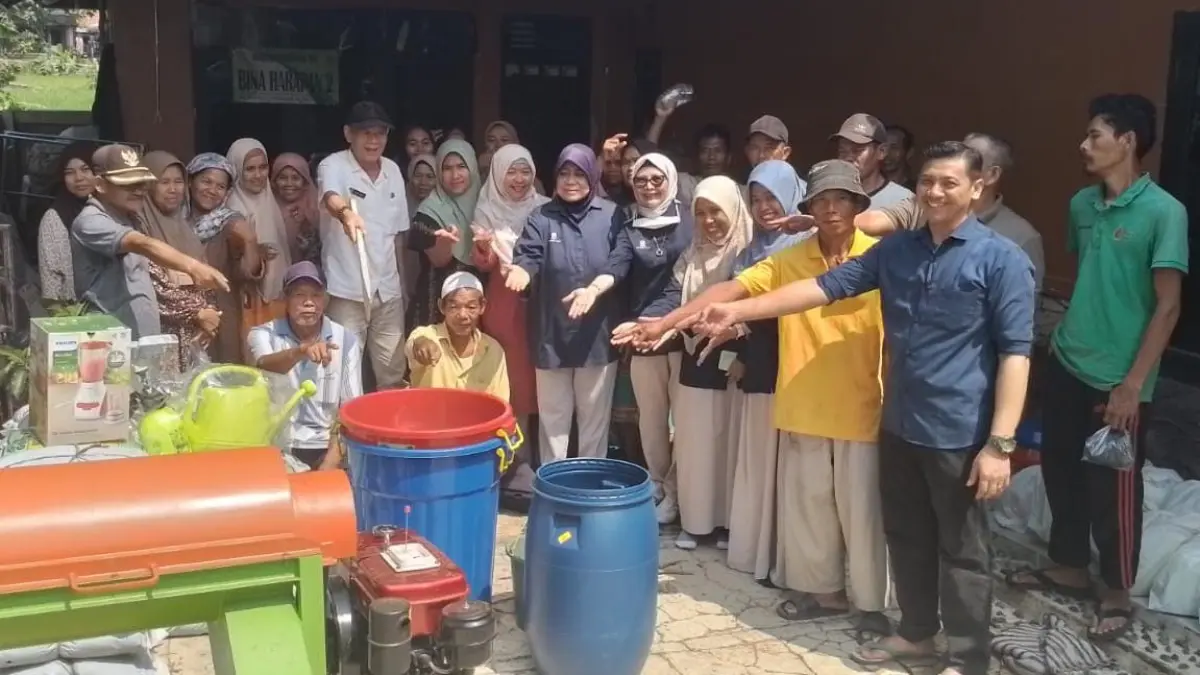
The solution introduced by UT was also designed not to stop at the training activity. The PkM Team handed over one organic material shredding machine to the Bina Harapan 2 Farmers Group as a shared asset. The machine is expected to help residents shred plant residues into material that is more suitable for composting while supporting the sustainability of organic waste management after the program ends.
Participants were also given the opportunity to operate the machine directly. In this way, the knowledge they gained did not remain theoretical but could be immediately applied when the harvest season produced larger amounts of plant residues.
“We handed over this machine as a shared asset so that all members of the farmers group can benefit from it. We hope that after the program ends, the community will continue to use it to process plant residues into compost raw materials,” Nurhasanah said.
The impact has begun to emerge since the program was implemented. Some participants have used the knowledge they gained to grow vegetables in their home gardens using polybags, without having to rely on large areas of land. This pattern creates a simple cycle: plant residues are processed into compost, the compost is used to enrich the soil and support plant growth, and the harvest is then utilized again as a source of food for the family.
For the community, this approach offers more than just a way to reduce waste. It not only creates opportunities to reduce organic waste but also makes use of resources available around their homes and supports the fulfillment of some of their families’ vegetable needs.
Nurhasanah hopes that the pattern that has been initiated will continue after the program ends.
“We hope the community will continue this activity. Plant residues, especially during the harvest season, should not immediately be considered waste. Let us process them into compost and use them again to enrich the soil and support plant growth,” she said.
From Kampung Sampay, UT demonstrates that solutions do not always have to start with something big. Sometimes, change begins with what is already available nearby: harvest residues are turned into compost, compost supports plant growth, and home gardens once again produce food for families. Something that was once considered waste has found a useful purpose again.