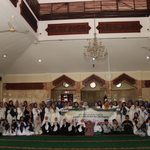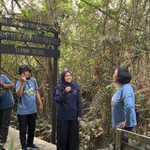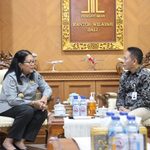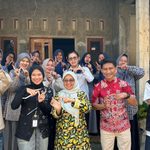

Tangerang Selatan, June 11, 2026 — In Lahad Datu, Sabah, Malaysia, many Indonesian children grow up and study far from the conditions of an ideal school. They live in plantation areas, far from urban centers, and attend Community Learning Centers (CLCs) that serve as a vital gateway to their future.
Within these learning spaces, Indonesian teachers carry significant responsibilities. It is not uncommon for a single teacher to teach multiple grade levels simultaneously, from Grade 1 through Grade 9. Their challenge extends beyond classroom instruction to sustaining students’ motivation, nurturing character development, and equipping them with life skills relevant to their circumstances.
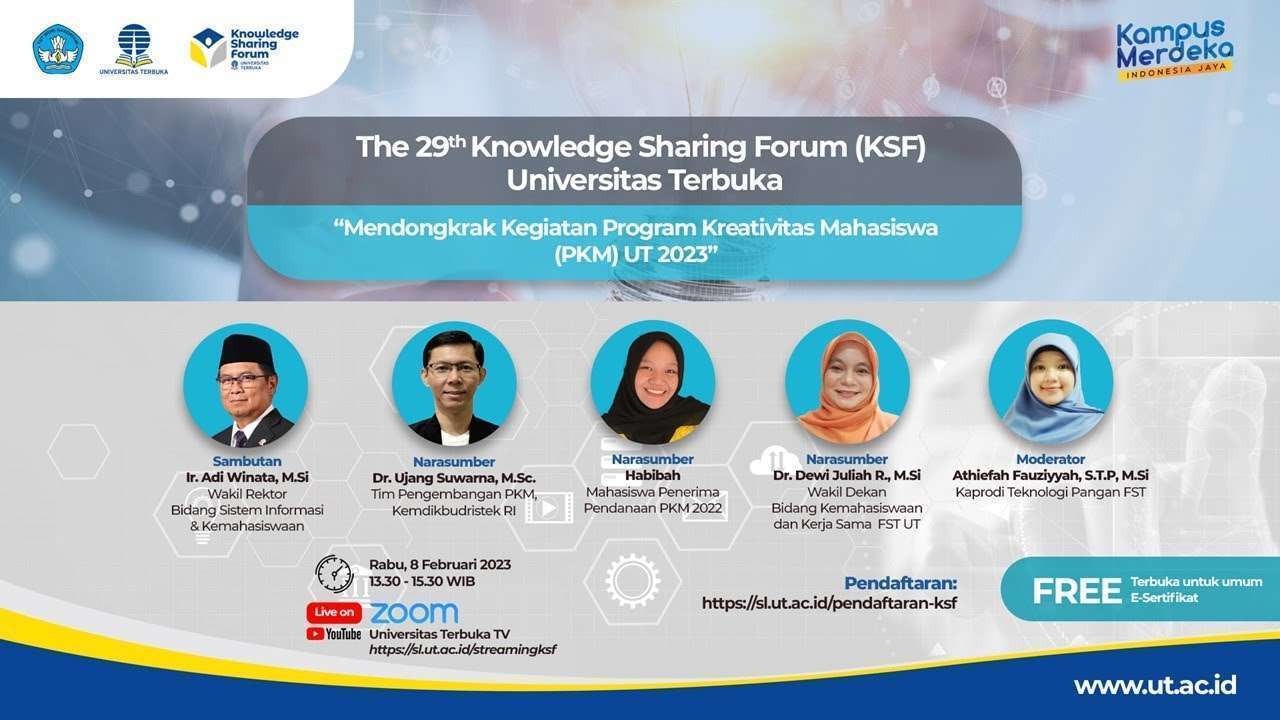
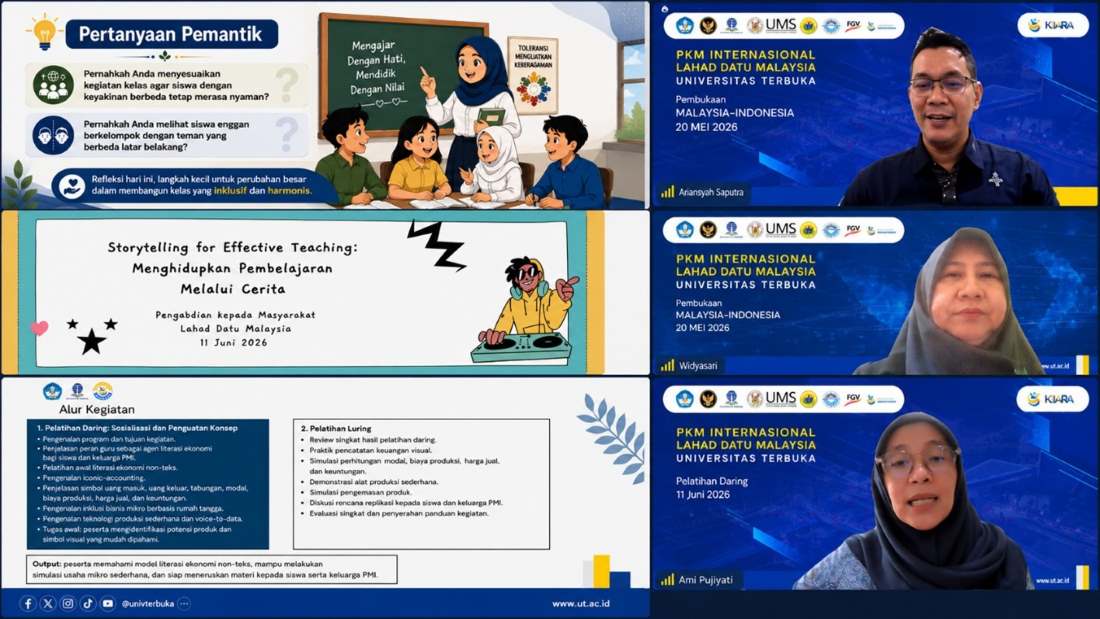
Recognizing these needs, Universitas Terbuka (UT) launched its 2026 International Community Service Program (Pengabdian kepada Masyarakat – PKM Internasional) in Lahad Datu, Sabah, Malaysia. Officially inaugurated online on Thursday, June 11, 2026, the program reflects UT’s commitment to supporting Indonesian communities abroad through initiatives that address real needs on the ground.
The program is the result of a collaboration between the Institute for Research and Community Service (Lembaga Penelitian dan Pengabdian kepada Masyarakat – LPPM) UT, the Consulate of the Republic of Indonesia in Tawau, the Indonesian School of Kota Kinabalu, the Lahad Datu Regional Liaison Coordinator, and the management of CLC Ilmuwan. Around 50 teachers from Indonesian educational institutions across Sabah participated in the program.
The 2026 International Community Service Program was designed not merely as a forum for sharing knowledge. More importantly, it serves as a capacity-building platform for teachers and Indonesian migrant worker (PMI) communities by providing practical skills to address challenges in education, character development, and community self-reliance.
The program features three main initiatives: strengthening religious moderation, enhancing creative learning through Storytelling for Effective Teaching, and developing models of economic literacy and financial independence for Indonesian migrant worker communities. These themes were selected because they directly respond to the needs of teachers, students, and Indonesian communities in Sabah.
Through the religious moderation initiative, teachers are expected to strengthen their ability to instill values of tolerance, unity, and positive character among students. The storytelling component aims to make classroom learning more engaging, relatable, and accessible for children. Meanwhile, the economic literacy and financial independence program seeks to help Indonesian migrant worker communities better manage their economic potential and family finances.
The program is implemented using a blended format. The online session held on June 11, 2026, serves as the initial orientation for participants. It will be followed by an in-person session in Lahad Datu on July 15, 2026, focusing on implementation, mentoring, and the development of practical community-based projects.
Through this approach, UT’s International Community Service Program goes beyond lectures or theoretical instruction. It is designed to ensure participants return with practical knowledge that can be applied, developed, and directly benefit both students and the surrounding communities.
The program addresses significant educational needs among the children of Indonesian migrant workers in Sabah. According to data from the Consulate of the Republic of Indonesia in Tawau, the region is home to more than 120,000 Indonesian migrant workers. Currently, 101 Community Learning Centers serve more than 8,000 students, many of whom study in remote plantation areas with limited access to formal education comparable to that available to children in Indonesia.
In her opening remarks, Prof. Dra. Dewi Artati Padmo Putri, M.A., Ph.D., Chair of UT’s Institute for Research and Community Service, emphasized UT’s long-term commitment to Indonesian communities abroad. She explained that the International Community Service Program was designed not as a one-time initiative but as a sustained effort to improve the quality of education and the well-being of Indonesians living overseas.
“The purpose of UT’s International Community Service Program is truly to serve communities that are closely connected to Indonesia. We hope this initiative will continue beyond one or two occasions. As long as Indonesian schools in Malaysia still need our support, we are ready to develop follow-up programs to enhance teachers’ competencies and provide other forms of assistance that will benefit Indonesian communities abroad,” said Prof. Dewi.
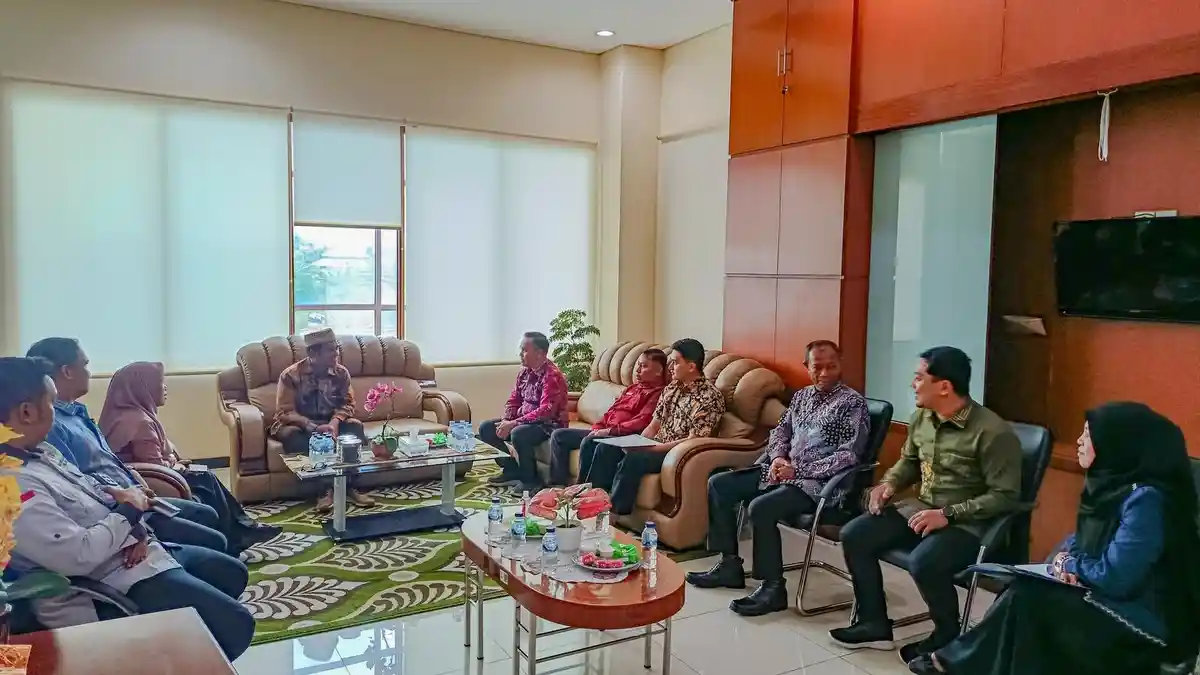
UT’s commitment was also reflected in the cross-faculty support demonstrated during the opening ceremony. Attendees included Prof. Dr. Ucu Rahayu, M.Sc., Dean of the Faculty of Teacher Training and Educational Sciences; Dr. Subekti Nurmawati, M.Si., Dean of the Faculty of Science and Technology; Dr. Meita Istianda, S.IP., M.Si., Dean of the Faculty of Law, Social Sciences, and Political Sciences; and Dr. Meirani Harsasi, S.E., M.Si., Dean of the Faculty of Economics and Business.
The participation of leaders from all four faculties demonstrated that the community service initiative was carried out through an integrated multidisciplinary approach. UT combined expertise across education, character development, teaching methods, and community economic empowerment to address challenges from multiple perspectives.
International support was also provided by Universiti Malaysia Sabah (UMS) through the participation of Dr. Soon Singh A/L Bikar Singh, Dean of the Faculty of Education and Sports Studies. UMS’s involvement strengthened academic collaboration between UT and its Malaysian partner while opening opportunities for broader cooperation in education and community empowerment.
Dr. Heriani, S.IP., M.A., Head of the Community Service Center at UT’s Institute for Research and Community Service, stated that every stage of the program had been carefully prepared to ensure effective implementation. She emphasized that the initiative represents the university’s commitment to the Tri Dharma of Higher Education while supporting the Impactful Campus initiative introduced by Indonesia’s Ministry of Higher Education, Science, and Technology.
The program also received positive recognition from Sahyuddin, S.Pd., MA TESOL, Principal of the Indonesian School of Kota Kinabalu. He noted that UT’s initiative directly addresses the needs of Indonesian teachers and students in Sabah.
“We highly appreciate Universitas Terbuka because this is more than an academic program. It demonstrates that education does not have to remain within the walls of higher education institutions. We hope this collaboration will continue in the future to strengthen educational services for our children in Sabah and Sarawak,” said Sahyuddin.
Support was also expressed by Dino Nurwahyudin, Head of the Indonesian Representative Office in Tawau. He highlighted the importance of the program, particularly for teachers working with Indonesian children in communities of plantation areas.
“These children live, and many of them are born and raised, on plantation areas located far from urban areas. Universitas Terbuka’s community service initiative has been a tremendous support for us. We hope this training will equip teachers in Lahad Datu with new skills and fresh ideas to enrich their teaching,” Dino said.
At the local level, the program was further supported by Raden Banu Firdaus, Regional Liaison Coordinator for Lahad Datu; H. Agussalim Bin Buhannase, Manager of CLC Ilmuwan; and Mubarok Ijtihadi, Head of the Lahad Datu Cluster, who coordinates educational institutions across Lahad Datu, Tawau, Semporna, and Kalabakan. Their roles are essential in ensuring that the program meets the specific needs of local communities.
The 2026 International Community Service Program features experts from various disciplines, including Dr. Izzul Fatawi, M.Pd., who delivers sessions on religious moderation; Widyasari, S.S., M.Hum., who leads the Storytelling for Effective Teaching module; and Dr. Ami Pujiwati, S.E., M.M., Zulfahmi, S.E., M.Si., Eka Wirajuang Daurrohmah, S.E.I., M.Ak., and Dr. Maya Maria, S.E., M.M., who present materials on economic literacy and financial independence.
Through the 2026 International Community Service Program, Universitas Terbuka once again demonstrates that education extends far beyond university classrooms. It can reach plantation areas, modest learning centers, migrant worker communities, and places where meaningful educational support is most needed.
In Lahad Datu, UT is present not merely as a higher education institution, but as a source of care, knowledge, and practical solutions that directly benefit teachers, students, and Indonesian communities in Sabah. This reflects the university’s enduring mission: expanding access, increasing impact, and ensuring that quality education reaches everyone, wherever they may be.