
Years before Curug Jenggala became a popular tourist destination, residents of Dusun Kalipagu, Desa Ketenger, Kecamatan Baturraden, Kabupaten Banyumas, had already invested their time, energy, and hopes in developing the route to the waterfall. Since 2015, the local community has built the tourism site through voluntary efforts, receiving no wages but driven by the belief that the natural beauty on the southern slopes of Mount Slamet could create a brighter future for their village.
That vision has gained greater momentum through the support of Universitas Terbuka (UT) Purwokerto. Since 2023, UT Purwokerto has been assisting the Curug Jenggala community through its Community Service (Pengabdian kepada Masyarakat – PKM) Program, focusing on infrastructure development, human resource capacity building, and the promotion of a more sustainable ecotourism model.
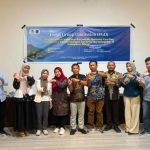
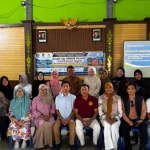
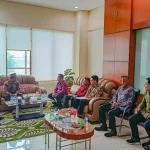
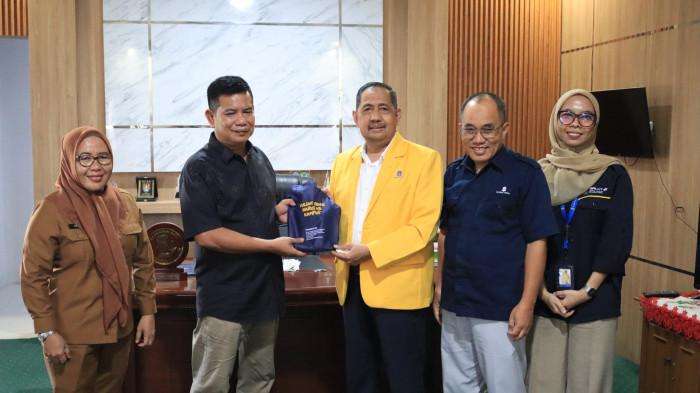
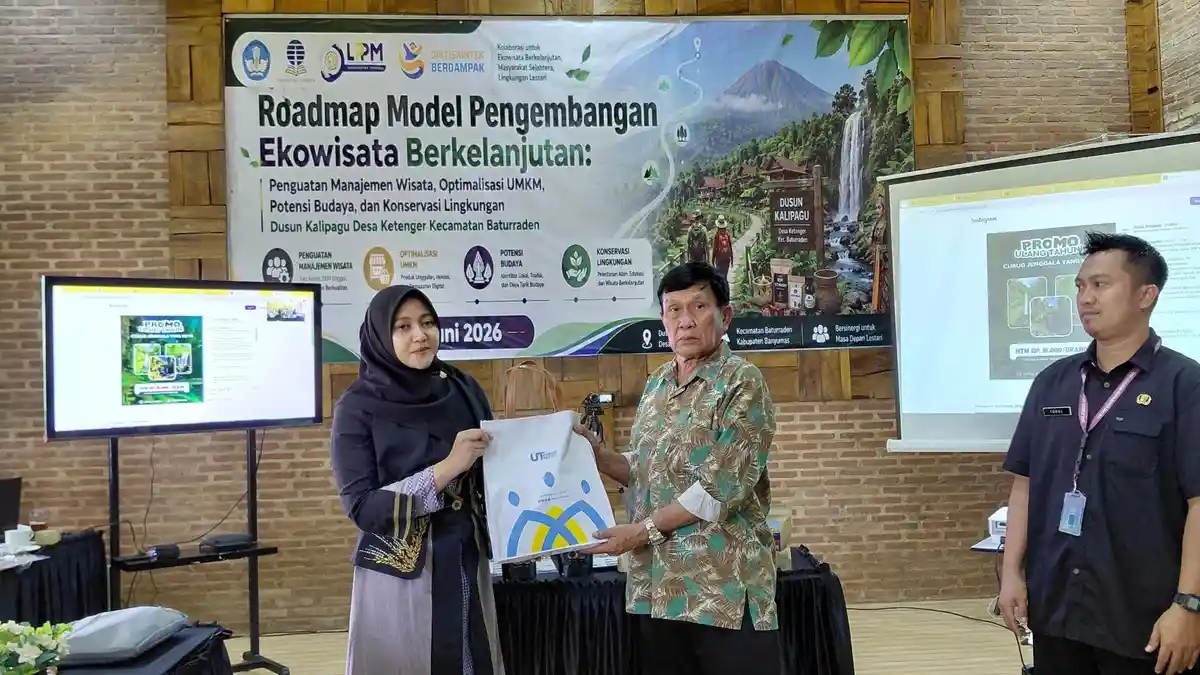
The initiative was further strengthened during a Focus Group Discussion (FGD) on the dissemination of PKM results, held by UT Purwokerto at Warung Putri Gunung Baturraden, Kabupaten Banyumas, on Thursday (June 18, 2026). The discussion was themed “Roadmap for Sustainable Ecotourism Development: Strengthening Tourism Management, Optimizing MSMEs, Enhancing Cultural Potential, and Environmental Conservation.”
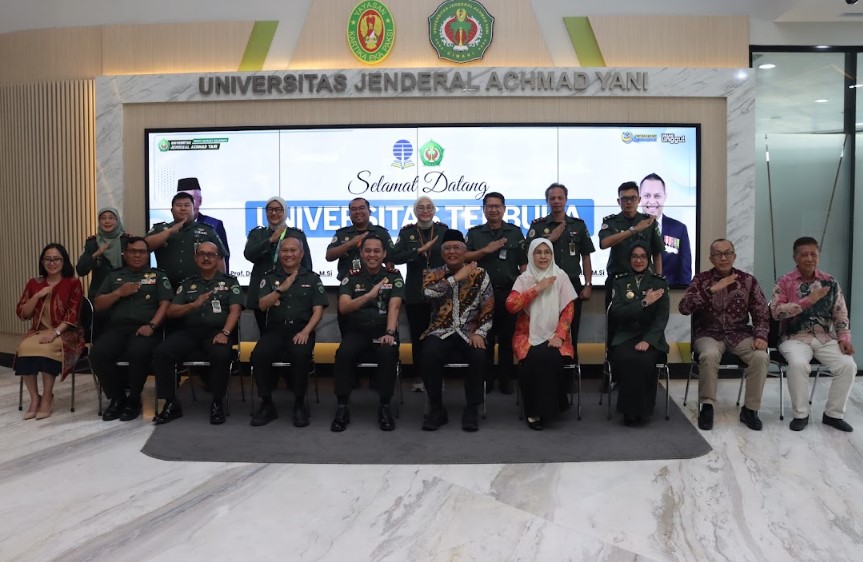
The forum brought together academics from Universitas Jenderal Soedirman, representatives of government agencies, Perum Perhutani, and community leaders. Their participation reflected a growing commitment to developing Curug Jenggala through a collaborative pentahelix approach involving academia, government, businesses, communities, and other stakeholders.
UT Purwokerto Director Dr. Prasetyarti Utami, S.Si., M.Si., explained that the university’s three-year assistance has included the construction of roads, supporting infrastructure, and community training programs. Among the major contributions was the development of a 900-meter access road with a width of one meter.
She estimated that more than Rp500 million has been invested in the program. However, she emphasized that the development of Curug Jenggala is far from complete and requires a long-term strategic plan.
“This is not the end. Our next step is to develop a five-year sustainability roadmap. That is why collaboration through the pentahelix approach is essential. Our focus is not only on tourism development but also on strengthening human resources, tourism management, and cultural potential,” she said.
According to Prasetyarti, the program has already produced encouraging results, with tourist arrivals increasing by 113 percent. Nevertheless, she noted that significant opportunities remain, particularly in strengthening local micro, small, and medium enterprises (MSMEs), improving tourism management, adopting digital technology, and expanding promotional efforts.
“Today, advancing a village cannot rely solely on traditional methods. We must leverage technology so that Curug Jenggala’s potential reaches people across Banyumas, Jawa Tengah, Indonesia, and even international audiences,” she added.
Prasetyarti explained that the FGD served as a platform to validate findings and formulate future development strategies. One of the planned initiatives is the expansion of the tourism area to include the Lemah Wangi Heritage Site, which holds significant cultural value on the southern slopes of Mount Slamet.
“That is why we need strong collaboration with various stakeholders to explore and develop the area’s full potential,” she said.
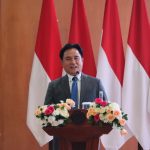
Ketenger Village Head, Wartam, expressed his appreciation for UT Purwokerto’s continued assistance. He recalled that residents of Dusun Kalipagu had independently developed Curug Jenggala since 2015.
“UT came to support us by building roads, gazebos, and providing various forms of assistance. Nearly Rp500 million has been invested in infrastructure, and it has made a tremendous difference for our community,” he said.
The impact is evident in the growing number of visitors. On weekends, Curug Jenggala attracts as many as 2,000 visitors per day, while monthly tourist arrivals range from 15,000 to 20,000 people. For local residents, these figures represent more than statistics, they signify expanding economic opportunities generated within the village itself.
In 2026, the Ketenger Village Government and UT Purwokerto also plan to extend tourism development to the Lemah Wangi Heritage Site.
“The southern slopes of Mount Slamet are home to many cultural heritage sites with significant potential that can be further explored and developed,” Wartam said.
Through its support for Curug Jenggala’s ecotourism development, UT Purwokerto is advancing not only community engagement but also sustainable rural development aligned with the Sustainable Development Goals (SDGs). From newly constructed access roads and gazebos to the growing MSMEs and community members learning to promote their village through digital platforms, Curug Jenggala demonstrates how university-community partnerships can create tangible local impact. In Kalipagu, ecotourism has become more than a scenic attraction, it has become a pathway toward a more resilient and empowered village.