
Pandeglang, October 2, 2025 – Agrarian Reform is not merely about providing legal certainty over land ownership; it is also a main driver for improving the welfare and self-sufficiency of rural communities. This is clearly evident in Bandung Village, Pandeglang Regency, which is now rapidly developing through the management of the Bukit Sinyonya Tourist Village. The village was even named one of the Best Agrarian Reform Villages in January 2025.
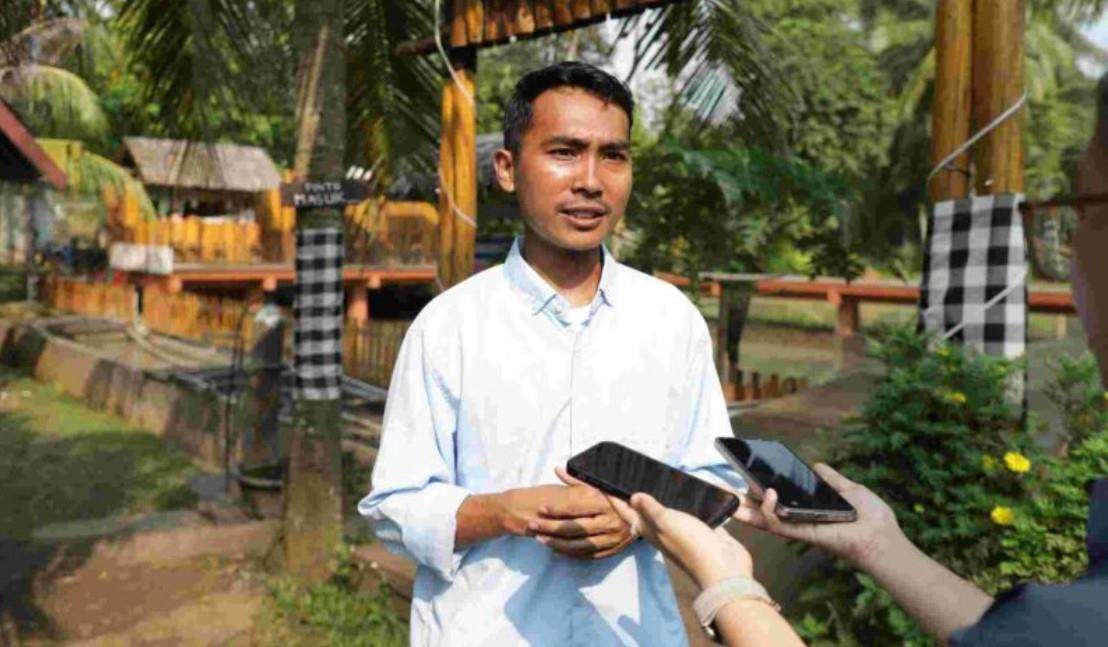
One of the key figures in this transformation is Asep Adam (25), a Tourism Study Program student at Universitas Terbuka (UT) Serang, who serves as the main manager of the tourist village. With youthful enthusiasm and academic insight, Asep successfully combined local potential with a sustainable tourism concept.
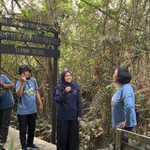
“If it’s not packaged well, the village’s potential will not be sustainable. Regeneration will also be cut off. For instance, weavers have always existed, but now the mothers are elderly, and young people are reluctant to continue. This tourist village becomes a bridge to get young people interested again,” explained Asep when met at Bukit Sinyonya on Monday (9/22/2025).
Since being designated an Agrarian Reform Village in 2023, the village has become a concrete example of the implementation of various Sustainable Development Goals (SDGs), especially in economic empowerment (SDG 8), poverty reduction (SDG 1), and sustainable village development (SDG 11).
Through Asep’s guidance, the involvement of the village’s younger generation has sharply increased. Innovation in local craft products has evolved from mere pandan bags to shoes, wallets, and various contemporary accessories with higher sales value.
“Initially, the mothers only made ordinary bags. But after training with the young people, creativity developed. Products are more varied, and prices have also increased,” said Asep, who actively integrates his studies at UT with community empowerment activities.
Not only developing products, but Asep has also played a crucial role in the social transformation of the village residents. The artisans are now transitioning into instructors who share their craft skills with tourists and the wider community, supporting the achievement of SDG 4: Quality Education based on local wisdom.
“Now, the artisans don’t just produce; they also share knowledge. They become trainers, not just ordinary artisans,” he added.
The impact is directly felt by residents like Ani (52), a weaving artisan who now sees an increase in income and quality of life. “Before, I worked from the forest to home, doing whatever work was available. Now, from weaving, I can help pay for my child’s college fees and even buy household needs,” Ani said proudly.
Armed with knowledge from his studies at Universitas Terbuka, Asep proves that students can play a significant role as agents of change in the community. Through an inclusive, sustainable, and locally-based approach, he has revived the village economy while building new hope for the younger generation.
Today, the Bukit Sinyonya Tourist Village serves as proof that Agrarian Reform is not just about land redistribution but also a means to achieve sustainable development goals—by creating employment, supporting vocational education, and strengthening village identity through culture-based tourism.