
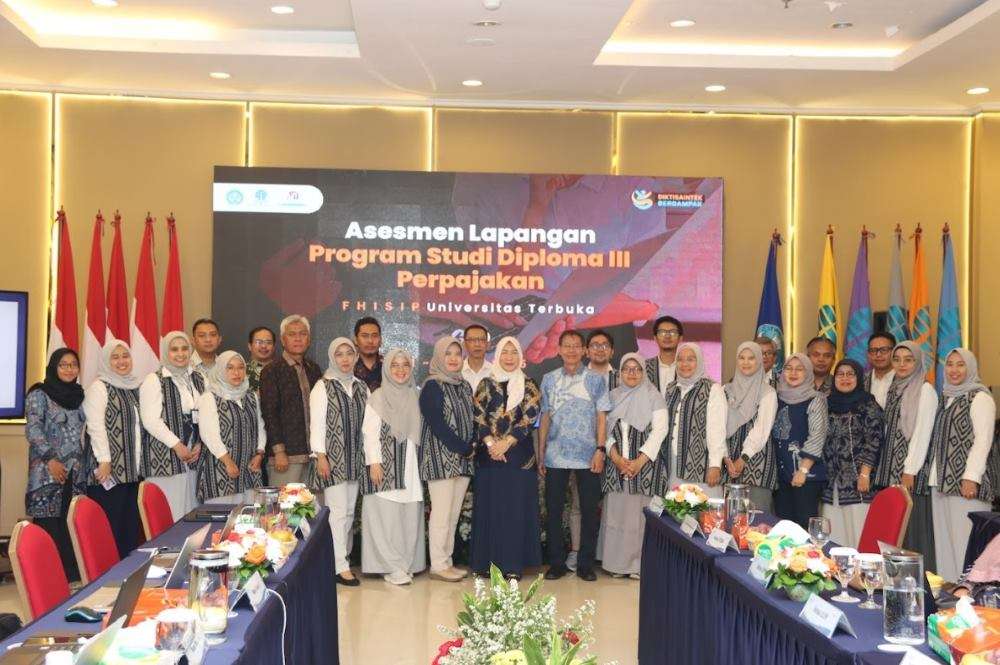
Tangerang Selatan, May 22, 2025 – As a commitment to educational quality, Universitas Terbuka (UT) hosted the field assessment for the re-accreditation of its D-III Taxation Study Program by LAMEMBA on May 22–23, 2025. This activity was conducted as part of the external evaluation process by the Independent Accreditation Agency for Economics, Management, Business, and Accounting (LAMEMBA), aiming to comprehensively assess and verify the quality of the study program’s administration.
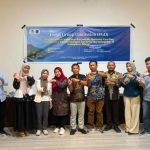
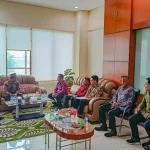
The field assessment was conducted offline over two days, Thursday-Friday, May 22-23, 2025, and was directly attended by the Assessment Team from LAMEMBA, namely Dr. Evada Dewata, S.E., M.Si., Ak., CA. and Dr. Nyoman Sentosa Hardika, S.E., Ak., MM. Also present at the event were the Rector of UT, Dr. Mohamad Yunus, S.S., M.A., Vice Rectors, the Head of the Academic Senate, Heads of Institutes, the Dean of the Faculty of Law, Social Sciences, and Political Sciences (FHISIP) UT, the Secretary of the Board of Trustees (MWA) UT, the Head of the Quality Assurance Office (KPM) UT, relevant Center Heads, the Head of the D-III Taxation Study Program, and lecturers supporting the program.
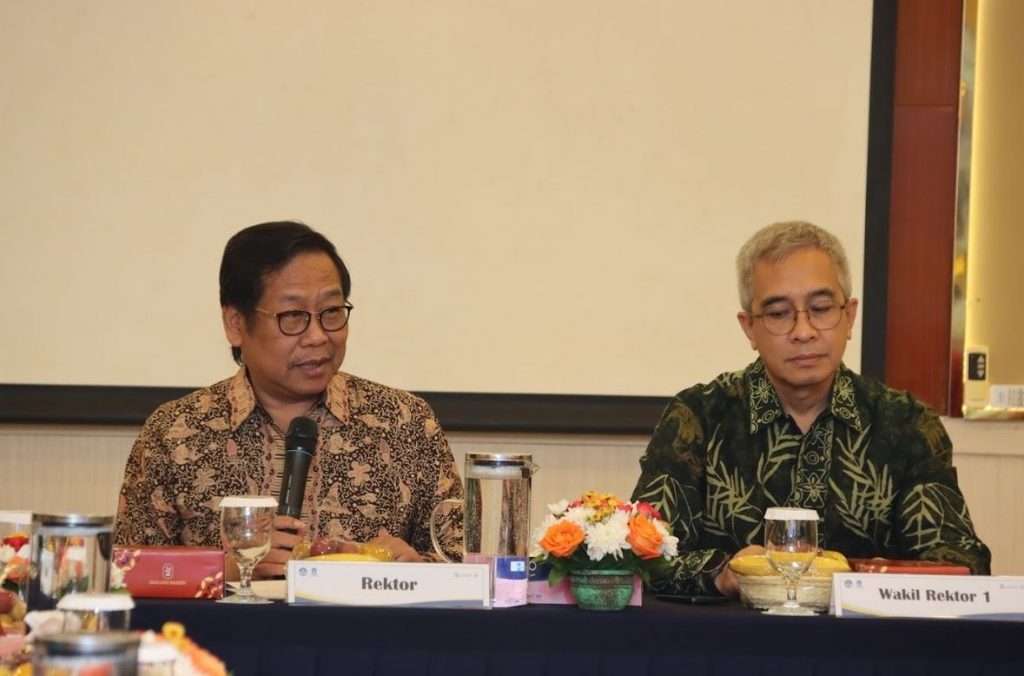
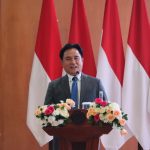
In his welcoming remarks, UT Rector Dr. Mohamad Yunus, S.S., M.A., extended a welcome and expressed appreciation and gratitude to the LAMEMBA assessors for their presence and time dedicated to assessing the D-III Taxation study program. He also emphasized the importance of accreditation as a strategic mechanism in building a sustainable quality culture, especially within the context of open and distance higher education.
“Your presence is both an honor and a valuable opportunity for us to receive constructive input for the improvement of our study program’s quality,” stated Mohamad Yunus.
Dr. Mohamad Yunus also conveyed that accreditation is not merely about an administrative process but a reflective and strategic effort to ensure the quality of higher education.
“We fully support all stages of this accreditation and hope that this activity can strengthen public trust in the D-III Taxation Study Program as one of our flagship programs capable of producing competent, adaptive graduates ready to compete in the job market,” added Dr. Mohamad Yunus.
The event continued with introductions from Dr. Evada Dewata, S.E., M.Si., Ak., CA. from Politeknik Negeri Sriwijaya and Dr. Nyoman Sentosa Hardika, S.E., Ak., M.M. from Politeknik Negeri Bali as the assessment team. The Assessment Team also expressed their highest appreciation for UT’s preparedness and warm welcome during this field assessment. The Assessment Team also hoped that this field assessment process would proceed smoothly and yield maximum results.
“This field assessment process requires good cooperation. Therefore, we ask for your help and cooperation so that this field assessment can run well and achieve maximum results,” stated one of the LAMEMBA Assessment Team members.
Furthermore, according to another LAMEMBA Assessment Team member, Dr. Evada Dewata, the Distance Learning (PJJ) system adopted by UT has its own unique characteristics.
“This is our first assignment at a campus that employs PJJ. Given the unique characteristics of PJJ, we need to find out and learn more, both about UT itself and its PJJ system,” revealed Dr. Evada.
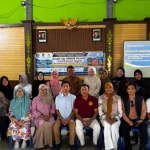
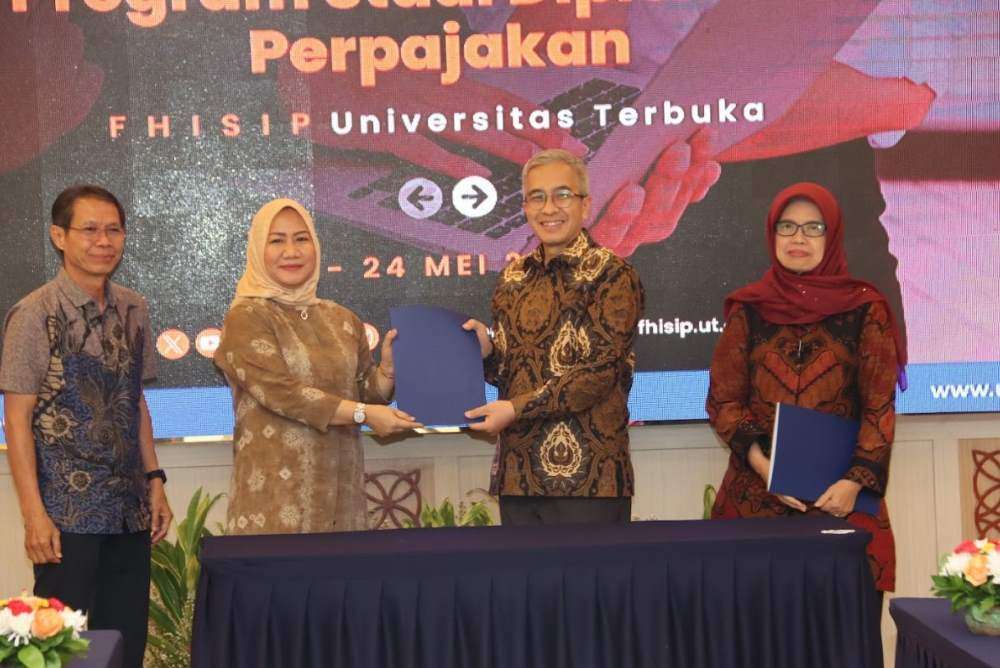
The two-day field assessment was an important moment in the process of improving academic quality, especially in the D-III Taxation Study Program under the Faculty of Law, Social Sciences, and Political Sciences (FHISIP) UT. During the assessment, the LAMEMBA Assessment Team conducted verification and clarification of various data and documents that had been previously submitted through the accreditation system. Additionally, the assessors conducted interviews with university leadership, lecturers, students, and educational staff to gain a comprehensive understanding of curriculum implementation, learning processes, and ongoing academic and student services.
At the closing ceremony on Friday (May 23), the Vice Rector for Academic Affairs, Rahmat Budiman, M.Hum., Ph.D., expressed gratitude and appreciation to the assessment team for completing their task during this field assessment. Rahmat Budiman, Ph.D., stated that this field assessment will serve as input for UT to implement continuous improvement across all lines.
“Continuous improvement is our lifeblood,” said Rahmat Budiman, Ph.D.
Furthermore, Rahmat Budiman, Ph.D., also stated that one of UT’s concrete efforts to maintain its quality is by inviting reviewers from the International Council for Open and Distance Education (ICDE) every three years. This helps ensure that all business processes at UT comply with the quality standards implemented by leading universities worldwide.
“Alhamdulillah, every three years we receive input and make improvements,” revealed Rahmat Budiman, Ph.D.
The presence of UT’s leadership in this activity signifies strong institutional support for the accreditation process and demonstrates that quality assurance is not only the responsibility of academic units but a shared responsibility of all university elements.
The field assessment by LAMEMBA also reflects a new direction for the accreditation system in Indonesia, which is more focused on the specificity of scientific disciplines and emphasizes the importance of the link between academic quality, industry needs, and social contribution. This process is expected to provide a more specific, relevant, and outcome-oriented assessment of learning achievements and the study program’s contribution to society and the workforce.
With the completion of this field assessment, UT hopes that the D-III Taxation Study Program will achieve excellent accreditation results and continue to develop into a study program that is adaptive to the dynamics of taxation in the digital era. Furthermore, this achievement is expected to increase public trust in the quality of UT students and graduates, especially in the field of taxation, who can compete nationally and globally. Thus, the implementation of this assessment is concrete proof that UT is committed to continuously strengthening its quality assurance system as part of its collective responsibility in producing excellent graduates in the digital era.