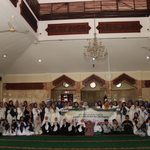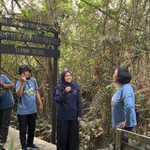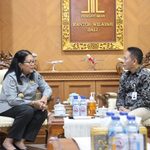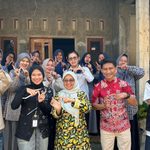

What if a student’s learning space were not only a classroom, but also an island that is home to an endemic species of Kalimantan? On Curiak Island, Kabupaten Barito Kuala, Universitas Terbuka (UT) Banjarmasin sees an opportunity to bring learning closer to real life while also contributing to the conservation of Bekantan (proboscis monkey). This opportunity was explored together with Universitas PGRI Kalimantan (UPK) through a visit as part of a Community Service (Pengabdian kepada Masyarakat – PKM) program on Thursday (September 17, 2026).
The visit was not merely an opportunity to enjoy the natural beauty. More than that, Curiak Island became a starting point for exploring collaboration in Bekantan conservation, research, and sustainable ecotourism development. Through synergy between higher education institutions and the community, the area has the potential to become both a learning space and a place where various environmental conservation initiatives can grow.
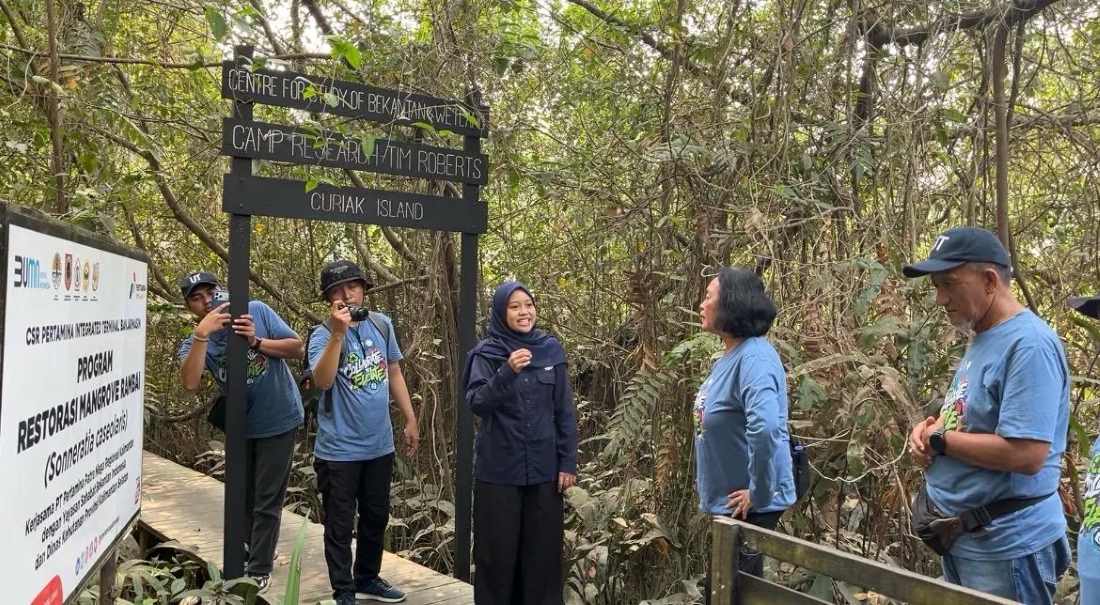
The experience began when the group traveled through the waters around Curiak Island. From the boat, they had the opportunity to observe Bekantan directly in their natural habitat. After touring the island area, the group then stopped at the Bekantan Research Station, or Camp Robert, managed by the Yayasan Sahabat Bekantan Indonesia (SBI).
The experience left a deep impression on Chair of UT’s Institute for Research and Community Service (LPPM), Prof. Dra. Dewi Artati Padmo Putri, M.A., Ph.D. She said she was impressed by the well-maintained condition of the research station and saw opportunities for UT to contribute to research and conservation activities.
“I think this is my first time here. It turns out that after entering Camp Robert, it is quite good and well maintained. Earlier, I also discussed with the Director that perhaps UT could contribute something, whether through research or by helping with conservation here,” Dewi said.
For her, the visit marked the initial step for UT to take part in environmental conservation efforts. The opportunities that have emerged are expected to develop into concrete contributions through collaboration and academic activities.
This commitment is in line with the view of UT Banjarmasin Director Ir. Mochamad Priono, M.Si. He emphasized UT Banjarmasin’s readiness to support the Bekantan Research Center, including by continuing the program to provide food for Bekantan. In addition, Curiak Island is considered to have great potential as a learning and research site for biology students.
Priono added that UT Banjarmasin is also discussing plans for strategic cooperation with UPK and Desa Anjir Muara Sarapat 1. The collaboration is aimed at developing ecotourism that continues to protect the Bekantan habitat while also generating economic value for the local community.
This opportunity for learning in nature was also welcomed by UPK Rector Dr. Alimuddin A Jawad, M.Hum. He considered Curiak Island suitable for use as a natural laboratory for students of the Biology Education and Environmental Sciences Study Program. Through research activities, students can learn about various plant and animal species while developing ideas to support environmental conservation. UPK also plans to follow up on the collaboration opportunity by involving students and lecturers.
From the perspective of the area managers, Conservation School Coordinator Dewita welcomed the enthusiasm shown by the higher education institutions. She explained that the Curiak Island Research Station had been established since 2018 and regularly collaborated with various higher education institutions. Volunteering activities are also open to participants, including tree planting as part of efforts to preserve the habitat.
According to Dewita, the number of Bekantan on Curiak Island, which was recorded at 14 in 2014, had increased to 61 in 2026. She also shared news of the birth of twin Bekantan in the area around June or July 2026.
This development serves as a reminder that environmental conservation requires the involvement of many parties, including the education sector. The exploration of collaboration among UT Banjarmasin, UPK, and the Curiak Island community is also in line with SDG 4 on Quality Education, SDG 15 on Life on Land, and SDG 17 on Partnerships for the Goals.
The exploration on Curiak Island opens up the possibility that students’ learning spaces do not always have to be inside classrooms. In this Bekantan habitat, learning, research, conservation, and community empowerment have the potential to come together in the same space. If the collaboration continues, Curiak Island will not only become a place for students to learn about nature up close, but also a space to learn how knowledge can help preserve the life within it.