
JAKARTA — For some people, college is synonymous with traveling to campus. However, for Universitas Terbuka (UT) students, the learning process can take place wherever they are. The Distance Learning (PJJ) model, which has been a defining characteristic of UT since 1984, has now developed with the support of digital technology and environmentally friendly practices. This combination forms part of UT’s Green Campus Digital concept.
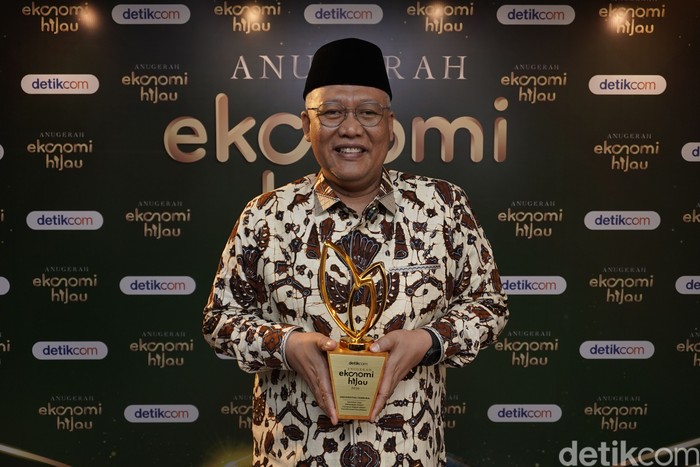
For this approach, UT received the Green Economy Award from detik.com on Thursday (September 3, 2026). The award was presented in recognition of UT’s efforts to integrate technology, resource efficiency, expanded access to education, and sustainability principles into the provision of higher education.
UT Rector Prof. Dr. Ali Muktiyanto, S.E., M.Si. said the award was significant because it demonstrated public recognition of UT’s contribution to the green economy. He said this contribution could not be separated from the involvement of students and the UT academic community.
“The award is very important and meaningful for UT, while also emphasizing that the public has actually recognized UT’s significant role in the green economy, particularly through the participation of UT students and the academic community,” said Ali.
PJJ is one of the key aspects of this contribution. By not relying on students’ physical presence on campus for every learning activity, mobility can be reduced. According to Ali, this model also helps reduce fuel consumption and carbon emissions resulting from student mobility.
Technological developments have subsequently strengthened the model that UT established from the beginning of its existence. Learning and academic services have become increasingly digitized and can be accessed by students from various regions. In this way, education can take place more flexibly while also making the use of physical resources in the educational process more efficient.
However, UT’s commitment to sustainability can also be seen in its direct environmental management efforts. Since 2010, UT has implemented the UT Go Green program through various activities, including reducing paper use, planting trees, waste management, creating biopores, constructing artificial lakes, and developing eco-buildings.
This commitment was subsequently developed through UT Green University (UTGU). Sustainability principles are applied across a number of areas, ranging from infrastructure, energy and waste, transportation, education, and research to community service.
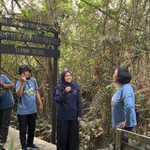
Students are also involved in these efforts. Through the “One Student, One Tree” program as part of new student orientation, UT encourages students to plant trees while introducing environmental awareness from the beginning of their membership in the academic community.
For UT, education and sustainability intersect in a broader issue, namely access. Not everyone has the opportunity to travel to and reside in cities where major higher education institutions are located. Geographical and economic constraints remain barriers for some people seeking to pursue higher education.
Therefore, UT seeks to reach communities in various regions, including disadvantaged, frontier, and outermost (3T) areas, isolated areas, and regions that have had limited access to higher education.
“Due to various economic constraints and geographical barriers that prevent people from reaching major campuses in big cities, our campus will come to the students,” said Ali.
The expansion of access continues to be accompanied by efforts to strengthen institutional quality. Ali cited academic authority, academic integrity, and academic reputation as three important pillars for strengthening UT’s role in carrying out its mission of higher education for all.
Currently, UT serves 856,444 active students. Within the next one to two years, this number is targeted to increase to 1 million students.
“We hope that within the next one or two years, we will be capable and worthy of serving up to 1 million students,” said Ali.
The target demonstrates the scale of services that UT seeks to develop. As access to education expands, it becomes increasingly important to ensure that the process is efficient and takes sustainability into account. This principle brings together the Green Campus Digital agenda with SDG 4 on quality education and SDG 13 on climate action.
For UT, sustainability ultimately is not merely a matter of managing the campus environment. It is also reflected in how education is delivered: using technology appropriately, reducing unnecessary mobility, involving students in environmental action, and opening learning opportunities for those whose access has previously been limited by distance.