

Not every meaningful transformation has to begin with vast stretches of land. Even in densely populated urban neighborhoods, a small unused yard can become a source of food, additional income, and renewed hope for families. With practical knowledge, community cooperation, and proper guidance, neglected spaces can be transformed into productive organic vegetable gardens.
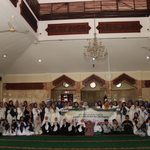
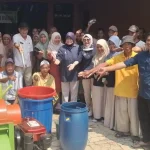
That was the spirit behind Universitas Terbuka’s (UT) Community Service Program (Pengabdian kepada Masyarakat – PkM), conducted in collaboration with the ARU Anotero Scientific Foundation. Carrying the theme “Transforming Vacant Land into Urban Gardens for Organic Vegetable Production and Waste Management as a Community Economic Resource,” the program was held at the BRI Multipurpose Hall, Dar El Tasqif Mosque, Jalan Taman Karya XX, Panam, Pekanbaru, on Sunday (July 26, 2026).
More than simply providing educational outreach, the program encouraged residents to recognize the untapped potential of spaces that had long been overlooked. Home yards were introduced as productive areas for growing organic vegetables, while household waste was reframed not as refuse but as a resource with economic value when managed properly. This practical approach is expected to strengthen household food security while creating additional sources of income for the community.
The educational session featured Ronny Basista, S.Ag., M.Si., Ph.D., from Universitas Terbuka alongside the expert team from the ARU Anotero Scientific Foundation. Together, they shared their knowledge and experience on making productive use of urban land, promoting environmental management, and fostering community self-reliance through innovations that can be applied in everyday life.
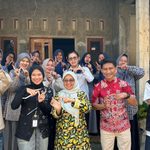
The program also served as a valuable learning opportunity for Universitas Terbuka students, who engaged directly with local communities. Beyond interacting with community partners, they gained first-hand insight into local challenges while applying science, technology, and the arts as part of practical solutions. The experience provided students with meaningful opportunities to strengthen their social awareness while putting the values of the Tri Dharma of Higher Education into practice beyond the classroom.
Program Chair Dr. Rian Vebrianto, M.Ed., stated that utilizing home yards is a simple initiative that can generate significant benefits for communities, particularly in supporting household food self-sufficiency.
“On this occasion, we are also donating a showcase and plant seedlings so that everyone can share. We do not want any resident to go without food or be unable to cook. In the future, this area will also include a dedicated pineapple plantation and a catfish pond,” he said.
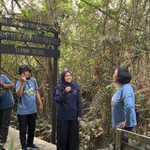
This commitment was demonstrated through concrete action. The community service team donated a showcase to the local community, distributed two eggplant seedlings to each participating household, and planted 50 pineapple seedlings in the surrounding area. Looking ahead, the site is also planned to include a dedicated pineapple cultivation area and a catfish pond as part of an integrated and sustainable community food production ecosystem.
The event concluded with a communal lunch that fostered a warm sense of togetherness. More importantly, however, it marked the beginning of a broader community movement. From previously neglected home yards, residents began to recognize new opportunities to strengthen household food security, protect the environment, and generate additional sources of income. When knowledge is combined with social commitment, what flourishes is not only productive gardens, but also stronger, more self-reliant communities.