
Tangerang Selatan, June 12, 2026 — As the use of Artificial Intelligence (AI) continues to expand across higher education, Universitas Terbuka (UT) Makassar is taking proactive steps to ensure its students are not only technologically proficient but also responsible in using AI. This commitment was demonstrated through a dedicated training program designed to help students navigate AI while upholding academic ethics.
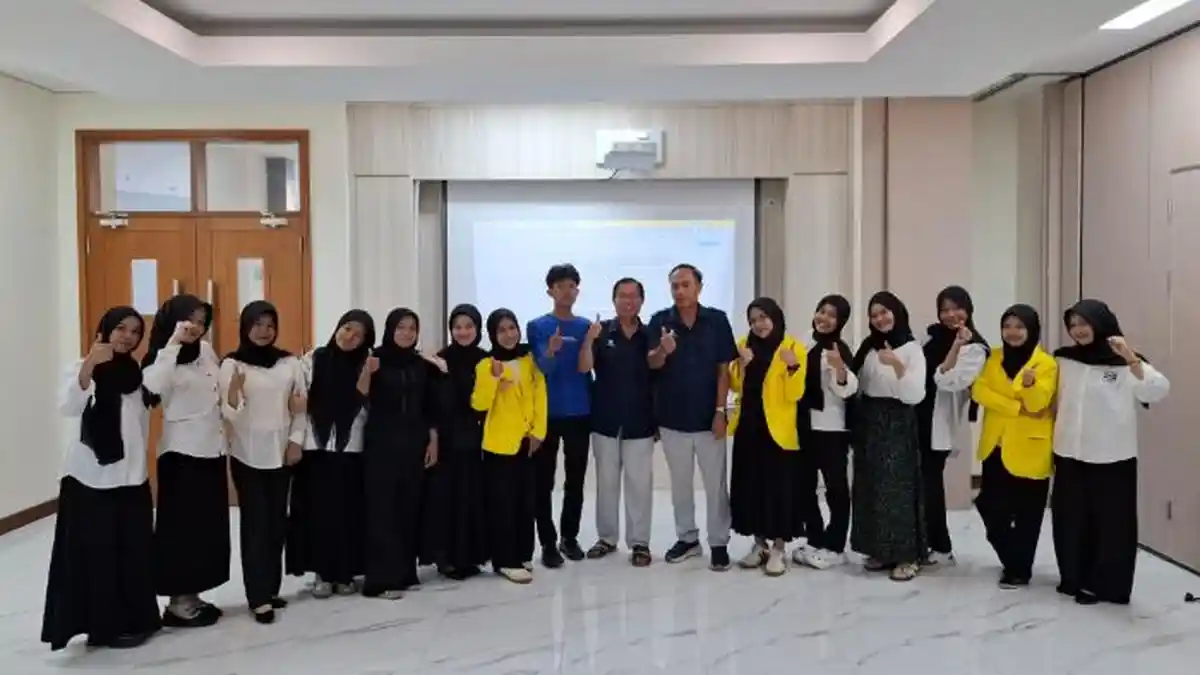
A team of lecturers from UT Makassar organized a Community Service (Pengabdian kepada Masyarakat – PkM) program focusing on the adaptive and responsible use of AI on Monday, June 2, 2026. Held in the UT Makassar Tutorial Room, the interactive training targeted recipients of the Kartu Indonesia Pintar – Kuliah (KIP-K) scholarship enrolled in the Management Study Program.
The initiative reinforces Universitas Terbuka’s commitment to providing accessible, high-quality higher education for all. Through this program, economic limitations are no longer a barrier preventing students from gaining advanced digital literacy, in line with Sustainable Development Goal (SDG) 4, which promotes inclusive and equitable quality education.
The intensive training was led by three senior UT Makassar lecturers: Drs. Jamil, M.Pd., Drs. Muin, M.Pd., and Drs. Arifin Tahir, M.Pd. As part of the university’s commitment to the Tri Dharma of Higher Education, the speakers explored both the opportunities and challenges of AI in academic settings.
On one hand, AI was introduced as an innovative tool for personalized learning and an interactive assistant capable of improving learning efficiency. On the other hand, participants were reminded of the potential risks associated with improper use, including overreliance on AI, declining critical thinking skills, and academic plagiarism.
“AI should be positioned as a tool that supports the learning process, not one that replaces the human capacity for critical thinking, creativity, and academic integrity,” a representative of the UT Makassar lecturer team emphasized.
Accordingly, the concept of human-centered AI governance became the core theme of the training. Students were encouraged to safeguard personal data privacy while maintaining the originality and integrity of their academic work.
Through this initiative to strengthen digital ethics literacy, UT Makassar is doing more than teaching technological skills. The university is preparing a generation of students who are adaptable, highly competitive, and committed to ethical conduct as they enter the era of Society 5.0. This effort also represents a long-term investment in developing high-quality human resources that support inclusive economic growth, in line with SDG 8.