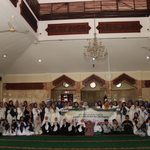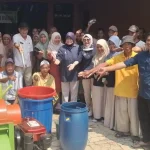

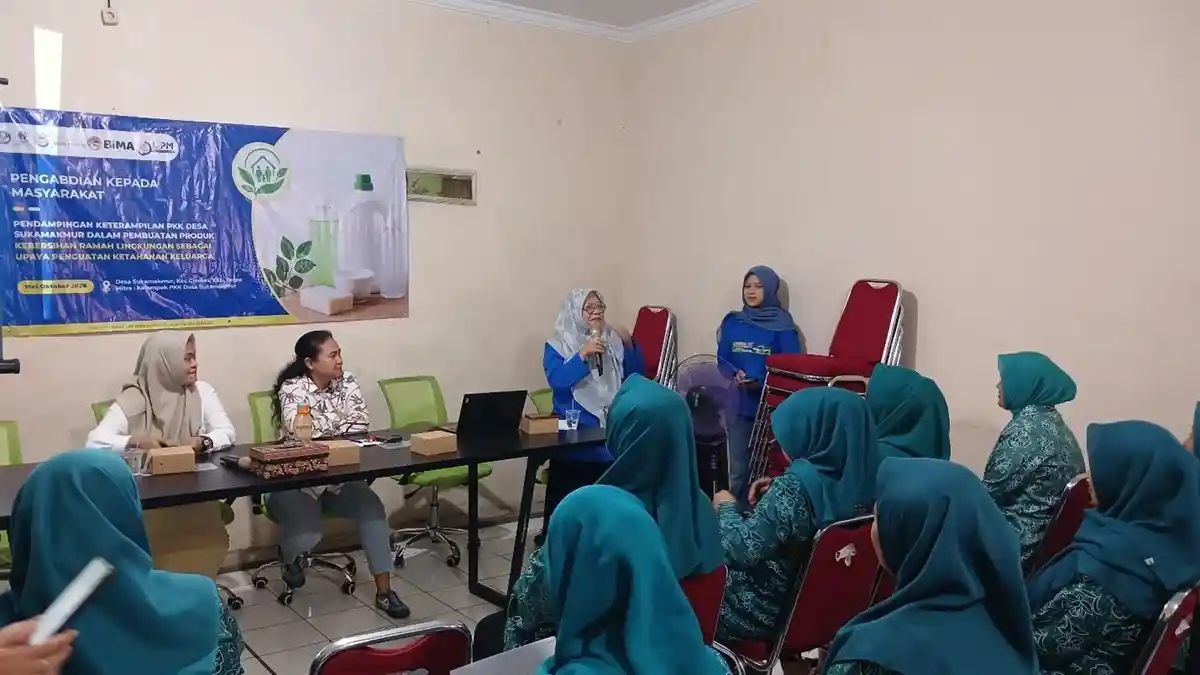
BOGOR — In the daily lives of residents of Desa Sukamakmur, Kecamatan Ciomas, Kabupaten Bogor, household waste and family health often emerge as interconnected challenges that frequently go unnoticed. From modest home kitchens to the everyday routines of homemakers, convenient consumption habits can gradually create larger environmental problems. Responding to this issue, Universitas Terbuka (UT) organized a community engagement program titled “Healthy Families, Sustainable Earth: Synergy of Zero Waste and Environmentally Friendly Lifestyles,” held on Sunday, June 14, 2026, from 9:00 a.m. to 12:00 p.m. at the PKK Office of Desa Sukamakmur.
The initiative reflects Universitas Terbuka’s commitment to expanding access to quality education beyond its open and distance learning system by delivering tangible community-based programs. The project was part of UT’s Community Service (Pengabdian kepada Masyarakat – PkM) Program, funded by the Ministry of Higher Education, Science, and Technology through the Research and Community Service Information System (Basis Informasi Penelitian dan Pengabdian kepada Masyarakat – BIMA) scheme under the Community-Based Empowerment program, specifically the Community Partnership Empowerment initiative.
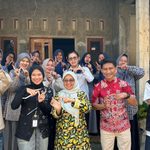
Dozens of participants, including members of the Family Welfare Movement (Pemberdayaan dan Kesejahteraan Keluarga – PKK), community health volunteers, and local community leaders, attended the event with great enthusiasm. From the outset, UT positioned itself not merely as a provider of information but as a learning partner that listens to community needs, understands local challenges, and supports behavioral change toward healthier and more sustainable living.
During the first session, Dr. Pepi Rospina Pertiwi, M.Si., a UT lecturer and Head of the Community Service Team, invited participants to reflect on everyday household practices that are often taken for granted. She highlighted how the use of chemical-based household products and dependence on single-use plastics can gradually affect both public health and the environment.
“Family resilience is not only about financial security but also about ensuring the long-term health of every family member. Without realizing it, the cleaning products, cosmetics, and synthetic fragrances we use every day contain active chemicals that may trigger respiratory problems, skin irritation, and even hormonal disorders. At the same time, our continued reliance on single-use plastics contributes to the growing accumulation of waste in our environment,” Dr. Pepi explained.
She emphasized that Universitas Terbuka’s commitment extends beyond knowledge transfer to direct community assistance.
“Together with our team of lecturers and with the active involvement of students from the Faculty of Science and Technology, we are committed to assisting the PKK of Desa Sukamakmur in implementing the concept of zero and limit waste as a practical academic solution to reduce and limit household waste directly from home kitchens, thereby helping to prevent damage to water and soil ecosystems.”
The program clearly demonstrated UT’s role as a university that not only generates knowledge but also helps communities apply it in their daily lives.
The second session was led by Anantasari, S.Si., M.T., an environmental practitioner who presented practical approaches to sustainable living. She stressed that adopting environmentally friendly lifestyles does not have to be expensive and can instead become an effective way for families to manage household expenses more efficiently.
“Switching to environmentally friendly products is neither difficult nor expensive. On the contrary, it is a smart economic strategy that helps families manage their household budgets more efficiently,” Anantasari explained.
She also shared practical examples of using biodegradable products and reducing the use of chemical-based household products, demonstrating how these practices can lower long-term healthcare costs while reducing environmental impact.
The program continued with an interactive discussion in which participants actively asked questions and shared their personal experiences. Throughout the session, the Universitas Terbuka team served as facilitators, bridging scientific knowledge with the realities of everyday community life. This interactive approach made the learning experience more engaging and directly relevant to participants’ daily routines.
The event concluded with a joint declaration of commitment by participants to begin managing household waste more responsibly by transforming it into products with practical value. Participants also received environmentally friendly starter kits to help them immediately implement the knowledge and practices introduced during the workshop in their own homes.
Through this initiative, Universitas Terbuka once again reaffirmed its role as an inclusive university that delivers education without boundaries, not only through virtual classrooms but also through direct engagement with communities. From Desa Sukamakmur, UT demonstrated that the journey toward healthier families and a more sustainable environment can begin with simple everyday actions, supported by appropriate knowledge, continuous guidance, and a shared commitment to positive change.