
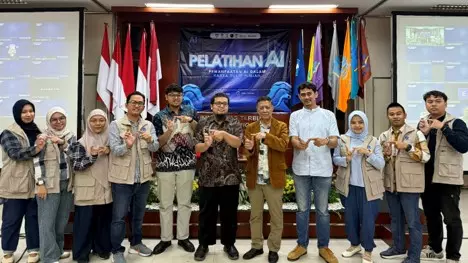
BANDUNG — Artificial Intelligence (AI) has become an increasingly familiar part of academic life for students and lecturers. From helping users find references and organize writing outlines to processing research data, AI is steadily becoming integrated into everyday scholarly activities. Alongside these opportunities, however, comes a new challenge: how to use AI effectively without compromising academic ethics and integrity?
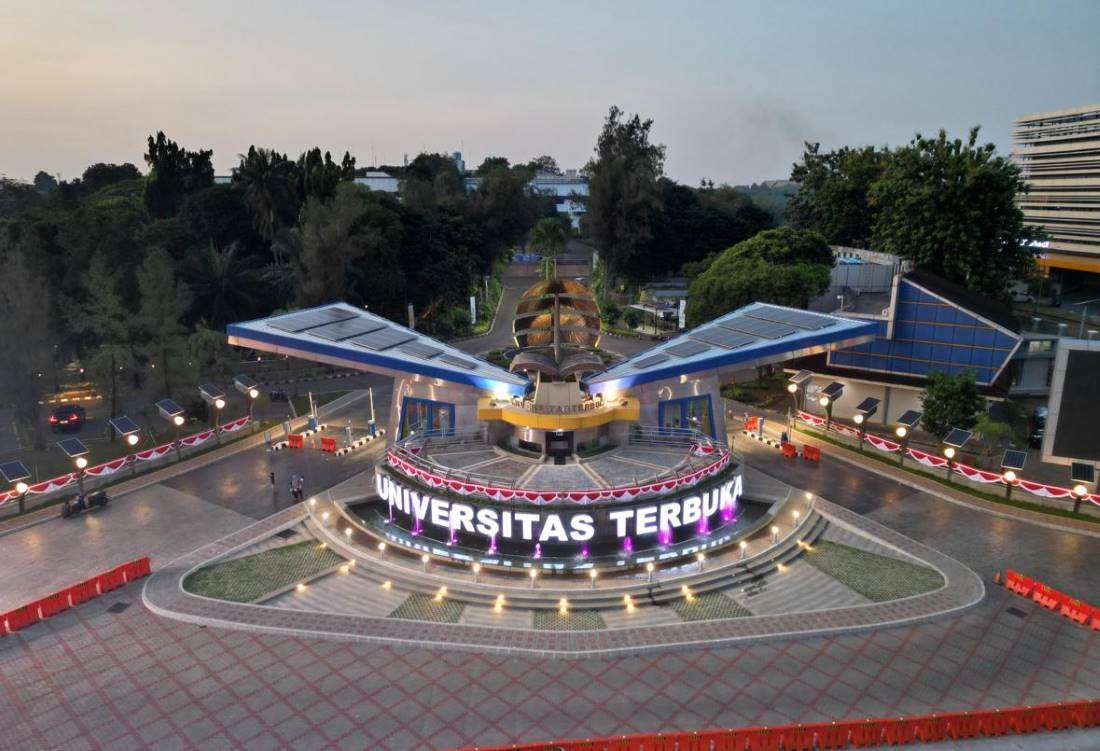
Recognizing this need, Universitas Terbuka (UT) Bandung, in collaboration with Telkom University, the Indonesian Cyber Law Council (DHSI), and the Indonesian Muslim Lecturers Association (PDMI), organized the AI for Scientific Writing Workshop on May 30, 2026. Held at the UT Bandung campus, the event provided hundreds of participants with practical guidance on using AI responsibly in academic writing and research.
As Indonesia’s pioneer in open and distance learning, Universitas Terbuka views digital literacy as an essential competency for preparing human resources to meet the demands of a rapidly changing world. Through initiatives such as this workshop, UT continues to expand learning opportunities that enable students, lecturers, and the wider public to acquire new knowledge and skills relevant to today’s digital landscape.
The strong public interest in the workshop reflected this commitment. A total of 627 participants registered, including 522 online attendees and 105 participants who joined in person. They represented a wide range of academic disciplines. The Bachelor’s Program in Primary School Teacher Education (PGSD) recorded the highest number of participants with 199 registrants, followed by the Bachelor’s Program in Law with 72 participants, Bachelor’s Program in Management with 50 participants, Bachelor’s Program in Early Childhood Education (PGPAUD) with 27 participants, along with dozens of participants from various other study programs.
The high level of participation highlights the growing importance of AI literacy within higher education. What was once considered a technology of the future has now become part of daily academic activities, including learning, research, and scientific writing.
Under the theme “AI for Scientific Writing,” participants explored how AI can support academic work, from generating research ideas and structuring scholarly papers to strengthening research methodologies. At the same time, the speakers emphasized that technological advancement must always be accompanied by critical thinking and academic responsibility.
Muharman Lubis of Telkom University explained that AI can serve as a valuable academic partner when used appropriately.
“AI can become a highly valuable academic partner, but its use must always be guided by critical reasoning, ethics, and scholarly responsibility. In scientific writing, technology should strengthen the quality of ideas rather than replace the integrity of the author,” he said.
A similar perspective was shared by Ratandi Ahmad Fauzan, who emphasized that AI should be used to expand intellectual exploration and enhance research quality.
“Students and academics need to understand that AI is not merely a tool for speeding up tasks. It should be used to broaden ways of thinking, support exploration, and facilitate research that is more systematic, transparent, and accountable,” he said.
In addition to discussing the technical applications of AI, the workshop also focused on digital ethics. Participants received guidance on validating information, using credible sources, applying proper citation techniques, and preventing plagiarism. The central message was clear: technology should enhance academic quality, not replace human reasoning.
The collaboration among universities, professional organizations, and a cyber law institution also demonstrated that strengthening AI literacy requires a comprehensive approach. The responsible use of AI extends beyond technical competence to encompass legal, ethical, educational, and social dimensions.
This initiative aligns with the Sustainable Development Goals (SDGs) agenda, particularly SDG 4: Quality Education, which promotes lifelong learning opportunities for all. At the same time, integrating AI into academic practice supports SDG 9: Industry, Innovation and Infrastructure by fostering innovation and encouraging the responsible application of technology in scientific research.
Through this initiative, Universitas Terbuka once again reaffirmed its commitment to providing education that adapts to technological advancements. Beyond expanding access to higher education, UT continues to ensure that its learners develop the knowledge and competencies needed to thrive in the digital era. As technology continues to evolve, the ability to understand and use AI responsibly has become an essential skill for ensuring that education remains relevant, inclusive, and prepared for the challenges of the future.