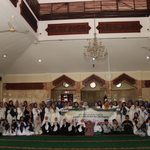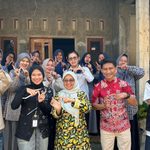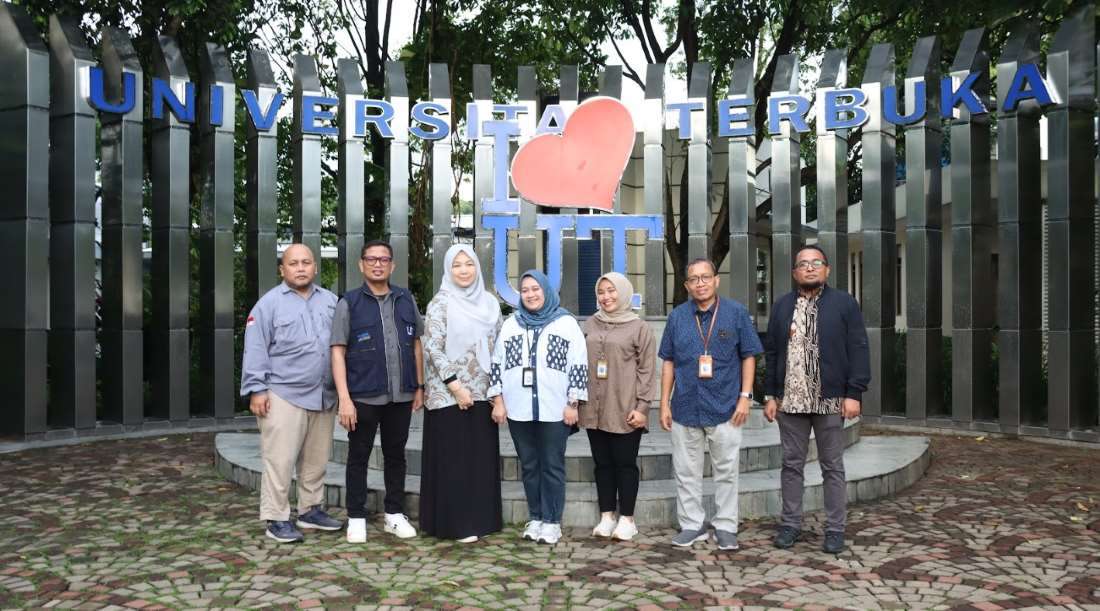

SAMARINDA, Indonesia — It is uncommon for a classroom of civil servants to discuss international humanitarian law, artificial intelligence (AI), drones, and the future of global civilization in a single forum. Yet that was exactly the atmosphere at the Building of Badan Kepegawaian dan Pengembangan Sumber Daya Manusia (BKPSDM) of Kota Samarinda on Saturday (June 13, 2026), where dozens of civil servants from the Samarinda City Government participated in a face-to-face tutorial organized by Universitas Terbuka (UT).
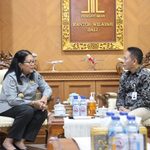
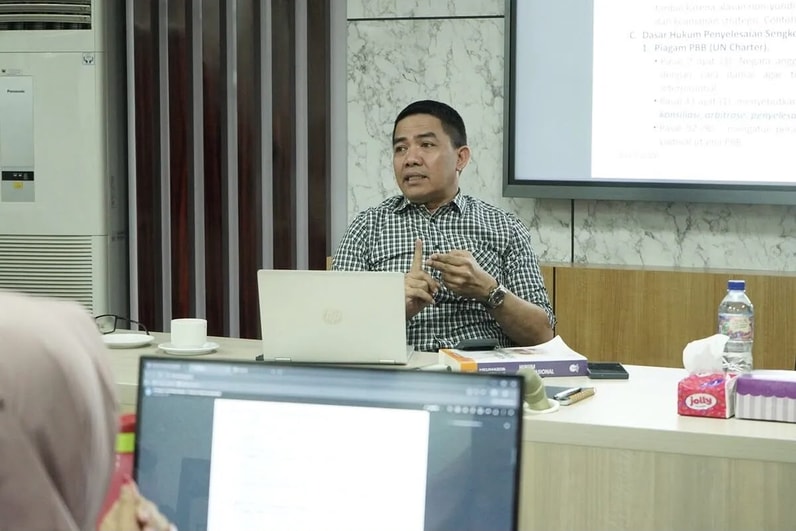
The weekend class stood out as the Mayor of Kota Samarinda, Andi Harun, took on the role of lecturer. Serving as a faculty member in the Faculty of Law and Social and Political Sciences at UT, he taught the International Law (HKUM4205) course, presenting a lecture on International Humanitarian Law and the Future of Global Civilization.
Amid the day-to-day responsibilities of public administration, government services, and bureaucratic governance, the session offered participants a broader perspective. Civil servants were encouraged to recognize that global conflicts, emerging military technologies, and geopolitical developments are closely connected to how governments understand law, formulate public policy, and uphold their responsibilities to society.
The lecture extended beyond the fundamentals of international law. Discussions explored the growing role of artificial intelligence, the use of drone technology in modern conflicts, and the challenges faced by international humanitarian law in preserving humanitarian values amid rapid technological and geopolitical change.
The classroom atmosphere was highly interactive. Rather than simply listening to lectures, participants actively engaged in discussions on the relevance of the laws of war in the modern era. The session also examined the United Nations Charter and explored how the principles of international law can be applied within government administration and public policymaking.
Andi Harun’s presence in the classroom underscored an important message: strengthening the capacity of civil servants requires more than technical training. Public officials must also develop critical thinking, global perspectives, and adaptability to effectively address increasingly complex public service challenges.
The special academic program for civil servants was initiated by SALUT Etam Betuah, UT’s Learning Service Center in Samarinda. Head of SALUT Etam Betuah Ahmad Husaini explained that the program was designed to provide greater educational flexibility for civil servants who often struggle to attend face-to-face tutorials because of demanding work schedules.
“Many civil servants are already enrolled as Universitas Terbuka students but find it difficult to attend tutorials due to their work commitments. That is why the classes are held on Saturdays, ensuring they do not interfere with public services,” Ahmad said on Saturday (June 13, 2026).
According to Ahmad, SALUT Etam Betuah coordinated and facilitated the entire program, while government agencies were responsible for assigning participating employees. The collaborative model provides an effective solution for public servants seeking to pursue higher education without compromising their professional responsibilities.
The initiative also reflects the Government of Kota Samarinda’s commitment to strengthening the competencies of its civil servants through formal education. This commitment extends beyond policy support, as demonstrated by the mayor’s direct involvement in the lecturing process.
Through its flexible learning system, UT enables civil servants to continue their education while maintaining their responsibilities in public service. The initiative aligns with the Sustainable Development Goals (SDGs), particularly Quality Education (SDG 4), Decent Work and Economic Growth (SDG 8), and Peace, Justice and Strong Institutions (SDG 16).
The weekend classroom delivered a clear message: the bureaucracy of the future requires more than officials who simply carry out routine administrative duties. It requires civil servants who continuously expand their knowledge, embrace change, and bring fresh perspectives to public service.