
PALANGKA RAYA, Indonesia — Many great ideas are born from curiosity, persistence, and the courage to experiment. Some begin in classrooms, research laboratories, artistic communities, or from simple ideas that eventually take shape. However, in today’s digital era, works that require significant time and effort can be copied, redistributed, or even claimed by others within moments.
Recognizing these risks, Universitas Terbuka (UT) Palangka Raya is encouraging the public, students, academics, artists, and innovators not only to continue creating but also to formally register their intellectual property to ensure legal protection.
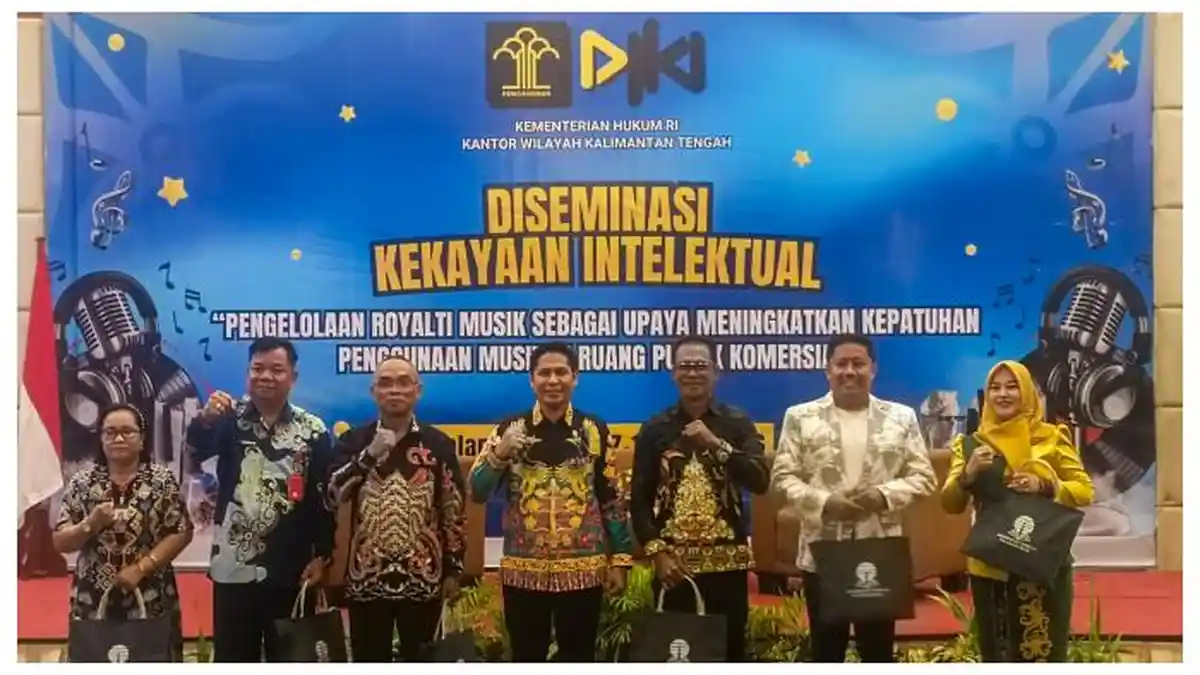
Director of UT Palangka Raya, Hariyadi, S.P., M.P., emphasized that awareness of intellectual property rights must continue to grow, particularly as creativity and innovation become increasingly widespread and accessible. He delivered the remarks after attending the 2026 Intellectual Property Dissemination Forum in Palangka Raya on Thursday (June 18, 2026).
“Whatever creativity we produce and whatever intellectual property we create should be registered with the Ministry of Law, because that is the appropriate institution responsible for protecting these rights,” Hariyadi said.
According to Hariyadi, works in education, research, the arts, and other fields of innovation deserve legal protection because every creation represents a substantial investment of time, ideas, financial resources, effort, and determination.
“Today, it is impossible to limit or prevent the growth of creativity, innovation, and creative works across society. That is why public understanding of legal protection for intellectual property has become increasingly important,” he said.
Hariyadi explained that registering intellectual property provides an important legal safeguard, preventing creative works from being claimed or used without authorization. Such protection offers creators greater confidence while ensuring their contributions receive proper recognition.
“Registering intellectual property helps ensure that our works cannot simply be claimed or misused by others,” he added.
At the same time, Hariyadi noted that legal protection does not prevent others from benefiting from creative works. Instead, it establishes clear legal frameworks governing how those works may be used while ensuring that creators’ rights remain protected.
“Others may certainly use our works, but such use must comply with the legal provisions and obligations established under applicable laws,” he explained.
As a higher education institution, UT Palangka Raya believes that intellectual property literacy should become an integral part of the academic ecosystem. Beyond encouraging research and innovation, the university seeks to ensure that the ideas and discoveries produced by its academic community receive adequate legal protection.
Hariyadi revealed that UT Palangka Raya has already registered several intellectual property rights, particularly those resulting from faculty research. These registrations demonstrate that academic research should not remain confined to publications but can also generate broader social, educational, and economic value.
“We have registered numerous intellectual property rights, particularly for research conducted by our faculty members,” he said.
Looking ahead, UT Palangka Raya remains committed to expanding public awareness of intellectual property protection among students and the wider community. The university hopes these efforts will encourage more people across the Central Kalimantan to continue developing innovative ideas without fear of losing ownership of their work.
“We will continue promoting intellectual property awareness among both the public and our students. People should never hesitate to create innovations, artistic works, or other forms of creativity. There are legal mechanisms available to ensure that their contributions are properly protected,” Hariyadi said.
These initiatives align with the Sustainable Development Goals (SDGs), particularly those promoting Quality Education (SDG 4), Decent Work and Economic Growth (SDG 8), Industry, Innovation and Infrastructure (SDG 9), and Peace, Justice and Strong Institutions (SDG 16).
“Programs like this encourage society, especially students, to continue producing meaningful innovations,” he concluded.
Ultimately, protecting intellectual property extends far beyond obtaining certificates or completing administrative procedures. It is about preserving the dignity of creators. When ideas are protected through legal certainty, individuals gain greater confidence to innovate, while communities and regions are better positioned to foster creativity that is not only recognized but also respected.