
MATARAM, Indonesia — In many regions, the desire to pursue higher education often collides with the realities of distance, time constraints, and work responsibilities. At the same time, communities increasingly need legal information that is accessible, practical, and capable of protecting local innovations and intellectual creations. Responding to these challenges, Universitas Terbuka (UT) Mataram and the Regional Office of the Ministry of Law of Nusa Tenggara Barat (NTB) have begun exploring a strategic partnership.
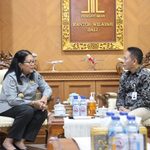
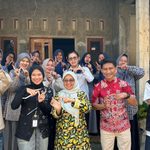
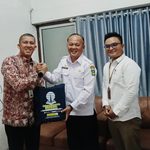
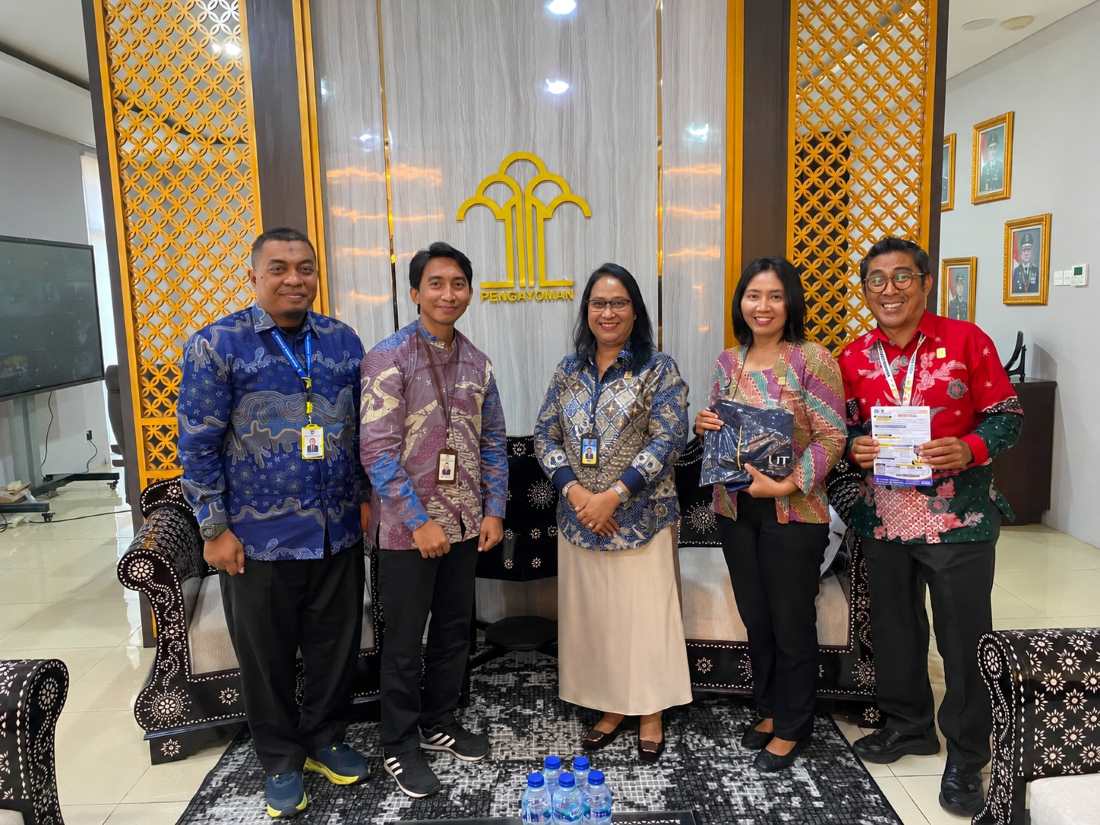
The Regional Office of the Ministry of Law of Nusa Tenggara Barat welcomed a delegation from UT Mataram on Thursday (June 18). The meeting marked the first step toward establishing institutional collaboration aimed at strengthening human resource development, expanding public legal education, and enhancing intellectual property protection across the province.
The delegation was received by the Head of the Regional Office of the Ministry of Law of Nusa Tenggara Baratt, I Gusti Putu Milawati, accompanied by the Head of the Intellectual Property Division and Legal Counsel. UT Mataram was represented by Anam, Manager of Learning Services, and Andri, Coordinator for Partnerships and Student Registration.
During the meeting, both institutions discussed opportunities for collaboration that extend beyond institutional cooperation and are intended to generate broader benefits for both public officials and local communities. Proposed areas of collaboration include education, civil servant capacity building, legal outreach programs, and the protection and utilization of intellectual property.
For Universitas Terbuka, its open and distance learning system offers a practical solution to the growing need for professional development in regional areas. Through its flexible learning model, civil servants and community members can enhance their competencies without having to leave their jobs or daily responsibilities.
Meanwhile, the Regional Office of the Ministry of Law views the partnership as an opportunity to expand public access to legal education. Legal literacy initiatives would not be limited to formal programs but could also be strengthened through academic networks, university communities, and more accessible educational approaches.
Intellectual property protection also emerged as a key topic during the discussion. As local creativity and innovation continue to grow, public awareness of intellectual property rights has become increasingly important. Creative works, ideas, products, and local innovations require legal protection to ensure they can develop into valuable assets for both individuals and communities.
Head of the Regional Office of the Ministry of Law of Nusa Tenggara Barat, I Gusti Putu Milawati, welcomed the proposed collaboration and emphasized the importance of partnerships with higher education institutions in strengthening legal services throughout the region.
“We hope this collaboration will not only strengthen the capacity of public officials but also provide direct benefits to the community through legal education and stronger intellectual property protection,” she said.
Her remarks underscored that the proposed partnership is intended to deliver tangible outcomes rather than merely fulfill administrative objectives. The collaboration aims to support more competent public officials, improve legal literacy among citizens, and encourage local innovators to recognize the importance of protecting their intellectual property.
The initiative also aligns with the Sustainable Development Goals (SDGs), particularly SDG 4 (Quality Education), SDG 9 (Industry, Innovation and Infrastructure), SDG 16 (Peace, Justice and Strong Institutions), and SDG 17 (Partnerships for the Goals). By expanding access to education while strengthening legal awareness, the partnership seeks to create greater opportunities for communities to develop independently and securely.
As a follow-up, the Regional Office of the Ministry of Law of Nusa Tenggara Barat and UT Mataram will conduct further technical discussions to define the scope of cooperation. The outcomes are expected to be formalized through a Memorandum of Understanding (MoU) and subsequent cooperation agreements.
What began as an exploratory meeting has outlined a shared vision in which education and law become more closely connected to everyday life. If successfully implemented, the partnership will not only broaden access to higher education across Nusa Tenggara Barat but also strengthen public legal awareness and provide greater protection for local innovation.