
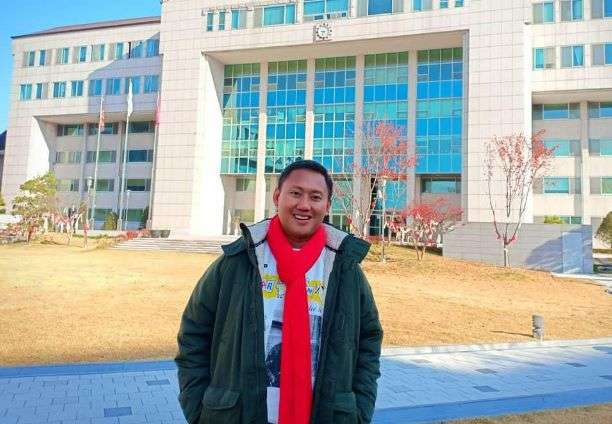
Imam Pesuwaryantoro, a Communication Science student from Universitas Terbuka (UT) Jakarta, has been selected as one of the TOP 50 Delegates out of over 1,000 applicants who submitted and participated in the selection process. Imam expressed his gratitude for the achievement with joy and enthusiasm, thanking his mentors, academic supervisors, and UT’s esteemed professor, Prof. Dr. Mohammad Imam Farisi, M.Pd., for his guidance.
The Global Youth Congress will take place from October 24-26, 2024, in Bangkok, Thailand, ASEAN. The event aims to promote values such as Collaboration and Cultural Exchange, the Creation of Future Leaders Role Models, an SDGs Mindset, and fostering World ChangeMakers. The International-scale Global Youth Congress also focuses on activities like Youth Conferences, Project Collaborations, and SDGs Training, with participation from more than 50 international delegates from ASEAN, Asia, the EU, America, and Africa. At the end of the event, the TOP 50 selected delegates will be honored with the World Leaders & ChangeMakers Ambassador Awards 2024.
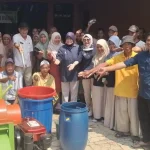
Imam Pesuwaryantoro developed an Eco-Urban Farming innovation from processed household food waste, utilizing the S-ROI (Social Return on Investment) methodology based on the ESG Matrix to address waste management issues at the Integrated Waste Disposal Site, Bantar Gebang, Bekasi. Notably, the Bantar Gebang landfill in Bekasi, which receives waste from Jakarta residents, accumulates over 10,000 tons of waste per day, according to data from the Ministry of Environment and Forestry (KLHK RI, August 30, 2024). Imam’s S-ROI methodology employs the integration of Optimized Media Aggregator, Community Development, and Key Opinion Leader (KOL) Campaign approaches.
For example, if a corporate entity invests IDR 200,000,000 per year in a CSR program for plastic waste management and recycling into fuel and souvenir merchandise, the investment should align with the social impact outcomes, including economic, environmental, and social aspects (ESG). The measurement of S-ROI impact through plastic waste management into fuel and merchandise needs to be assessed from upstream to downstream, involving offtakers/recycling partners in community development and creative agencies to promote the program campaign through KOL and mass media publications, creating positive PR value and public perception.
“Thus, the CSR/ESG program investment made by corporations is expected not only to produce small-scale impacts but can be scaled up independently and not rely continuously on company subsidies,” said Imam Pesuwaryantoro, a student at UT Jakarta.