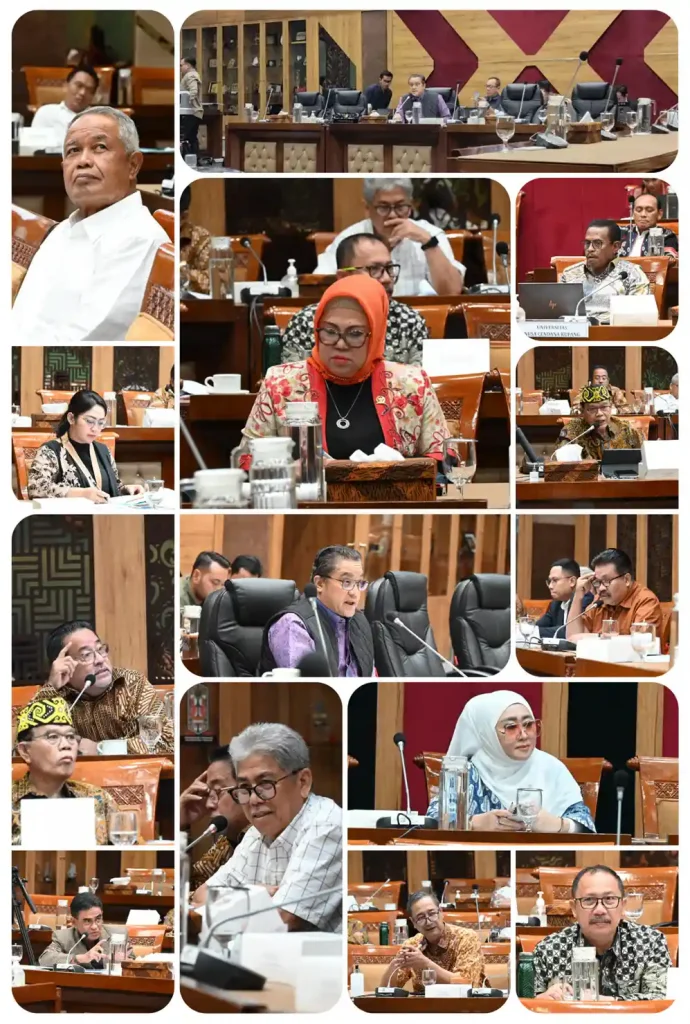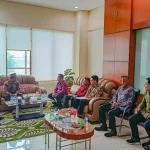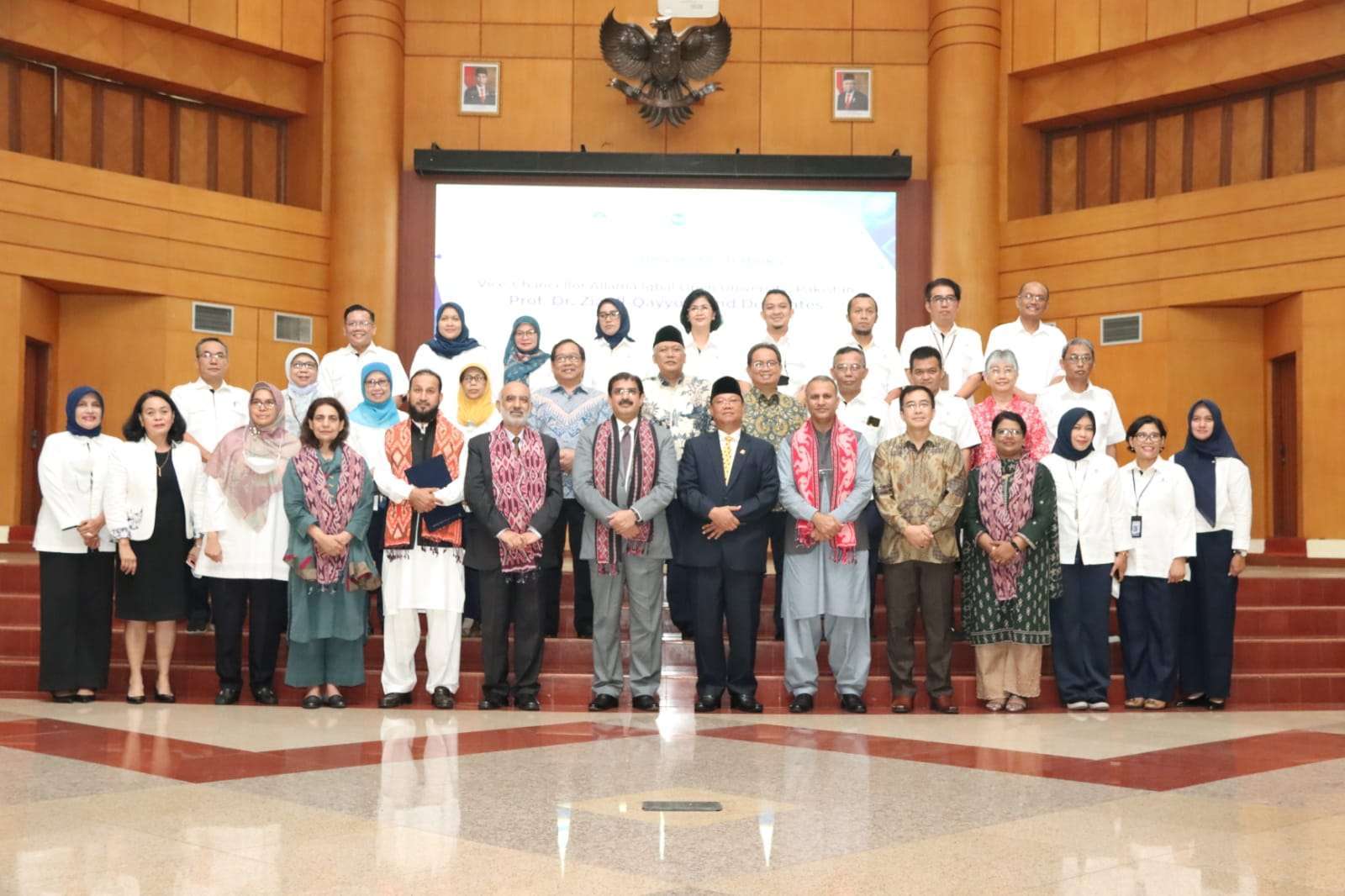

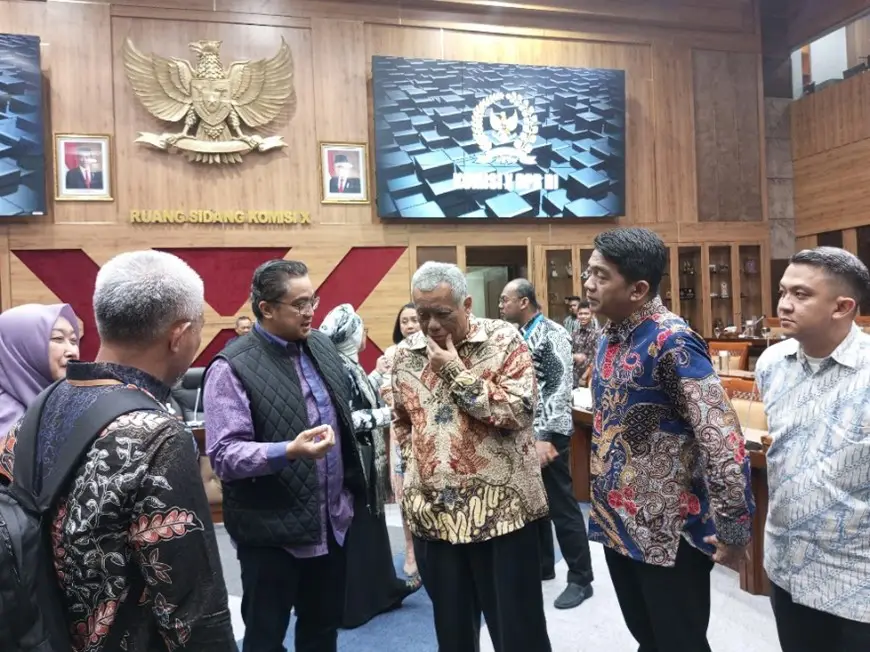
In line with the dynamics of increasing tuition fees (UKT) occurring in Indonesia, the House of Representatives of the Republic of Indonesia (DPR RI) through the Working Committee (Panja) of Commission X invited several State Universities (PTN) to present educational financing at their respective universities in a Public Hearing Meeting (RDP).
This meeting was attended by 9 Universities, namely Universitas Indonesia (UI), Universitas Hasanudin (UNHAS), Universitas Riau (UNRI), Universitas Nusa Cendana (UNDANA), Institut Seni Indonesia Yogyakarta (ISI DIY), Institut Seni Budaya Indonesia (ISBI) Bandung, Politeknik Negeri Semarang (Polines), Politeknik Negeri Sriwijaya (POLSRI), and Universitas Terbuka (UT). Among the 9 Universities present, UT was a key focus for the meeting’s leadership due to its unique distance learning-based education system and affordable tuition fees compared to other universities.
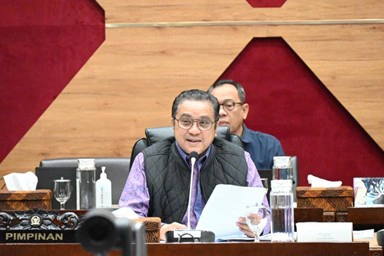
The meeting was opened by the Chair, Dr. Dede Yusuf M.E., S.T., M.I.Pol., who serves as the Vice Chairman of Commission X DPR RI, having the field of Education as one of their responsibilities. He mentioned that the recent increase in tuition fees was triggered by the issuance of the Minister of Culture, Research, and Technology Regulation (Permendikbudristek) Number 2 of 2024 concerning the Standard Unit Cost of Higher Education Operations at State Universities within the Ministry of Education, Culture, Research, and Technology.
During this occasion, UT had the opportunity to highlight that it offers a solution to provide wide access to Higher Education across Indonesia, with an extensive service reach. On this occasion, UT’s Rector was represented by: the Head of the Planning and Reporting Center, Bambang Hariyanto, S.E.; Expert Staff of Financial and Accounting , Hendrawan Bayu Wicaksono, S.E., M.Ak.; and Ahmad Tanoe Widjojo, S.E., as Staff of Planning and Reporting Center. In the presentation delivered by Bambang Hariyanto, S.E., he discussed UT’s processes and dynamics in facing the challenges of Higher Education in Indonesia. He emphasized that, with its distinct characteristics compared to other state universities, UT is the only one that implements distance education, allowing it to serve from Sabang to Merauke, from cities to remote villages. He also stated that UT continues to strive for the best in delivering education by collaborating with other Universities and educational institution partners, known as resource sharing.
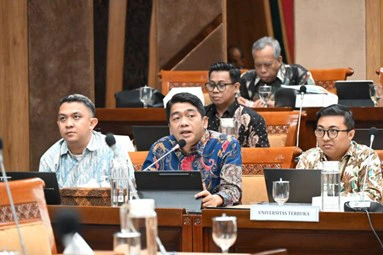
This collaboration, covering all aspects from the learning process, practical sessions, to final exams, is seen as adding value to UT in enhancing efficiency in advancing the delivery of Higher Education for the Indonesian public. During his presentation, he stated the phrase, “We may have come late, but the future of learning is with us,” underscoring that UT has been and is preparing itself to face the future challenges of Higher Education, moving towards Indonesia Emas 2045, which is just over 20 years away.
In this dynamic of tuition fees, UT remains one of the universities unaffected by these changes, maintaining the same tuition fees since 2014 for existing study programs. The presentation also highlighted that UT’s tuition fees are quite affordable. “UT can offer affordable fees because our learning system requires students to be capable of independent and distance learning,” he said.
The presentation detailed UT’s affordable tuition fees, with two service tracks: Non-Semester Package System (Non-SIPAS) ranging from Rp. 35,000 to Rp. 80,000 per credit/semester, and the Semester Package System (SIPAS) ranging from Rp. 1,150,000 to Rp. 3,400,000 per semester. Not only are the written fees affordable, but when divided per month, the SIPAS rates for each study program compare to the average Minimum Wage of Regency/City (UMK) in Indonesia for 2024, representing only about 6% – 16%. Thus, UT can serve all Indonesian citizens without limitations and enhance people’s purchasing power. It was also noted that UT was established by the government without capacity constraints.
Nevertheless, as UT has no limitations for capacity, UT continuously strives each semester to maintain the quality of education provided to the public. This includes obtaining accreditation from BAN-PT, applying international quality standards (ISO), and receiving quality reviews from The International Council for Open and Distance Education (ICDE), including some programs already internationally accredited by the Foundation for International Business Administration Accreditation (FIBAA).
Regarding the views, explanations, and inputs provided by the speakers, the Commission X of DPR RI Education Financing Working Committee conveyed several perspectives:
1. The policy promoting the change of university status from Work Unit (Satker) and Public Service Agency (PTN-BLU) to Legal Entity (PTN-BH) needs to be reviewed based on the criteria and self-reliance of each university in fundraising.
2. An evaluation of the Key Performance Indicators (IKU) imposed on state universities is necessary to ensure alignment with the rationality of program and budget support provided.
3. Given the indication that if Non-Tax State Revenue (PNBP) increases, State University Operational Assistance (BOPTN) decreases, there is a need for policy review on allocation based on the rationalization of university operational needs and student affordability.
4. A review of the average UKT calculation policy is necessary, considering the difference between Single Tuition Cost (BKT) and UKT to be met by BOPTN, as stipulated in Ministerial Decree No. 140/M/KPT/2019 on Formula Allocation and Use of Non-Research State University Operational Assistance.
5. Encouragement for collaboration between the Directorate General of Higher Education and the Directorate General of Culture in supporting cultural-related study programs and promoting internationally recognized study programs in line with the requirements of Ministerial Regulation No. 54 of 2003 on Higher Education Quality Assurance.
This series of meetings becomes a significant momentum for UT to continue developing and increasing recognition in the academic world in Indonesia, sparking hope placed by our predecessors to uphold inclusive higher education for all Indonesia.