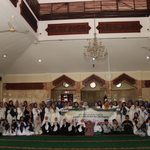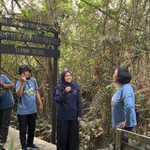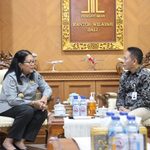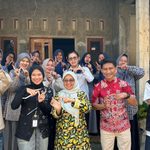


Tangerang Selatan, Indonesia, May 20, 2025 – Universitas Terbuka (UT) has officially launched its 2025 International Community Engagement Program (PkM) in Sabah, Malaysia. This program is a collaborative effort between Universitas Terbuka, Universitas Negeri Jakarta (UNJ), and Universiti Malaysia Sabah (UMS), with support from FGV Holdings Berhad, the Indonesian School of Kota Kinabalu, and the Indonesian Consulate in Tawau. The initiative aims to improve the quality of education for Indonesian migrant children in Sabah’s plantation areas through teacher training and the provision of relevant and contextual learning materials.
The 2025 International PkM features three main programs: national literacy training, culture-based learning media training, and digital assessment training. These activities will be conducted online from May 24–31, 2025, and offline in Tawau, Sabah, in August 2025. This program is a continuation of the successful 2024 International PkM, which received positive feedback from the community.
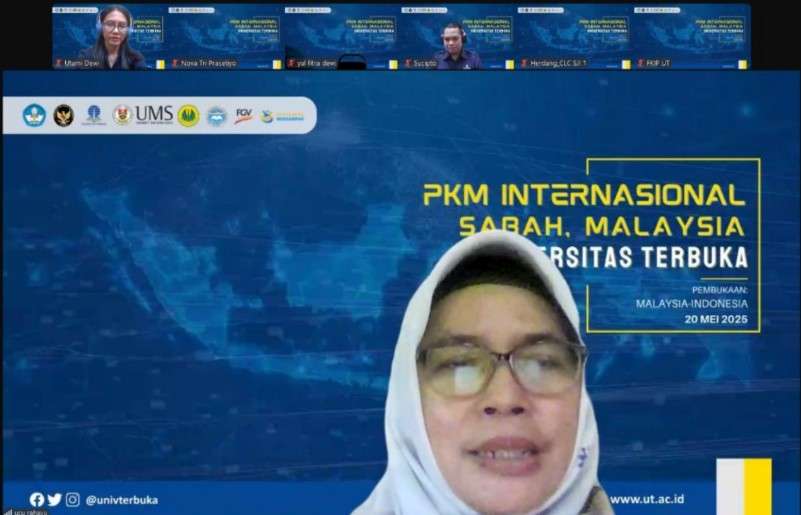
In her remarks, Prof. Dr. Ucu Rahayu, Dean of FKIP UT, emphasized that this activity is part of the Tri Dharma of Higher Education and aligns with the “Impactful Campus” program initiated by the Ministry of Higher Education, Science, and Technology (Kemdiktisaintek).
“We hope this activity can provide a real contribution to the community and continue in the future. Cross-country synergy and national spirit are key to the success of this program,” said Prof. Ucu.
Echoing this sentiment, Prof. Dr. Iwan Sugihartono, Head of LPPM UNJ, stated that this activity is a form of international engagement that brings global recognition to Indonesian educational institutions.
“The synergy between UNJ, UT, and international partners is crucial for systematically addressing the educational issues of migrant children. We welcome this collaboration and hope it will continue,” he concluded.
Support also came from the industrial sector. Mr. Muril Raman Armugan, RCEO of FGV P(M) Sabah and Sarawak, expressed FGV’s pride in supporting the education of migrant workers’ children. He explained that FGV currently manages 14 Community Learning Centers (CLCs) with over 1,500 students, comprising 1,145 Indonesian children and 359 Filipino children, along with 49 teachers.
“Education is a right for all children, and we are committed to continuing to support activities like this,” he stated.
From the school’s side, Ms. Shelya Regina, representing the Head of the Indonesian School of Kota Kinabalu, expressed hope for continued strengthening of this collaboration.
“We are very open to continuous cooperation and invite UT and UNJ to participate in our annual international seminar,” she revealed.

Meanwhile, Aris Heru Utomo, Head of the Indonesian Representative Office in Tawau, stated that this activity is highly relevant to the spirit of National Awakening Day. The Consulate appreciates UT’s contribution to strengthening national literacy and Pancasila values among migrant children.
“We are ready to support the implementation of this activity in our working area, which covers 101 CLCs, most of which are in hard-to-reach plantation areas,” said the Consulate representative.
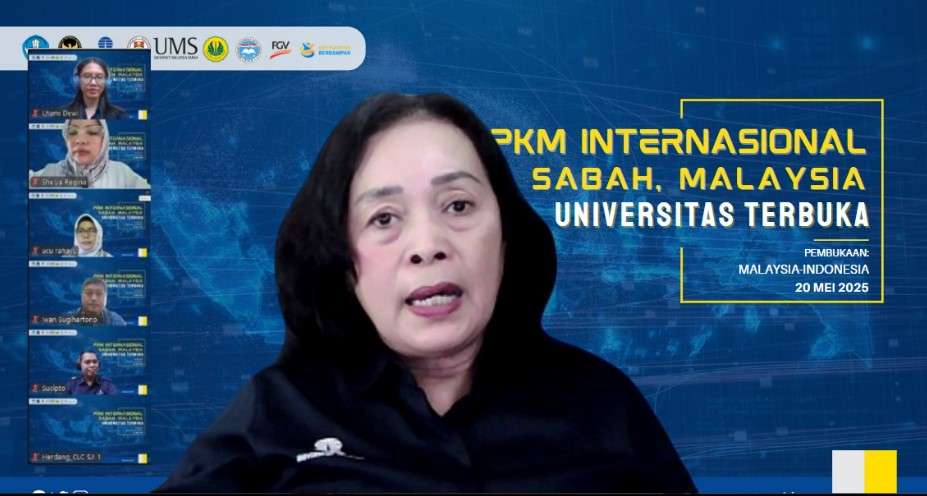
The Head of LPPM UT, Prof. Dewi Artati Padmo Putri, Ph.D., stated that this is the second year of implementing the International PkM in Sabah.
“We are very grateful that last year’s activity ran smoothly, and we hope this year will have an even greater impact. Thank you to all partners and the implementing team who have worked hard,” concluded Prof. Dewi.
By involving a cross-faculty team from FEB, FKIP, FHISIP, the Postgraduate School, and even UT Regional Office Tarakan, the International Community Engagement Program initiated by UT is a tangible manifestation of UT’s role in nation-building through education. The training, conducted both online and offline, targets the capacity building of teachers and the strengthening of students’ national identity, especially for Indonesian communities abroad residing in remote areas with limited access to education. Upholding the spirit of collaboration and dedication, UT, together with its strategic partners, continues to expand the reach and positive impact of education for all segments of society, without geographical boundaries.
Contributor: Nurul Isra Fauziah (with modifications)